
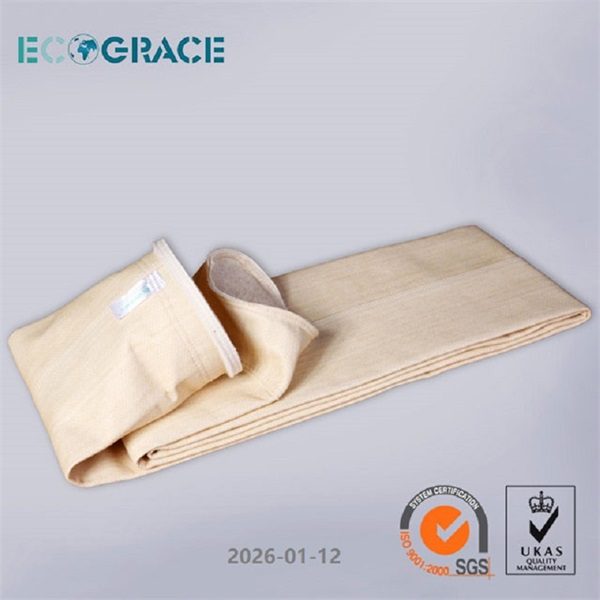
Asphalt Mixing Plant Filter Bags
Baghouse Dust Collection for Hot Mix Asphalt (HMA) Batch Plants, Drum Mix Plants & Continuous Mixing Plants
Engineered by ECOGRACE
Product Overview
ECOGRACE asphalt mixing plant filter bags are specifically engineered for the unique combination of high temperature, hydrocarbon vapor, moisture cycling, and abrasive mineral dust generated during hot mix asphalt (HMA) production. Asphalt mixing plants — whether batch type, drum mix, or continuous — operate aggregate dryer drums at 160–200°C exhaust temperature, producing a complex flue gas mixture of mineral aggregate dust, bitumen fume, hydrocarbon volatiles (blue smoke), and water vapor that demands purpose-built filtration media.
Our asphalt mixing plant filter bags deliver ≥99.9% particulate capture efficiency with outlet emissions consistently below 20 mg/Nm³ — well within the strictest global emission standards for HMA production. Each bag features NOMEX (meta-aramid) or fiberglass substrate with hydrocarbon-resistant surface treatment, engineered to prevent bitumen condensation blinding that destroys standard polyester filter bags within weeks of asphalt plant service. Optional PTFE membrane lamination achieves <10 mg/Nm³ outlet emission for plants requiring ultra-low particulate discharge.
With proven installations across asphalt mixing plant OEM brands including Marini, Ammann, Benninghoven, Lintec, XCMG, SANY, D&G Machinery, Nikko, and Astec worldwide, ECOGRACE provides dust collector filter bags that meet EU TA Luft, US EPA AP-42, China GB 16297, and the most demanding regional air quality permit requirements for asphalt mixing operations.
Asphalt Mixing Plant Filter Bags by Plant Type
Batch Mix Asphalt Plant
The most common asphalt mixing plant configuration worldwide. Batch plants operate with intermittent aggregate heating cycles, creating variable exhaust temperatures (120–200°C) and fluctuating dust loading as each batch moves through the dryer drum, hot elevator, screens, and mixer. Asphalt mixing plant filter bags for batch operations require excellent thermal cycling endurance and rapid moisture adaptation as exhaust conditions change between batches.
Drum Mix (Continuous) Asphalt Plant
Drum mix plants combine drying and mixing in a single rotating drum, producing continuous HMA output at steady-state exhaust temperatures (160–190°C). The sustained high-temperature operation with consistent bitumen fume exposure makes this the most challenging environment for asphalt mixing plant filter bags. NOMEX filter bags with oleophobic treatment are essential to prevent cumulative bitumen blinding over 12–24 months of continuous operation.
Counter-Flow Drum Mix Plant
Counter-flow designs minimize hydrocarbon emissions by separating the aggregate drying zone from the bitumen mixing zone. Exhaust temperature is lower (140–170°C) with reduced blue smoke, but higher moisture content from the drying zone increases acid dew point condensation risk. Asphalt mixing plant filter bags must feature hydrophobic treatment to prevent moisture-induced mineral dust caking and bag blinding during startup and shutdown cycles.
RAP (Reclaimed Asphalt Pavement) Processing
Asphalt mixing plants processing recycled asphalt pavement (RAP) at 20–50% blend ratios generate significantly higher bitumen fume, volatile organic compound (VOC), and blue smoke concentrations as old binder is reheated. Asphalt mixing plant filter bags for high-RAP operations face accelerated hydrocarbon exposure and require enhanced oleophobic/hydrocarbon-resistant surface treatment to prevent premature saturation and pressure drop increase.
Mobile Asphalt Mixing Plant
Portable and semi-mobile asphalt plants (40–160 t/h) use compact baghouse systems with limited filter area. Asphalt mixing plant filter bags in mobile plants operate at higher air-to-cloth ratios (1.5–2.0 m/min) with more aggressive cleaning cycles, demanding exceptional mechanical strength and abrasion resistance. NOMEX filter bags with superior flex fatigue endurance are the standard for mobile HMA operations.
Warm Mix Asphalt (WMA) Plant
WMA technologies reduce mixing temperatures by 20–40°C (to 120–140°C), lowering energy consumption and emissions. While lower temperatures reduce thermal stress on asphalt mixing plant filter bags, WMA additives (zeolites, waxes, chemical surfactants) introduce new chemical compounds to the exhaust that can affect filter media. Polyester or NOMEX with appropriate chemical-resistant finish provides cost-effective WMA filtration.
Recommended Filter Media for Asphalt Mixing Plant Filter Bags
NOMEX Filter Bags (Meta-Aramid)
The gold standard for asphalt mixing plant filter bags worldwide. NOMEX filter bags operate continuously at 200°C with exceptional mechanical strength, abrasion resistance, and flex fatigue endurance. Oleophobic and hydrophobic surface treatment prevents bitumen condensation and moisture blinding. NOMEX 554 and NOMEX NXT grades provide the optimum balance of filtration efficiency, dust cake release, and service life for HMA production.
Fiber Glass Filter Bags
Continuous operating temperature up to 280°C for asphalt mixing plants with elevated exhaust temperatures or plants using recycled fuel (waste oil, rubber-modified binder). Fiber glass filter bags with PTFE membrane and acid-resistant e-PTFE coating provide maximum thermal safety margin and superior dimensional stability for reverse-air baghouse systems common in large-capacity asphalt mixing plants.
PTFE Membrane Lamination
Applied to NOMEX or fiber glass substrates for surface filtration that prevents fine mineral dust and bitumen aerosols from penetrating fiber depth. PTFE membrane asphalt mixing plant filter bags achieve <10 mg/Nm³ outlet emission while maintaining the lowest pressure drop and best dust cake release of any filtration technology. Essential for plants in urban areas or near residential zones with strict opacity limits.
Polyester Needle Felt (Anti-static)
Cost-effective option for warm mix asphalt (WMA) plants and batch mix operations with exhaust temperatures consistently below 150°C. Anti-static polyester with oleophobic finish provides reliable performance at lower acquisition cost. Recommended only for low-temperature asphalt mixing plant filter bag applications where NOMEX’s thermal advantages are not required. Not suitable for drum mix or high-RAP operations.
Material Comparison for Asphalt Mixing Plant Filter Bags
| Material | Max Temp | Best Plant Type | Hydrocarbon Resistance | Abrasion Resistance | Service Life |
|---|---|---|---|---|---|
| NOMEX 554 + Oleophobic | 200°C | Batch mix, drum mix, mobile | Excellent | Excellent | 18–30 months |
| NOMEX + PTFE Membrane | 200°C | Urban plants, strict emission zones | Superior | Excellent | 24–36 months |
| Fiber Glass + PTFE Membrane | 280°C | High-temp drum mix, waste oil fuel | Good | Moderate | 18–24 months |
| Polyester + Oleophobic | 150°C | WMA, low-temp batch mix only | Moderate | Good | 12–18 months |
| P84 (Polyimide) + PTFE Membrane | 240°C | High-RAP, rubber-modified binder | Excellent | Good | 24–36 months |
Technical Parameters — Asphalt Mixing Plant Filter Bags
| Parameter | Specification |
|---|---|
| Filtration Efficiency | ≥99.9% (standard) / ≥99.99% with PTFE membrane |
| Outlet Particulate Emission | <20 mg/Nm³ (standard) / <10 mg/Nm³ (PTFE membrane) |
| Operating Temperature Range | 120°C – 200°C (NOMEX) / up to 280°C (fiber glass) |
| Inlet Dust Loading | 5–20 g/Nm³ (plant type and aggregate moisture dependent) |
| Air-to-Cloth Ratio | 1.0–1.5 m/min (stationary) / 1.5–2.0 m/min (mobile) |
| Cleaning Mechanism | Pulse-jet (online), 4–6 bar; reverse air for large-diameter bags |
| Service Life | 12–36 months (material, plant type, and RAP ratio dependent) |
| Fabric Weight | 500–550 g/m² (NOMEX felt) / 750–900 g/m² (fiber glass woven) |
| Tensile Strength (Warp/Weft) | ≥800 N/5cm (warp) / ≥1,000 N/5cm (weft) |
| Surface Treatment | Oleophobic (oil-repellent), hydrophobic (water-repellent), singeing, calendering, PTFE membrane optional |
| Common Bag Diameter | 120 mm, 130 mm, 150 mm, 160 mm (custom available) |
| Common Bag Length | 2,000 mm – 6,000 mm (OEM specification dependent) |
| Baghouse Fines Recovery | Captured mineral filler (<75 µm) recycled to HMA mix as baghouse fines |
| Certification | ISO 9001, ISO 14001, CE, SGS tested |
Why Asphalt Mixing Plants Need Specialized Filter Bags
Asphalt mixing plant exhaust presents a unique filtration challenge that is fundamentally different from cement, power, or steel mill dust collection. The combination of moderate temperature, bitumen hydrocarbon vapor, moisture cycling, and abrasive mineral aggregate creates conditions that destroy standard industrial baghouse filter bags through mechanisms not encountered in other industries. Here is why asphalt mixing plant filter bags require purpose-built engineering:
Bitumen Fume & Hydrocarbon Condensation
Asphalt mixing plants release bitumen aerosols and hydrocarbon volatiles (“blue smoke”) that condense on filter media surfaces when exhaust temperature drops below the bitumen dew point (typically 140–160°C). This sticky hydrocarbon film traps mineral dust particles permanently within the fiber structure, causing progressive, irreversible pressure drop rise. Asphalt mixing plant filter bags must feature oleophobic surface treatment that repels bitumen condensate and prevents hydrocarbon wetting of the fiber surface.
Moisture Cycling & Acid Dew Point
Wet aggregate (3–8% moisture) enters the dryer drum, producing large volumes of steam that carry through to the baghouse. During startup, shutdown, and rain events, exhaust temperature can drop below the acid dew point (120–130°C), causing sulfuric acid condensation from sulfur-containing fuel combustion products. Asphalt mixing plant filter bags must withstand rapid moisture fluctuations and intermittent acid condensation without hydrolysis damage to the fiber structure.
Abrasive Mineral Aggregate Dust
Crushed stone, gravel, and sand aggregate produce highly abrasive silica-bearing dust (Mohs hardness 6–7) that erodes filter media at an accelerated rate, particularly at bag entry zones and bottom cuffs. Granite and basalt aggregates are especially aggressive. Asphalt mixing plant filter bags require high-weight needle felt (≥500 g/m²) with singed and calendered surface finish and reinforced bottom sections to resist abrasive wear over 18–30 months of service.
Baghouse Fines Recycling Quality
Mineral dust captured by asphalt mixing plant filter bags (“baghouse fines”) is typically recycled back into the HMA mix as mineral filler, contributing to mix design gradation and binder demand. Filter bag performance directly affects fines quality — bags that shed fibers or allow bitumen contamination degrade the consistency and quality of recycled fines. PTFE membrane bags produce the cleanest, most consistent baghouse fines for mix design compliance.
High RAP Content Challenges
Modern asphalt mixing plants increasingly process 30–50% reclaimed asphalt pavement (RAP) to reduce virgin material costs and meet sustainability targets. Reheating old binder releases 3–5 times more hydrocarbon volatiles, blue smoke, and odorous compounds than virgin aggregate processing. Asphalt mixing plant filter bags in high-RAP operations face accelerated bitumen saturation and require premium oleophobic treatment or PTFE membrane to maintain acceptable pressure drop and bag life.
Seasonal & Intermittent Operation
Most asphalt mixing plants operate seasonally (spring through fall) with extended winter shutdowns, and daily production runs of 8–12 hours with overnight idle periods. Each startup subjects asphalt mixing plant filter bags to moisture condensation as the cold baghouse warms through the dew point zone. This repeated cold-start cycling causes more bag damage than steady-state operation — requiring filter media with exceptional hydrolysis resistance and rapid moisture release characteristics.
Baghouse Fines Recovery — Maximizing Mineral Filler Value
In asphalt mixing plant operations, the dust captured by filter bags is not waste — it is a valuable mineral filler that is recycled directly into the hot mix asphalt recipe. These “baghouse fines” (particles <75 µm) contribute to the mix design gradation, increase asphalt binder demand, and improve the volumetric properties of the final HMA product. Most asphalt mix designs specify 2–8% mineral filler content, and baghouse fines typically satisfy all or most of this requirement without purchasing additional imported filler.
The quality of baghouse fines depends directly on your asphalt mixing plant filter bags. Bags that shed fibers contaminate the fines with organic material, altering binder absorption and mix properties. Bags with poor cake release produce inconsistent fines particle size distribution, making mix design control unreliable. PTFE membrane asphalt mixing plant filter bags produce the cleanest, most consistent baghouse fines by capturing dust on the membrane surface with complete cake release during pulse cleaning — no fiber contamination, no bitumen-contaminated agglomerates, just clean mineral filler.
For asphalt producers using Superpave, Marshall, or other specification-based mix designs, consistent baghouse fines quality is critical for JMF (Job Mix Formula) compliance. ECOGRACE asphalt mixing plant filter bags help plant operators maintain tight fines quality control, reduce imported filler costs, and ensure mix design compliance across the entire production season.
Asphalt Mixing Plant Applications We Serve
ECOGRACE Advantages for Asphalt Mixing Plant Filter Bags
Plant-Specific Engineering
Every asphalt mixing plant filter bag order is engineered for your specific plant configuration (batch/drum/counter-flow), fuel type (gas, diesel, heavy fuel oil, coal dust, recycled fuel), RAP processing ratio, aggregate type, and local emission requirements. We analyze your exhaust temperature profile, moisture cycling pattern, and production schedule to optimize media selection, surface treatment, and bag construction for maximum service life.
Anti-Bitumen Blinding Technology
Our proprietary oleophobic surface treatment creates a non-wetting barrier on NOMEX fibers that actively repels bitumen condensate, preventing the sticky hydrocarbon film formation that destroys conventional asphalt mixing plant filter bags. Combined with PTFE membrane surface filtration for zero-penetration dust capture, this dual-protection system delivers 2–3 times longer bag life compared to standard treated NOMEX in high-RAP drum mix operations.
Consistent Baghouse Fines Quality
PTFE membrane asphalt mixing plant filter bags deliver the most consistent mineral filler gradation for baghouse fines recycling. Zero fiber shedding, complete dust cake release, and no bitumen contamination ensure your recycled fines maintain stable specific gravity, gradation, and binder absorption values — critical for Superpave and Marshall mix design JMF compliance throughout the production season.
Complete OEM Replacement Compatibility
Drop-in replacement asphalt mixing plant filter bags for all major OEM dust collector systems including Marini (Fayat Group), Ammann, Benninghoven (Wirtgen/John Deere), Lintec & Linnhoff, XCMG, SANY, D&G Machinery, Nikko, Astec Industries, ALmix, and Tarmac designs. Provide existing bag dimensions for exact-fit replacements with optimized media.
Frequently Asked Questions — Asphalt Mixing Plant Filter Bags
What filter bag material is best for asphalt mixing plant baghouse systems?
NOMEX (meta-aramid) filter bags with oleophobic surface treatment are the industry standard for asphalt mixing plant filter bags. NOMEX provides the optimal combination of 200°C continuous temperature rating, mechanical strength, abrasion resistance, and hydrocarbon resistance needed for HMA production. For plants with strict emission limits or in urban areas, NOMEX with PTFE membrane achieves <10 mg/Nm³ outlet emission. Fiber glass is recommended only when exhaust temperature consistently exceeds 200°C.
How do I prevent bitumen blinding of my asphalt mixing plant filter bags?
Bitumen blinding is the #1 cause of premature asphalt mixing plant filter bag failure. Three strategies prevent it: (1) Maintain exhaust temperature above 160°C to keep bitumen aerosols in vapor phase — avoid operating below dew point; (2) Use filter bags with professional oleophobic surface treatment that repels hydrocarbon condensate; (3) Upgrade to PTFE membrane lamination that prevents any bitumen penetration into fiber depth. High-RAP operations (>30%) should always use PTFE membrane bags.
Can I use polyester filter bags in my asphalt mixing plant?
Polyester is only suitable for warm mix asphalt (WMA) or batch mix plants where exhaust temperature never exceeds 150°C. For standard HMA production (160–200°C exhaust), polyester will suffer thermal degradation, shrinkage, and rapid failure. NOMEX is strongly recommended for all conventional asphalt mixing plant filter bag applications. The higher acquisition cost of NOMEX is recovered through 2–3 times longer service life, lower replacement frequency, and reduced downtime costs.
Do you supply replacement filter bags for all asphalt plant OEM brands?
Yes. We manufacture drop-in replacement asphalt mixing plant filter bags compatible with all major OEM baghouse designs: Marini (Fayat), Ammann, Benninghoven (Wirtgen/John Deere), Lintec & Linnhoff, XCMG, SANY, D&G Machinery, Nikko, Astec Industries (Heatec/CEI), ALmix, and Tarmac. Provide your existing bag dimensions (diameter x length), snap-ring/spring collar type, and plant model for exact-fit replacements.
What is the minimum order quantity, pricing, and lead time for asphalt mixing plant filter bags?
MOQ is 200 pieces for standard sizes. Pricing ranges from $5–$18/piece depending on material (polyester vs. NOMEX vs. fiber glass), dimensions, PTFE membrane, and surface treatments. Standard delivery 15–20 days. Full plant baghouse changeout orders (500–3,000 bags) within 20–25 days. Free samples available for laboratory testing and quality comparison against your current bags.
Request a Technical Quote for Asphalt Mixing Plant Filter Bags
Contact ECOGRACE for plant-specific filtration solutions for your asphalt production operation
[email protected]WhatsApp: +86-13588065995
Learn more about baghouse filter bags from ECOGRACE