
|
ISO 9001 & ISO 14001 Certified
|
80 + Countries Served
|
≤ 10 mg/Nm³ Guaranteed Emission
Power Plant Filter Bags
High-Performance Baghouse Filtration for Coal-Fired, Biomass, CFBC, Waste-to-Energy & Industrial Boiler Power Generation — Engineered by ECOGRACE
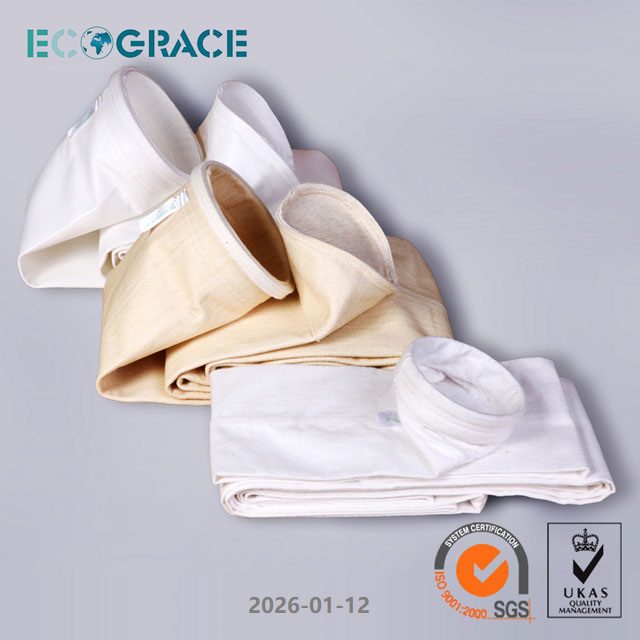
Power plant filter bags are the critical frontline components in baghouse dust collection systems that protect both the environment and downstream equipment from harmful fly ash, particulate matter, and acid gas emissions. Every megawatt of electricity generated from solid-fuel combustion produces tens of thousands of cubic meters of flue gas loaded with fine particulate — and the filter bag is the only barrier between that dust and the atmosphere.
ECOGRACE is a specialist power plant filter bag manufacturer with over 25 years of direct experience supplying baghouse filtration media to coal-fired power stations, biomass power plants, circulating fluidized bed combustion (CFBC) boilers, waste-to-energy (WtE) incineration facilities, and industrial boiler operations across more than 80 countries. We engineer application-specific filter bags matched precisely to each plant’s fuel type, flue gas temperature, chemical composition, and emission compliance requirements.
Whether you need to retrofit an aging ESP-to-baghouse conversion at a coal-fired station, replace failing filter bags in a biomass CHP plant, or commission a new pulse-jet baghouse for a municipal waste incinerator — ECOGRACE delivers the right fiber, the right construction, and the right surface treatment to maximize filtration efficiency, extend service life, and minimize your total cost of ownership.
Why Power Plants Require Specialized Filter Bags
Power generation flue gas is among the most challenging industrial filtration environments. Generic filter bags designed for ambient-temperature material handling will fail catastrophically within days when exposed to boiler exhaust. The unique combination of thermal, chemical, and mechanical stresses in power plant baghouses demands purpose-engineered filtration media.
High Operating Temperatures
Coal-fired boiler flue gas typically operates at 130 – 180 °C after air preheater. CFBC boilers reach 150 – 200 °C. Biomass combustion flue gas ranges from 140 – 220 °C depending on fuel moisture. Waste-to-energy plants operate at 180 – 260 °C. Filter bags must maintain structural integrity and filtration performance under sustained high-temperature exposure for 24+ months without embrittlement or shrinkage.
Acid Gas Corrosion (SO₂, HCl, HF)
Coal combustion produces SO₂ (500 – 3 000 ppm) and SO₃ that form sulfuric acid below the acid dew point (120 – 160 °C). Biomass with high chlorine content generates HCl. Waste incineration produces HCl, HF, and SO₂ simultaneously. Acid condensation on filter bags causes rapid chemical degradation — PPS and PTFE media with acid-resistant coatings are essential for long service life.
Abrasive Fly Ash Particles
Coal fly ash contains 40 – 60 % SiO₂ and 20 – 35 % Al₂O₃ — both highly abrasive minerals (Mohs 6 – 7). At typical face velocities of 0.8 – 1.2 m/min, these particles erode filter media at cage contact points, bag bottoms, and seam lines. Heavy-duty felt weights (550 – 600 g/m²) with singed and calendered surfaces are mandatory to resist abrasion wear.
Hydrolysis & Oxidation Attack
Flue gas moisture content of 8 – 15 % combined with temperatures above 150 °C creates hydrolysis conditions that degrade PPS, polyester, and acrylic fibers. Residual oxygen (3 – 8 %) at elevated temperatures causes oxidative degradation — particularly for PPS media above 170 °C. Proper fiber selection and blending (PPS/PTFE, fiberglass) is critical to prevent premature chemical failure.
Fine Particulate & PM2.5 Capture
Modern emission regulations require power plant stack emissions below 10 – 30 mg/Nm³, with ultra-low emission zones demanding ≤ 5 mg/Nm³. Achieving these limits requires capturing PM2.5 and sub-micron fly ash — conventional depth filtration alone cannot achieve this. PTFE membrane lamination provides surface filtration that captures ≥ 99.99 % of particles at 0.3 μm while maintaining low, stable pressure drop.
Dioxin & Heavy Metal Adsorption
Waste-to-energy and co-incineration plants must comply with strict dioxin/furan (PCDD/F ≤ 0.1 ng TEQ/Nm³) and heavy metal emission limits. Activated carbon injection upstream of the baghouse requires filter bags that capture carbon-adsorbed pollutants at ≥ 99.9 % efficiency. PTFE membrane filter bags with proper surface treatment prevent breakthrough of mercury, cadmium, lead, and dioxin-laden activated carbon particles.
Power Plant Filter Bags by Boiler Type
ECOGRACE provides application-specific power plant filter bags for every major boiler technology and fuel type. Each solution is engineered to address the unique flue gas conditions, dust chemistry, and regulatory requirements of that specific power generation process.
Power Plant Filter Bag Selection Guide — By Boiler Type & Fuel
Use the table below to quickly identify the recommended ECOGRACE power plant filter bag specification for your specific boiler type and fuel. This guide covers 20+ application scenarios across all major power generation technologies.
| Boiler Type | Fuel | Flue Gas Temp (°C) | Dust Loading | Key Challenge | Recommended Media | Surface Treatment | A/C Ratio (m/min) |
|---|---|---|---|---|---|---|---|
| Coal-Fired Power Plant | |||||||
| PC Boiler (Utility) | Bituminous Coal | 130 – 160 | 15 – 30 g/Nm³ | SO₂ acid dew point | PPS 550 g/m² | PTFE Membrane | 0.8 – 1.0 |
| PC Boiler (Utility) | High-Sulfur Coal | 140 – 170 | 20 – 40 g/Nm³ | Severe acid corrosion | PPS/PTFE blend 600 g/m² | PTFE Membrane + Acid Coat | 0.7 – 0.9 |
| PC Boiler (Utility) | Lignite / Sub-Bituminous | 140 – 180 | 30 – 60 g/Nm³ | High ash + moisture | PPS 550 g/m² | PTFE Membrane + Anti-Static | 0.7 – 0.9 |
| Stoker Boiler | Mixed Coal | 120 – 160 | 10 – 25 g/Nm³ | Larger ash particles | PPS 550 g/m² | Singe + Calendar | 0.9 – 1.1 |
| CFBC Power Plant | |||||||
| CFBC | Bituminous Coal | 140 – 180 | 20 – 40 g/Nm³ | Alkaline calcium ash | PPS 550 g/m² | PTFE Membrane | 0.8 – 1.0 |
| CFBC | Pet Coke Blend | 150 – 200 | 15 – 35 g/Nm³ | V, Ni metals + SO₂ | PPS/PTFE blend 600 g/m² | PTFE Membrane + Acid Coat | 0.7 – 0.9 |
| CFBC | Lignite + Limestone | 150 – 190 | 30 – 50 g/Nm³ | Very high dust + CaO | PPS 600 g/m² HD | PTFE Membrane + Anti-Cake | 0.6 – 0.8 |
| Biomass Power Plant | |||||||
| Grate / BFB | Wood Chip / Pellet | 140 – 170 | 3 – 10 g/Nm³ | Sticky KCl ash | PPS 550 g/m² | Anti-Stick Coat + PTFE Membrane | 0.9 – 1.1 |
| Grate / Stoker | Straw / Agri-Waste | 150 – 200 | 5 – 15 g/Nm³ | High Cl + K corrosion | PPS/PTFE blend 550 g/m² | PTFE Membrane + Acid Coat | 0.8 – 1.0 |
| Grate / CFB | Rice Husk | 180 – 220 | 10 – 25 g/Nm³ | High SiO₂ abrasion | Fiberglass 550 g/m² | PTFE Membrane | 0.7 – 0.9 |
| Grate | Palm EFB / PKS | 140 – 180 | 5 – 15 g/Nm³ | Sticky K-rich ash | PPS 550 g/m² | W&O Repellent + Anti-Stick | 0.9 – 1.1 |
| Waste-to-Energy | |||||||
| Grate Incinerator | MSW | 190 – 260 | 3 – 10 g/Nm³ | HCl + HF + Hg + Dioxin | PTFE Felt 800 g/m² | Acid-Resistant Finish | 0.6 – 0.8 |
| Fluidized Bed | RDF / SRF | 180 – 230 | 5 – 15 g/Nm³ | High Cl + heavy metals | P84/PTFE blend 650 g/m² | PTFE Membrane | 0.7 – 0.9 |
| Rotary Kiln | Hazardous Waste | 200 – 260 | 2 – 8 g/Nm³ | Extreme acid + toxics | PTFE Felt 800 g/m² | Full Acid-Resistant Coat | 0.6 – 0.8 |
| Industrial Boiler | |||||||
| Fire Tube / Water Tube | Coal (Industrial) | 120 – 160 | 10 – 20 g/Nm³ | Cost optimization | PPS 550 g/m² | Singe + Calendar | 0.9 – 1.2 |
| CHP / Cogeneration | Biomass | 140 – 190 | 3 – 10 g/Nm³ | Sticky ash + K/Cl | PPS 550 g/m² | Anti-Stick + PTFE Membrane | 0.9 – 1.1 |
| Thermal Oil Heater | Heavy Oil / Pet Coke | 160 – 200 | 5 – 15 g/Nm³ | V/Ni + SO₂ corrosion | PPS/PTFE blend 600 g/m² | PTFE Membrane + Acid Coat | 0.8 – 1.0 |
Filter Media Comparison for Power Plant Applications
Selecting the correct filter media is the single most important decision in power plant baghouse performance. The table below compares the six primary media types used across all power generation applications, with specific focus on the chemical and thermal challenges unique to boiler flue gas.
| Parameter | PPS (Ryton) | Fiberglass | PTFE Felt | P84 (Polyimide) | Nomex (Aramid) | Acrylic (Homopolymer) |
|---|---|---|---|---|---|---|
| Max Continuous Temp | 190 °C | 260 °C | 260 °C | 240 °C | 204 °C | 125 °C |
| Acid Resistance (SO₂, HCl) | Excellent | Fair | Excellent | Good | Good | Good |
| Hydrolysis Resistance | Good | Excellent | Excellent | Good | Poor | Poor |
| Oxidation Resistance | Poor (above 170 °C) | Good | Excellent | Good | Good | Good |
| Abrasion Resistance | Good | Poor | Fair | Fair | Excellent | Good |
| PM2.5 / Fine Ash Capture | Good (w/ membrane) | Good (w/ membrane) | Excellent (inherent) | Excellent (trilobal) | Good (w/ membrane) | Moderate |
| Alkali Resistance | Good | Poor | Excellent | Good | Excellent | Good |
| Cost Index (1 = lowest) | 4 | 2 | 7 | 6 | 3 | 1 |
| Best Power Plant Fit | Coal PC, CFBC, Biomass | WtE, High-Temp Boiler | WtE, Hazardous Waste | WtE, Mixed Fuel | Low-Sulfur Boiler | Low-Temp Industrial |
Global Emission Standards for Power Plant Particulate Control
Power plants worldwide face increasingly stringent particulate emission regulations. ECOGRACE power plant filter bags are engineered to meet or exceed all major international emission standards for thermal power generation.
| Standard / Regulation | Region | PM Limit (Power Plants) | Notes | ECOGRACE Solution |
|---|---|---|---|---|
| EU IED / BAT-AEL (LCP BREF) | Europe | 2 – 10 mg/Nm³ | Large Combustion Plant ≥ 50 MW | PTFE membrane — ≤ 5 mg/Nm³ |
| EU WID / BAT-AEL (WI BREF) | Europe | 1 – 5 mg/Nm³ | Waste Incineration Directive | PTFE felt / membrane — ≤ 3 mg/Nm³ |
| US EPA MATS (40 CFR 63 Subpart UUUUU) | USA | 0.030 lb/MMBtu (filterable PM) | Mercury + Air Toxics Standards | PPS/PTFE membrane — compliant |
| US EPA NSPS (40 CFR 60 Subpart D/Da) | USA | 0.015 – 0.030 lb/MMBtu | New Source Performance Standards | PTFE membrane — compliant |
| China GB 13223 (Thermal Power) | China | 20 – 30 mg/Nm³ | National standard | Standard PPS — compliant |
| China Ultra-Low Emission | China (key regions) | ≤ 5 mg/Nm³ | Coal-fired ≥ 65 t/h boilers | PTFE membrane — ≤ 5 mg/Nm³ |
| India CPCB (Thermal Power) | India | 30 – 100 mg/Nm³ | Based on plant capacity | Standard PPS or Nomex — compliant |
| World Bank / IFC EHS (Thermal Power) | Global (developing) | 30 – 50 mg/Nm³ | Project finance requirement | Standard or membrane — compliant |
Customer Case Studies — ECOGRACE Power Plant Filter Bags in Action
Power Plant Filter Bag Technical Specifications
| Parameter | Specification Range |
|---|---|
| Bag Diameters | Ø 120, 130, 150, 160, 180 mm (custom sizes available) |
| Bag Lengths | 2 000 – 10 000 mm (common: 5 000, 6 000, 7 000, 8 000 mm) |
| Filter Media | PPS, PPS/PTFE blend, Fiberglass, PTFE felt, P84, Nomex, Acrylic |
| Felt Weight | 500 – 800 g/m² (application dependent) |
| Temperature Rating | 120 – 260 °C continuous (surge to 280 °C) |
| Surface Treatments | PTFE membrane, singe, calendar, acid-resistant coating, anti-static, W&O repellent, anti-stick |
| Filtration Efficiency | ≥ 99.9 % at 0.3 μm (with PTFE membrane: ≥ 99.99 %) |
| Air Permeability | 80 – 200 L/m²/s at 200 Pa (media dependent) |
| Top Construction | Snap band (spring/wire), sewn flange, raw edge, loop (application specific) |
| Bottom Construction | Sewn closed (flat/round), sealed, wear pad reinforcement |
| Seam Construction | Triple-stitch with PTFE thread (WtE) or double-stitch with matched thread |
| Service Life | 24 – 48 months (application and media dependent) |
| Compatible Baghouse Brands | Donaldson, Camfil, GEA, FLSmidth, Balcke-Dürr, Hamon, B&W, Babcock, BHEL, all OEMs |
Why Power Generators Worldwide Choose ECOGRACE
25+
Years in Power Plant Filtration
Since 2000, ECOGRACE has specialized in filter bags for thermal power generation — from 10 MW industrial boilers to 1 000+ MW supercritical coal-fired stations.
800+
Power Plant Installations
Over 800 successful installations across coal-fired, biomass, WtE, CFBC, and industrial boiler power plants in 80+ countries. From Southeast Asia to South America, Europe to Africa.
Lab
In-House Testing Laboratory
Complete in-house laboratory for tensile strength, air permeability, acid resistance, hydrolysis resistance, and used-bag failure analysis. Free diagnostic service for power plant customers.
OEM
Compatible with All Brands
ECOGRACE manufactures exact-fit replacement power plant filter bags for all major baghouse dust collector brands — Donaldson, GEA, FLSmidth, Hamon, Babcock, BHEL, and hundreds of OEMs worldwide.
5 mg
Ultra-Low Emission Guarantee
ECOGRACE PTFE membrane power plant filter bags are guaranteed to achieve ≤ 5 mg/Nm³ steady-state stack emission — meeting the world’s strictest standards including EU BAT-AEL and China Ultra-Low Emission.
24/7
Technical Support
Dedicated power plant engineering team for media selection, remote diagnostics, on-site commissioning, and preventive maintenance planning. Emergency support available 24/7.
Recommended Filter Media for Power Plant Applications
PPS Filter Bags
Polyphenylene sulfide up to 190 °C — industry standard for coal-fired boilers
PTFE Filter Bags
260 °C continuous — ultimate chemical resistance for WtE and hazardous waste
High Temperature Filter Bags
Fiberglass, P84 & PTFE for 200 – 280 °C high-temperature boiler applications
Nomex Filter Bags
Meta-aramid up to 204 °C — excellent abrasion resistance for low-sulfur boilers
Dust Collector Filter Bags
Complete range of baghouse filter bags for all temperature ranges and industries
Baghouse Filter Bags
Pulse-jet & reverse-air baghouse replacement bags for all OEM brands
Industrial Filter Bags
Heavy-duty filter bags for mining, cement, steel, and power plant applications
Filter Bag Cages
Galvanized, stainless steel & organic silicon coated cages for power plant baghouses
Frequently Asked Questions — Power Plant Filter Bags
1. What type of filter bags are best for coal-fired power plants?
For coal-fired power plant baghouses, PPS (polyphenylene sulfide) needle felt with PTFE membrane lamination is the global industry standard. PPS provides excellent acid resistance against SO₂-derived sulfuric acid — the primary chemical threat in coal combustion flue gas. The PTFE membrane adds surface filtration for PM2.5 capture and ultra-low emission compliance. For high-sulfur coals with severe acid dew point conditions, ECOGRACE recommends PPS/PTFE fiber blend at 600 g/m² for maximum chemical durability. Typical service life with PPS + PTFE membrane is 24 – 36 months.
2. How long do power plant filter bags last?
Power plant filter bag service life depends on fuel type, operating temperature, chemical environment, and maintenance quality. Typical ranges: Coal-fired (PPS + membrane): 24 – 36 months. Biomass (PPS/PTFE blend): 18 – 30 months (shorter due to KCl/HCl corrosion). WtE (PTFE felt): 36 – 48 months. CFBC (PPS + membrane): 24 – 36 months. Key factors affecting life: temperature excursions above design limits, acid dew point condensation events, cleaning cycle optimization, and inlet dust loading. ECOGRACE offers free used-bag laboratory analysis to predict remaining service life.
3. What is the difference between PPS and PTFE filter bags for power plants?
PPS (Ryton) is the workhorse filter media for coal-fired and CFBC boilers: 190 °C continuous, excellent acid resistance, good cost-performance ratio. Its main weakness is poor oxidation resistance above 170 °C in high-oxygen environments. PTFE felt is the premium option: 260 °C continuous, superior resistance to all chemicals (acids, alkalis, oxidation, hydrolysis), but at 2 – 3x the cost. ECOGRACE recommends PTFE felt for waste-to-energy incinerators and hazardous waste applications where the chemical environment is extreme. For standard coal power plants, PPS with PTFE membrane provides the optimal balance of performance and cost.
4. Why is PTFE membrane important for power plant filter bags?
PTFE membrane lamination is critical for modern power plants for three reasons: (1) Ultra-low emission compliance — membrane enables ≤ 5 mg/Nm³ stack emission to meet EU BAT-AEL and China Ultra-Low standards. Without membrane, standard felt typically achieves only 20 – 40 mg/Nm³. (2) Lower operating ΔP — surface filtration keeps dust cake on the membrane surface for efficient pulse-jet release, maintaining ΔP at 800 – 1 200 Pa versus 1 500 – 2 500 Pa without membrane. (3) Extended bag life — preventing fine ash penetration into the felt matrix avoids irreversible depth blinding that shortens bag life by 30 – 50 %. The energy savings from lower ΔP alone often pay for the membrane cost premium within 6 – 12 months.
5. What causes premature filter bag failure in power plants?
The most common causes of premature power plant filter bag failure are: (1) Acid dew point condensation — flue gas temperature drops below 120 – 140 °C during startup/shutdown, condensing H₂SO₄ that attacks PPS fibers. Solution: maintain temperature above dew point, use PPS/PTFE blend. (2) Oxidation degradation — PPS bags operated above 170 °C with ≥ 6 % residual O₂ experience accelerated oxidation. Solution: PPS/PTFE blend or replace with fiberglass above 200 °C. (3) Hydrolysis — moisture + heat degrades certain fibers. Solution: avoid PET/acrylic above 130 °C in humid gas. (4) Abrasion wear — high-ash coal erodes bags at cage contact points. Solution: heavy-duty weight + wear pads. (5) Improper pulse cleaning — over-pressure damages bags and membrane. Solution: calibrate to ECOGRACE specifications.
6. Can ECOGRACE supply filter bags for any power plant baghouse brand?
Yes — ECOGRACE manufactures exact-fit replacement power plant filter bags for all major baghouse dust collector brands used in the power industry, including Donaldson/BHA, GEA, FLSmidth, Hamon, Balcke-Dürr, Babcock & Wilcox, BHEL, Thermax, Longking, CLYDE Bergemann, and hundreds of regional OEMs. We offer 100 % custom fabrication — provide bag dimensions, snap band type, and operating conditions, and we manufacture exact-fit replacement bags. Reverse engineering from sample bags is also available.
7. What are the best filter bags for biomass power plant boilers?
Biomass power plants face unique challenges compared to coal: sticky potassium/sodium-rich ash, high chlorine content producing HCl gas, and variable fuel moisture. ECOGRACE recommends: Wood chip/pellet: PPS 550 g/m² with anti-stick coating + PTFE membrane. Straw/agricultural waste: PPS/PTFE fiber blend for enhanced HCl resistance. Rice husk: Fiberglass + PTFE membrane for high silica + high temperature (180 – 220 °C). The anti-stick coating is critical for biomass — without it, sticky KCl-rich ash bonds permanently to the filter surface, causing ΔP escalation and premature bag failure.
8. What is the price range for power plant filter bags?
ECOGRACE power plant filter bags are priced based on media type, weight, surface treatment, dimensions, and quantity. Indicative ranges for Ø 160 × 6 000 mm bags: PPS standard (550 g/m²): $10 – $18/pc. PPS + PTFE membrane (550 g/m²): $14 – $24/pc. PPS/PTFE blend + membrane (600 g/m²): $18 – $30/pc. PTFE felt (800 g/m²): $28 – $55/pc. Fiberglass + PTFE membrane (550 g/m²): $10 – $20/pc. Despite higher upfront cost, PTFE membrane bags deliver 20 – 40 % lower total cost of ownership over 3 – 5 years due to extended life and energy savings. Request a detailed quotation for your specific requirements.
How do ECOGRACE filter bags perform in ESP-to-baghouse conversion projects?
ESP-to-baghouse conversion is one of the fastest-growing applications for ECOGRACE power plant filter bags. Many aging coal-fired stations with underperforming ESPs are converting to fabric filter baghouses to meet modern emission limits. ECOGRACE has supplied filter bags for 100+ ESP-to-baghouse conversions worldwide. Key considerations: (1) Existing ductwork often constrains baghouse sizing, requiring optimized A/C ratio design. (2) High dust loading from coal with 30+ % ash content demands robust PPS + PTFE membrane with heavy-duty construction. (3) Converting ESP to baghouse typically reduces stack emission from 50 – 150 mg/Nm³ to ≤ 10 mg/Nm³. ECOGRACE provides turnkey technical support including media selection, bag sizing, and on-site commissioning for conversion projects.
What filter bags are recommended for waste-to-energy dioxin control?
Waste-to-energy dioxin control requires a dual approach: (1) Activated carbon injection upstream of the baghouse to adsorb gas-phase PCDD/F dioxins and heavy metals (Hg, Cd). (2) High-efficiency filter bags to capture the activated carbon particles and any particulate-bound dioxins at ≥ 99.99 % efficiency. ECOGRACE recommends PTFE felt 800 g/m² with acid-resistant finish for WtE baghouses. PTFE felt provides: 260 °C continuous temperature rating, complete chemical resistance to HCl/HF/SO₂ acid gases, superior activated carbon capture preventing dioxin breakthrough during pulse cleaning, and typical dioxin emission of ≤ 0.02 ng TEQ/Nm³ — well below the 0.1 ng limit. For facilities with activated carbon injection temperature control in the 180 – 200 °C dioxin formation window, PTFE membrane on fiberglass substrate is a cost-effective alternative.
How does acid dew point affect power plant filter bag selection?
Acid dew point is the single most important parameter in coal-fired power plant filter bag selection. When flue gas temperature drops below the sulfuric acid dew point (typically 120 – 160 °C depending on SO₃ concentration and moisture), concentrated H₂SO₄ condenses on filter bag surfaces. This acid condensation causes: (1) Rapid chemical attack on non-acid-resistant fibers (polyester destroyed in weeks). (2) Sticky acid-ash paste that blinds the filter and resists pulse cleaning. (3) Corrosion of cages, tube sheets, and structural components. To manage acid dew point risk, ECOGRACE recommends: (1) PPS fiber as minimum requirement — PPS has excellent sulfuric acid resistance. (2) PPS/PTFE fiber blend for high-sulfur coals. (3) Acid-resistant coating on felt surface for additional protection. (4) Temperature monitoring and control to maintain flue gas above dew point at all times.
Does ECOGRACE provide on-site commissioning support for power plant baghouses?
Yes — ECOGRACE provides comprehensive on-site support for power plant baghouse projects: (1) Pre-installation audit — measure tube sheet holes, cage dimensions, inspect ductwork condition, review DCS operating data. (2) Installation supervision — ensure proper snap band seating, cage insertion, and venturi alignment. (3) Commissioning optimization — set pulse pressure (typically 3.5 – 5.0 bar for power plants), calibrate cleaning interval based on ΔP, establish baseline emission measurement. (4) Annual preventive maintenance audit — ΔP trending analysis, leak detection (fluorescent powder method), bag sampling for lab analysis, cage inspection. (5) Emergency support — rapid failure root-cause analysis and emergency bag replacement shipment. Contact our power plant team to discuss your project requirements.
Get Expert Filter Bag Solutions for Your Power Plant
Tell us your boiler type, fuel, flue gas temperature, and current emission requirements — our power plant engineering team will provide a detailed technical proposal and competitive quotation within 48 hours.
Email: [email protected] | Phone: +86 135 8806 5995