
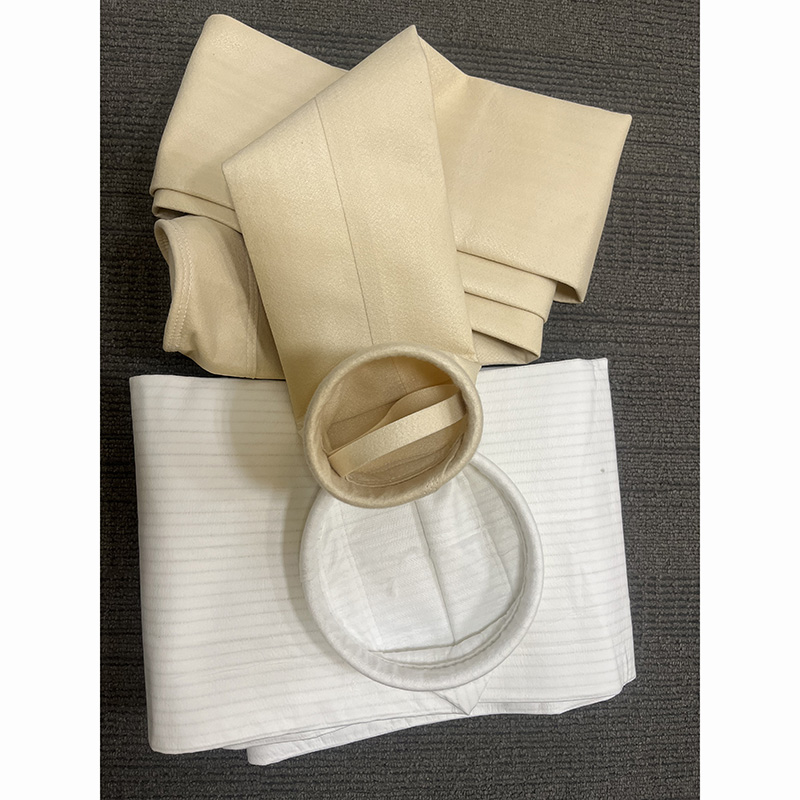
Dust Filter Bag – Industrial Baghouse Filtration Solutions for All Applications
Industrial dust collection systems require reliable, high-performance dust filter bags that deliver consistent emission control, extended service life, and optimized operational costs. ECOGRACE manufactures premium baghouse filter bags engineered for diverse applications including cement plants, steel mills, power generation, woodworking, chemical processing, and food production facilities worldwide.
With 25+ years of filtration expertise, we produce dust collector filter bags using advanced needle-felted materials including Nomex aramid, PTFE, PPS, P84 polyimide, fiberglass, and polyester. Our engineering team provides customized filtration solutions optimized for your specific dust characteristics, operating temperatures, chemical exposure, and regulatory compliance requirements.
Why Dust Filter Bag Selection Is Critical to System Performance
- Emission Control: Proper filter media selection ensures compliance with EPA, EU, and local air quality regulations
- Operational Costs: Optimized filter bags reduce energy consumption, maintenance labor, and unplanned downtime
- Service Life: Application-matched materials extend replacement intervals from months to years
- Process Protection: Prevents dust-related equipment damage, product contamination, and workplace health hazards
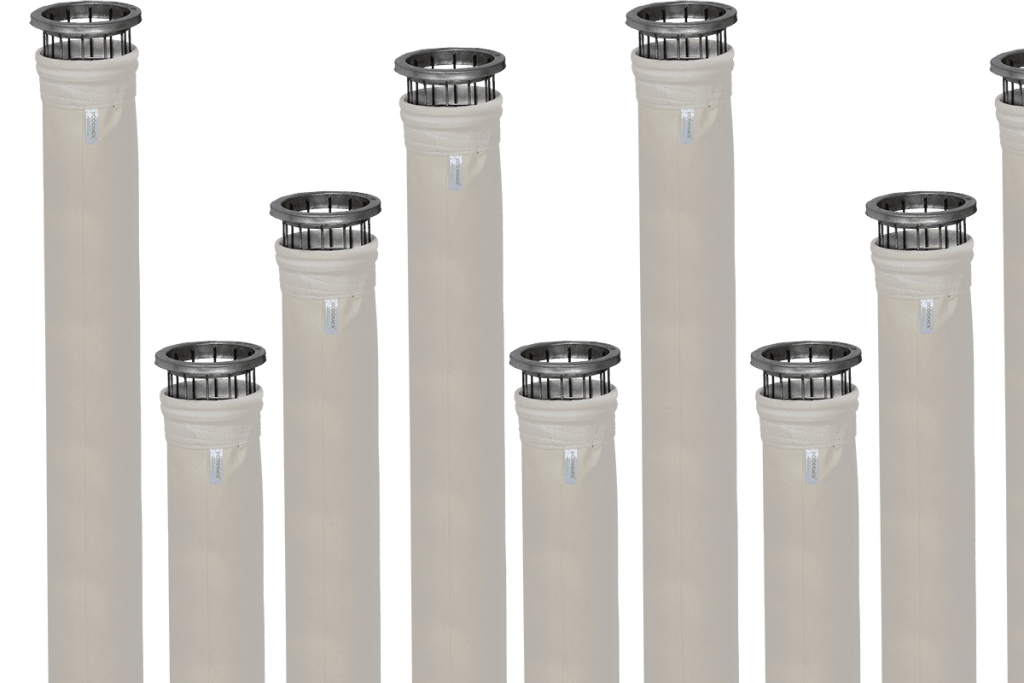
Dust Filter Bag Material Selection Guide
Selecting the right dust filter bag material is the single most important factor determining system performance, operating costs, and equipment longevity. Each filter media offers unique properties optimized for specific operating conditions. The table below provides a comprehensive comparison of all major industrial filter bag materials we manufacture.
| Filter Media | Max Temp (°C) | Acid Resistance | Alkali Resistance | Abrasion Resistance | Hydrolysis Resistance | Typical Applications |
|---|---|---|---|---|---|---|
| Nomex (Aramid) | 204 | Fair | Good | Excellent | Fair | Asphalt plants, cement kilns, metal smelting |
| PTFE (Teflon) | 260 | Excellent | Excellent | Fair | Excellent | Waste incineration, chemical plants, power stations |
| PPS (Ryton) | 190 | Excellent | Excellent | Good | Excellent | Coal-fired boilers, power generation, steel mills |
| P84 (Polyimide) | 260 | Good | Fair | Good | Good | Cement plants, carbon black, waste-to-energy |
| Fiberglass | 260 | Good | Fair | Poor | Good | Glass furnaces, aluminum smelting, ferroalloy |
| Polyester (PE) | 130 | Good | Fair | Good | Poor | Woodworking, grain, general manufacturing |
| Polypropylene (PP) | 90 | Excellent | Excellent | Good | Good | Pharmaceutical, food processing, electroplating |
| Acrylic (Homopolymer) | 125 | Good | Fair | Good | Good | Mining, mineral processing, coal handling |
All ECOGRACE dust filter bags are available with optional PTFE membrane lamination, anti-static treatment, oleophobic/hydrophobic coating, and singed/glazed surface finish to meet specific application requirements.
Dust Filter Bag Technical Specifications
Standard Dimensions & Configurations
- Diameter: 100mm, 120mm, 130mm, 150mm, 160mm (custom available)
- Length: 1000mm to 10000mm (standard 2000-6000mm)
- Fabric Weight: 450-750 g/m² depending on media
- Air Permeability: 80-250 L/dm²/min (adjustable per application)
- Top Closure: Snap band, spring ring, flange, cuff, raw edge
- Bottom Closure: Sewn bottom, round bottom cap, flat bottom
- Seam Construction: Three-needle double-row stitching with PTFE thread
Available Surface Treatments
- PTFE Membrane Lamination: Surface filtration for ultra-low emissions (<5 mg/Nm³)
- Singeing & Calendering: Smooth surface for improved cake release
- Anti-static Treatment: Conductive fibers for ATEX compliance (surface resistivity <10&sup9; Ω)
- Oleophobic/Hydrophobic: Water and oil repellent for high-moisture applications
- Acid-resistant Coating: Enhanced chemical protection for aggressive environments
Filtration Efficiency vs. Pressure Drop
Optimal dust filter bag performance balances high filtration efficiency with acceptable pressure drop. PTFE membrane provides 99.99% efficiency with lower pressure drop than standard felts due to surface filtration mechanism. Our engineering team uses computational modeling to predict performance and recommend optimal media selection.
Pulse Cleaning Optimization
Proper pulse jet cleaning parameters are critical to filter bag longevity. Key factors include pulse pressure (4-6 bar typical), pulse duration (100-150 milliseconds), interval timing, and venturi nozzle selection. Over-cleaning causes premature fabric abrasion; under-cleaning leads to filter blinding.
Air-to-Cloth Ratio Selection
Air-to-cloth ratio (filtration velocity) directly impacts dust filter bag service life and system performance. Typical ranges:
- Fine/sticky dust: 1.5-2.0 m/min (cement, flour)
- General industrial: 2.0-3.0 m/min (woodworking, metalworking)
- High-temperature: 2.5-3.5 m/min (boilers, kilns)
- Coarse/free-flowing: 3.0-4.0 m/min (grain, sand)
Lower ratios extend bag life but increase equipment size and capital cost.
Dust Filter Bags Engineered for Extreme Environments
Asphalt & Cement Plants
High-temperature aramid (Nomex) and P84 bags designed for continuous operation at 200-260°C in abrasive alkaline dust conditions. PTFE membrane option for emissions <10 mg/Nm³.
Power Generation
PPS and PTFE membrane dust filter bags for coal-fired boilers with superior acid resistance. SO&sub2;/SO&sub3; dew point protection and ultra-low emission compliance (<5 mg/Nm³).
Steel & Metallurgy
Reinforced fiberglass and P84 bags for EAF, BOF, and blast furnace applications. Handles extreme thermal shocks up to 280°C with fine metallic particulate capture.
Waste Incineration
PTFE felt and membrane bags for municipal and hazardous waste incinerators. Exceptional resistance to HCl, HF, and dioxin/furan adsorption with activated carbon injection compatibility.
Chemical Processing
Chemical-resistant PTFE and PPS dust filter bags for pharmaceutical, petrochemical, and specialty chemical operations. FDA-compliant materials available for food-contact applications.
Food & Pharmaceutical
Food-grade polyester and polypropylene filter bags meeting FDA 21 CFR standards. Anti-static treatment for combustible dust (flour, sugar, starch). GMP-compliant manufacturing.
Quality Control & Testing Standards
Manufacturing Quality Assurance:
- Raw material inspection (fiber composition, strength testing)
- In-process monitoring (fabric weight, thickness, permeability)
- Dimensional verification (diameter, length, seam integrity)
- Visual inspection (surface defects, stitching quality)
- Final testing (burst strength, leakage testing)
- Lot traceability and documentation
Performance Testing Capabilities:
- Filtration efficiency (ASHRAE 52.2, EN 779)
- Air permeability (ISO 9237, ASTM D737)
- Tensile strength (ISO 13934, ASTM D5034)
- Temperature resistance (continuous exposure testing)
- Chemical resistance (immersion testing)
- Abrasion resistance (Martindale method)
Dust Filter Bag Installation & Maintenance Guide
Proper Installation Procedures
Correct installation of dust filter bags is essential to achieving designed performance and preventing premature failure. Follow these critical steps:
- Pre-installation Inspection: Check each bag for shipping damage, correct dimensions, and proper closure type before installation
- Cage Inspection: Verify filter bag cages are straight, free of burrs, and properly sized. Damaged cages are the #1 cause of premature bag abrasion
- Bag Insertion: Carefully lower the bag over the cage, ensuring no bunching or folding. Align the snap band or cuff with the tube sheet opening
- Sealing Verification: Confirm each bag is fully seated and sealed against the tube sheet to prevent bypass leakage
- Compartment Testing: Perform fluorescent powder leak test after installation to identify any defective seals
Maintenance Best Practices
Extending the service life of your baghouse filter bags requires systematic monitoring and maintenance:
- Differential Pressure Monitoring: Track ΔP daily. Normal range 100-150 Pa (clean) to 1200-1500 Pa (trigger cleaning). Replace bags when ΔP exceeds 2x baseline despite cleaning
- Pulse Cleaning Audit: Verify pulse pressure (4-6 bar at valve), duration (100-150 ms), and valve operation monthly. Replace failed diaphragm valves immediately
- Leak Detection: Perform triboelectric or opacity monitoring continuously. Conduct visual smoke test quarterly
- Temperature Logging: Record inlet gas temperature continuously. Investigate any excursion above media rating. Install bypass damper for emergency protection
- Bag Rotation: During partial replacement, install new bags in high-wear positions (inlet rows, bottom sections) first
Engineering Services & Technical Support
Application Engineering:
- On-site process assessment and dust characterization
- Particle size distribution analysis (laser diffraction)
- Temperature profiling and chemical exposure evaluation
- Filter media selection and specification development
- CFD modeling for baghouse performance optimization
- Pilot testing programs with performance validation
Installation & Commissioning Support:
- Installation guidelines and training
- Pulse cleaning system optimization
- Leak detection and baghouse inspection
- Performance baseline establishment
- Maintenance protocol development
- Troubleshooting and root cause analysis
Proven Performance: Customer Success Stories
Asphalt Plant – UAE
Client experienced 4-month bag life with competitor’s product in a 240 TPH asphalt plant. ECOGRACE supplied Nomex aramid bags with PTFE membrane and anti-static treatment.
Result: Bag life extended to 18+ months. Emissions reduced from 45 mg/Nm³ to <8 mg/Nm³. Annual filter cost reduced by 65%.
Coal-Fired Power Plant – Vietnam
300 MW boiler required ultra-low emission compliance (<10 mg/Nm³) with high SO&sub2; flue gas. ECOGRACE engineered PPS/PTFE composite bags with acid-resistant finish.
Result: Achieved 4.2 mg/Nm³ stack emissions. 36-month service life. Zero unplanned shutdowns since installation.
Cement Plant – Turkey
Kiln baghouse with 4,200 filter bags experiencing frequent blinding due to moisture condensation. ECOGRACE recommended P84 bags with hydrophobic treatment and optimized pulse settings.
Result: Pressure drop reduced by 40%. Bag life improved from 12 months to 30+ months. Cleaning frequency reduced by 50%.
Certifications & Compliance
- ISO 9001:2015 Quality Management System
- ISO 14001:2015 Environmental Management
- ATEX 2014/34/EU Explosive Atmospheres (for anti-static bags)
- CE Marking for European Markets
- FDA 21 CFR 177.1520 (food-grade materials)
- NFPA 654/664 Combustible Dust Compliance
- EPA MACT Standards Support Documentation
- RoHS & REACH Material Compliance
- Third-Party Performance Testing Validation
- Material Safety Data Sheets (MSDS/SDS)
Why Choose ECOGRACE Dust Filter Bags?
25+ Years Manufacturing Experience
Quarter-century track record supplying dust filter bag solutions across 60+ countries. Deep expertise in challenging applications including high-temperature, corrosive, and explosive dust environments.
Advanced Manufacturing Facility
State-of-the-art production lines with automated needle-felting equipment, PTFE membrane lamination capability, and in-house testing laboratory. Annual capacity exceeds 5 million filter bags.
Custom Engineering Capability
No minimum order quantities for custom sizes. Rapid prototyping for retrofit applications. Engineering support included at no additional cost.
Competitive Total Cost of Ownership
Value-engineered baghouse filter bags optimize not just filter price but service life, energy consumption, maintenance requirements, and disposal costs for lowest lifecycle expenses.
Global Supply Chain & Logistics
Strategic inventory in North America, Europe, and Asia-Pacific. Standard lead times 3-4 weeks. Emergency expedited service available. Technical support in multiple languages.
Performance Guarantee Program
Documented service life guarantees backed by field performance data. If dust filter bags fail prematurely due to material defects or incorrect specification, full replacement at our cost.
Technical FAQ – Dust Filter Bags
Q: How do I determine the correct dust filter bag material for my application?
A: Key factors include maximum operating temperature, dust particle characteristics (size, abrasiveness, hygroscopic), chemical exposure (acids, alkalis, solvents), moisture content, and emission requirements. Provide these parameters and our engineers will recommend optimal media. Free application assessment available.
Q: What causes premature dust filter bag failure?
A: Common failure modes include: (1) Chemical attack from incorrect material selection, (2) Thermal degradation from temperature excursions, (3) Mechanical abrasion from excessive pulse cleaning, (4) Moisture-related caking and blinding, (5) Poor seam construction or cage abrasion. Root cause analysis services available to diagnose failures.
Q: Can I upgrade to PTFE membrane bags without modifying my existing baghouse?
A: Yes, in most cases. PTFE membrane bags are drop-in replacements that install using existing cages and mounting hardware. Benefits include 50-70% lower pressure drop, 99.99% efficiency, and 2-3x longer service life. Pulse cleaning pressure may need optimization (typically reduced to 4-5 bar). Consult our engineers for compatibility verification.
Q: How often should dust filter bags be replaced?
A: Replacement interval depends on application severity, operating conditions, and maintenance practices. General guidelines: Polyester 24-36 months, Aramid 30-48 months, PPS/P84 36-60 months, PTFE 48-72+ months. Monitor differential pressure trending—replacement typically needed when pressure drop exceeds 2x initial clean value despite cleaning.
Q: Do you provide filter bags for explosive dust environments?
A: Yes. Anti-static dust filter bags include conductive fibers (carbon, stainless steel) achieving surface resistivity <10&sup9; Ω per ATEX requirements. Combined with proper grounding, explosion venting, and ignition source control, these bags safely handle combustible dusts including flour, sugar, wood, metal powders, and plastics. ATEX certification documentation provided.
Q: What is the difference between needle felt and woven filter bags?
A: Needle-felted bags (our standard) use nonwoven fabric construction with randomly oriented fibers creating tortuous particle paths. Provides depth filtration, higher dust holding capacity, and better cake release compared to woven fabrics. Woven bags use interlaced yarns, typically for liquid filtration or specialized high-temperature applications. For dust collection, needle felt is superior in 95% of applications.
Q: Can you manufacture custom dust filter bag sizes for retrofit applications?
A: Absolutely. No minimum order quantity for custom dimensions. Provide current bag diameter, length, top/bottom closure type, and quantity needed. Standard lead time 3-4 weeks for custom sizes. Rush production available. Reverse-engineering service offered if original specifications are unavailable.
Q: How do I reduce dust filter bag operating costs?
A: Optimization strategies: (1) Select appropriate media—over-specifying wastes money, under-specifying causes premature failure, (2) Optimize pulse cleaning—over-cleaning causes abrasion, under-cleaning causes blinding, (3) Maintain proper air-to-cloth ratio—overloading shortens life, (4) Consider PTFE membrane upgrade—higher initial cost but 50-70% lower lifecycle cost, (5) Implement condition monitoring—replace based on performance not arbitrary schedules. Our engineering team provides cost optimization analysis.
Expert Technical Q&A
Q: What is the maximum operating temperature for these filter bags?
Depending on the material, our dust filter bags can handle continuous temperatures up to 260°C (500°F) for PTFE and Fiberglass, 204°C for Nomex (Aramid), and 190°C for PPS media. Short-term surge temperatures 20-30°C above continuous rating are tolerable.
Q: Are your dust filter bags compatible with all baghouse brands?
Yes, we manufacture custom-sized filter bags that are precision-engineered to be 100% compatible with all major global baghouse brands including Donaldson, Camfil, BWF, Hamon, GEA, and pulse-jet systems from any manufacturer.
Q: What treatments do you offer for high-moisture environments?
We offer specialized Oleophobic and Hydrophobic treatments, ePTFE membrane lamination, and water-repellent DWR coatings to prevent blinding and cake adhesion in high-moisture, condensation-prone conditions.
Q: What is your minimum order quantity for dust filter bags?
We have no minimum order quantity for standard sizes and materials. For custom specifications, MOQ starts at just 50 pieces. We stock common sizes for immediate shipment and can expedite custom orders in 2-3 weeks.