
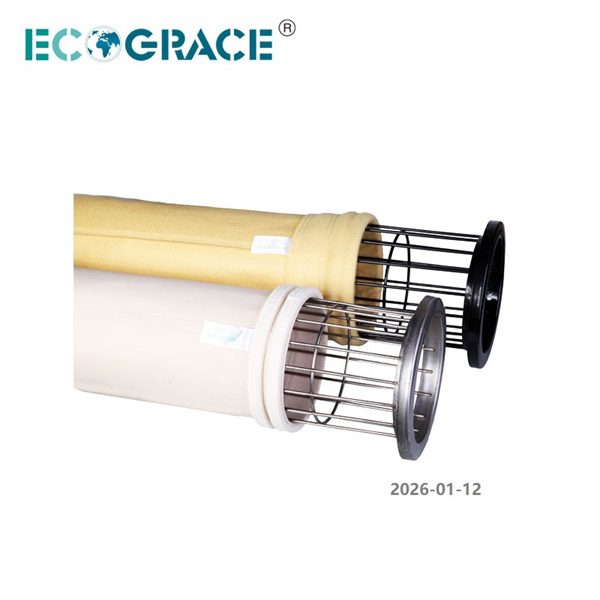
Aramid Filter Bags – Nomex® Needle Felt for Superior Heat & Abrasion Resistance
Aramid filter bags are the industry-standard solution for medium-to-high temperature dust collection where exceptional abrasion resistance and dimensional stability are critical. Manufactured from meta-aramid (Nomex®) needle-punched felt, these bags deliver reliable filtration at continuous operating temperatures up to 204°C (400°F) while providing the best cost-performance ratio among all high-temperature filter media.
ECOGRACE is a leading manufacturer and exporter of premium aramid filter bags serving cement plants, asphalt mixing stations, steel mills, power generation facilities, and waste-to-energy plants across 60+ countries. Our Nomex® filter bags are produced using 100% meta-aramid staple fiber with advanced needle-punching technology, optional PTFE membrane lamination, and rigorous heat-setting treatment to ensure maximum dimensional stability and service life in demanding industrial environments.
Why Aramid (Nomex®) Filter Bags Are the Preferred Choice for High-Temperature Filtration
- Excellent Heat Resistance: 204°C continuous / 220°C surge operating temperature — ideal for cement, asphalt, and steel applications
- Superior Abrasion Resistance: Meta-aramid fiber provides 3–5x better abrasion resistance than PPS, fiberglass, or P84 — critical for high-dust-load environments
- Inherent Flame Resistance: Aramid fiber is self-extinguishing with LOI >28% — will not melt, drip, or support combustion
- Outstanding Dimensional Stability: Heat-set Nomex fabric resists shrinkage <1% at operating temperature — maintains consistent airflow and sealing
- Best Cost-Performance Ratio: 30–50% lower cost than PTFE or P84 while delivering 36–48 month service life in most applications
- Chemical Compatibility: Good resistance to most organic solvents, alkalis, and dilute acids encountered in dry industrial processes
Aramid (Nomex®) Filter Bag Technical Specifications
Understanding the technical specifications of aramid filter bags is essential for proper media selection and baghouse system design. The table below provides the complete specification profile for ECOGRACE Nomex® needle felt filter bags:
| Property | Specification |
|---|---|
| Fiber Composition | 100% Meta-Aramid (Nomex®) staple fiber |
| Fabric Construction | Needle-punched nonwoven felt on woven scrim |
| Fabric Weight | 500 g/m² (standard) / 550 g/m² (heavy duty) |
| Thickness | 1.6–1.8 mm |
| Air Permeability | 12–15 m³/m²·min @ 200 Pa |
| Tensile Strength (Warp) | >800 N/5cm |
| Tensile Strength (Weft) | >1100 N/5cm |
| Continuous Operating Temp | 204°C (400°F) |
| Surge Temperature | 220°C (428°F) |
| Limiting Oxygen Index (LOI) | ≥28% |
| Acid Resistance | Good (weak acids) / Fair (strong mineral acids) |
| Alkali Resistance | Excellent |
| Hydrolysis Resistance | Excellent — unaffected by moisture at operating temperature |
| Surface Treatment Options | Singed & Calendered / PTFE Membrane Lamination / Anti-static / Water & Oil Repellent |
All ECOGRACE aramid filter bags undergo strict quality control including weight uniformity testing, air permeability verification, tensile strength validation, and thermal shrinkage testing at 250°C × 30 minutes (<1% shrinkage requirement). Optional PTFE membrane lamination is available for applications requiring <10 mg/Nm³ emission compliance from the first filtration cycle.
Understanding Aramid Fiber: What Makes Nomex® the Industry Standard
Aramid fibers are a class of synthetic aromatic polyamide fibers known for their exceptional strength-to-weight ratio, heat resistance, and dimensional stability. In the filtration industry, meta-aramid (commercially known as Nomex® by DuPont, or Conex® by Teijin) is the most widely used aramid fiber for baghouse filter bags. Understanding the fundamental properties of aramid fiber helps engineers make informed media selection decisions.
Meta-Aramid vs. Para-Aramid
Aramid fibers exist in two primary forms. Meta-aramid (Nomex®) is specifically engineered for thermal and electrical insulation applications. It provides excellent heat resistance without melting, outstanding dimensional stability, and good chemical resistance — making it the ideal fiber for aramid filter bags used in hot gas filtration. Para-aramid (Kevlar®) offers extreme tensile strength but is not commonly used in filter bag applications due to its UV degradation sensitivity and higher cost.
Key Molecular Properties
The aromatic ring structure in meta-aramid polymer chains provides inherent thermal stability that is fundamentally different from standard synthetic fibers like polyester or acrylic. While polyester begins deforming at 130°C, aramid maintains full structural integrity at 204°C and does not reach glass transition until approximately 275°C. This molecular architecture delivers:
- No Melting Point: Aramid decomposes rather than melts at ~370°C — eliminates risk of bag collapse from temperature excursions
- Self-Extinguishing: LOI of 28%+ means aramid will not sustain combustion in normal atmospheres
- Excellent Abrasion Resistance: Aramid’s toughness exceeds PPS, PTFE, and fiberglass by 3–5x in Taber abrasion testing
- Low Thermal Shrinkage: <1% at 200°C after heat-setting — maintains bag dimensions and seal integrity over years
- Hydrolysis Immunity: Unlike PPS, aramid is completely unaffected by hydrolytic conditions, making it suitable for wet gas applications
Aramid Needle Felt Construction
ECOGRACE aramid filter bags are manufactured through a multi-step process that maximizes filtration performance and service life:
- Fiber Opening & Blending: 100% meta-aramid staple fibers (typically 2.2 dtex, 51mm cut length) are opened and uniformly blended
- Carding & Cross-Lapping: Fibers are carded into a web and cross-lapped onto a woven aramid scrim substrate for reinforcement
- Needle Punching: High-density needle punching (350–500 punches/cm²) interlocks fibers into a dense, uniform felt structure
- Heat Setting: The felt is thermally set at 230–250°C to pre-shrink the fabric, ensuring dimensional stability at operating temperatures
- Surface Treatment: Singeing removes surface fibers for improved cake release; calendering provides a smooth surface; optional PTFE membrane is laminated for ultra-low emissions
- Bag Fabrication: Computer-controlled cutting and sewing with aramid thread, stainless steel snap rings or spring bands installed per baghouse specifications
This controlled manufacturing process results in aramid filter bags with consistent weight distribution (±5%), uniform air permeability, and predictable performance across the entire bag population — minimizing pressure drop variation and maximizing system efficiency.
Aramid vs. Other Filter Media: Comprehensive Comparison
Selecting the right filter media is one of the most critical decisions in dust collector system design. The table below compares aramid filter bags against all major alternative media across key performance parameters:
| Parameter | Aramid (Nomex®) | PPS (Ryton®) | PTFE | P84® | Fiberglass | Polyester | Acrylic |
|---|---|---|---|---|---|---|---|
| Continuous Temp (°C) | 204 | 190 | 260 | 240 | 260 | 130 | 125 |
| Surge Temp (°C) | 220 | 210 | 280 | 260 | 280 | 150 | 140 |
| Abrasion Resistance | Excellent ★★★★★ | Good ★★★☆☆ | Good ★★★☆☆ | Fair ★★☆☆☆ | Poor ★☆☆☆☆ | Excellent ★★★★★ | Good ★★★☆☆ |
| Acid Resistance | Good | Excellent | Excellent | Good | Good | Good | Fair |
| Alkali Resistance | Excellent | Good | Excellent | Fair | Fair | Fair | Excellent |
| Hydrolysis Resistance | Excellent | Poor | Excellent | Poor | Good | Good | Good |
| Oxidation Resistance | Good | Fair | Excellent | Good | Good | Fair | Fair |
| Flex Fatigue Resistance | Excellent ★★★★★ | Good ★★★☆☆ | Good ★★★☆☆ | Fair ★★☆☆☆ | Poor ★☆☆☆☆ | Excellent ★★★★★ | Good ★★★☆☆ |
| Typical Service Life | 36–48 months | 36–48 months | 48–72 months | 36–48 months | 24–36 months | 24–36 months | 18–30 months |
| Relative Cost | $$ | $$$ | $$$$$ | $$$$ | $$ | $ | $ |
Key Takeaway: Aramid filter bags offer the best balance of heat resistance, mechanical durability, and cost-effectiveness for applications between 150–204°C. Their superior abrasion resistance and flex fatigue performance make them the clear choice for high-dust-load environments like cement mills, asphalt dryers, and metal processing where bag physical wear is the primary failure mode. For applications above 204°C or with aggressive chemical conditions, consider PTFE filter bags or P84/PPS high-temperature filter bags.
When to Choose Aramid Filter Bags: Application Decision Guide
While aramid filter bags are among the most versatile high-temperature filter media, they are not the right choice for every application. The decision matrix below helps engineers quickly determine whether aramid/Nomex® is the optimal media for their specific operating conditions:
| Operating Condition | Aramid Suitability | Recommendation |
|---|---|---|
| Temperature 150–204°C, low SO₂ / acid gases | ✔ Ideal Choice | Standard Nomex® needle felt — best cost-performance option |
| High dust load + abrasive particles | ✔ Ideal Choice | Heavy-duty 550 g/m² Nomex® — unmatched abrasion resistance at high temp |
| High moisture + 150–200°C | ✔ Ideal Choice | Nomex® with water/oil repellent treatment — immune to hydrolysis unlike PPS |
| Emissions <10 mg/Nm³ required | ✔ Good Choice | Nomex® + PTFE membrane lamination — achieves <5 mg/Nm³ |
| Temperature >210°C continuous | ✘ Not Suitable | Use PPS (190–220°C), P84 (up to 240°C), or PTFE (up to 260°C) |
| High SO₂ / strong mineral acids present | ✘ Not Suitable | Use PPS or PTFE for superior acid resistance |
| Aggressive oxidizing environment at high temp | ⚠ Limited | Nomex® tolerates moderate oxidation; for severe conditions use PTFE |
| Temperature <130°C, no chemical issues | ⚠ Over-specified | Standard polyester filter bags provide equal performance at lower cost |
Aramid Filter Bag Surface Treatment & Finishing Options
The base performance of aramid filter bags can be significantly enhanced through specialized surface treatments. ECOGRACE offers a complete range of finishing options that can be combined to address specific application challenges:
PTFE Membrane Lamination
A microporous PTFE membrane (0.2–2.0 μm pore size) is laminated to the felt surface, creating a surface filtration mechanism. Dust collects on the membrane rather than penetrating the felt depth, resulting in: lower pressure drop, easier pulse cleaning, <5 mg/Nm³ emissions from the first cycle, and extended bag life. Recommended for all new installations where emission compliance is critical.
Singed & Calendered (Standard)
The felt surface is flame-singed to remove protruding fibers, then calendered (hot-pressed) to create a smooth, glazed surface. This improves dust cake release during pulse cleaning, reduces residual pressure drop, and provides a baseline level of surface filtration. Standard treatment for most general industrial applications.
Water & Oil Repellent (W+O)
A fluorocarbon-based repellent treatment is applied to the fiber surface, preventing moisture absorption and oil wetting. Essential for applications with hygroscopic dust (e.g., calcium-based sorbents), condensation risk during startup/shutdown, or oily/sticky dust particles. Maintains filter permeability under humid conditions.
Anti-Static Treatment
Conductive fibers (stainless steel or carbon fiber) are blended into the aramid felt at 2–5% by weight, or conductive threads are woven into the scrim. This provides surface resistivity <10&sup9; Ω, preventing electrostatic discharge that could ignite combustible dust. Mandatory for grain handling, coal processing, pharmaceutical, and other ATEX/NFPA-classified environments.
Acid-Resistant Coating
For applications with moderate acid gas exposure (SO₂ <800 ppm), an acid-resistant coating can be applied to the aramid surface, extending chemical resistance without upgrading to more expensive PPS or PTFE media. This treatment is commonly used in coal-fired boiler applications where occasional acid dew point excursions occur.
Easy-Clean (Glazed) Finish
An enhanced calendering process creates an ultra-smooth, almost glass-like surface that maximizes dust cake release efficiency. Particularly effective for sticky, cohesive dusts encountered in carbon black production, pharmaceutical processing, and food industry applications. Reduces pulse cleaning frequency by 20–30%.
Aramid Filter Bag Applications by Industry
Aramid filter bags are deployed across a wide range of heavy industries where medium-to-high operating temperatures, abrasive dust, and demanding filtration requirements are the norm. Below are the primary industries and specific process applications where Nomex® filter bags deliver proven performance:
Asphalt Mixing Plants
Asphalt batch mix and drum mix plants are one of the largest application areas for aramid filter bags. The dryer drum exhaust at 160–200°C contains highly abrasive aggregate dust, making Nomex®’s superior abrasion resistance essential for acceptable bag life.
- Dryer drum baghouse filtration
- Hot aggregate dust collection
- RAP (Recycled Asphalt Pavement) processing
- Blue smoke emission control
- Typical bag life: 36–48 months
Cement Manufacturing
Cement plants generate enormous volumes of abrasive alkite dust at temperatures between 150–200°C. Aramid filter bags with PTFE membrane are the preferred choice for cement plant baghouse applications due to their combination of heat and abrasion resistance.
- Kiln exhaust gas filtration
- Raw mill / finish mill dedusting
- Clinker cooler dust collection
- Coal mill baghouse (anti-static required)
- Typical bag life: 36–48 months
Steel & Metal Processing
Metal processing facilities produce metallic fumes and abrasive dust at 150–200°C. Nomex® filter bags provide excellent performance for electric arc furnace (EAF) secondary dedusting, ladle furnace, and foundry applications where temperatures are moderate.
- EAF secondary fume collection
- Ladle furnace dedusting
- Foundry sand handling & shakeout
- Ferroalloy production
- Typical bag life: 30–42 months
Power Generation
Power plant baghouse systems treating coal-fired or biomass boiler flue gas at 150–200°C frequently utilize aramid filter bags. The excellent hydrolysis resistance of Nomex® makes it particularly suitable for biomass-fired boilers with high moisture content.
- Coal-fired boiler particulate control (low-sulfur coal)
- Biomass & wood-fired boiler filtration
- CFB boiler fly ash collection
- Ash handling system dedusting
- Typical bag life: 30–40 months
Carbon Black Production
Carbon black manufacturing is one of the most demanding applications for filter bags. The sub-micron carbon particles at 180–200°C require PTFE membrane-laminated aramid filter bags to achieve acceptable collection efficiency and emission compliance.
- Main product collection baghouse
- Tail gas treatment filtration
- Pelletizer & dryer dedusting
- PTFE membrane + easy-clean finish essential
- Typical bag life: 24–36 months
Waste-to-Energy & Incineration
In waste incineration facilities where flue gas temperatures are controlled to 160–200°C via spray cooling towers, Nomex® bags offer a cost-effective alternative to PTFE when acid gas concentrations are managed through dry sorbent injection (DSI).
- Municipal solid waste (MSW) incineration
- Medical waste incineration (with acid gas treatment)
- Refuse-derived fuel (RDF) combustion
- DSI system compatibility (lime / sodium bicarbonate)
- Typical bag life: 24–36 months
Chemical & Pharmaceutical
Chemical processing and pharmaceutical manufacturing involve diverse dust types at varying temperatures. Aramid filter bags with anti-static treatment are specified for combustible powder handling, while PTFE membrane versions ensure product purity in pharmaceutical applications.
- Spray dryer exhaust filtration
- Fluid bed processor dust collection
- Pigment & dye powder recovery
- Catalyst production dedusting
- Typical bag life: 30–42 months
Food & Grain Processing
Grain elevators, flour mills, and food dryers require filter bags with inherent flame resistance and anti-static properties due to the explosive nature of organic dust. Anti-static aramid filter bags meet ATEX Zone 20/21/22 requirements for food industry dust collection.
- Grain elevator & silo dedusting
- Flour & starch mill filtration
- Feed mill dust collection
- Food dryer exhaust (150–180°C)
- Anti-static treatment mandatory
Aramid Filter Bag Failure Modes & Prevention Strategies
Understanding the potential failure mechanisms of aramid filter bags is crucial for maximizing service life and avoiding unplanned baghouse shutdowns. Below is a comprehensive analysis of the most common failure modes, their root causes, and proven prevention strategies:
| Failure Mode | Root Cause | Symptoms | Prevention Strategy | Risk Level |
|---|---|---|---|---|
| Thermal Degradation | Sustained exposure above 220°C or frequent temperature excursions above surge limit | Fabric becomes brittle, brown discoloration, tensile strength loss >50% | Install high-temp alarms, bypass damper systems; maintain bag inlet <204°C | High |
| Abrasive Wear | Direct dust impingement on bag bottom or near inlet; poor gas distribution | Holes near bag bottom, thinning of fabric at impact zones | Install inlet baffles or deflector plates; use heavy-duty 550 g/m² felt; check gas velocity | Medium |
| Chemical Attack (Acid) | High SO₂/SO₃ concentration combined with moisture — forms sulfuric acid below dew point | Fiber weakening, powdery residue, premature failure in lower bag sections | Maintain gas temp above acid dew point; use PPS or PTFE for high-sulfur fuels; inject dry sorbent | High |
| Bag Blinding (Clogging) | Insufficient pulse cleaning pressure, hygroscopic dust absorption, oil/moisture contamination | Rising differential pressure, reduced airflow, increased fan energy consumption | Optimize pulse parameters; apply W+O treatment; install pre-heater for startup; add PTFE membrane | Medium |
| Bag-to-Cage Wear | Rough cage wire surface, missing cage caps, cage diameter too large for bag | Vertical or horizontal wear lines matching cage wire pattern | Use smooth-welded or galvanized/epoxy-coated cages; verify bag-cage sizing tolerance (<10mm clearance) | Medium |
| Spark/Ember Damage | Hot particles from combustion process entering baghouse without adequate spark arrestor | Burn holes (typically 5–15mm round), charred edges | Install spark arrestor/dropout box; use PTFE membrane (acts as thermal barrier); monitor inlet temperature | Medium |
Maintenance Tip: Implement a preventive bag inspection program with differential pressure monitoring, opacity monitoring, and scheduled visual inspections every 6–12 months. Early detection of wear patterns allows targeted bag replacement rather than full-set replacement, reducing lifetime filtration costs by 20–30%. Contact ECOGRACE for a free bag failure analysis — we can diagnose the root cause and recommend corrective actions.
Customer Case Studies: Aramid Filter Bags in Action
Real-world performance data from ECOGRACE aramid filter bag installations across different industries and geographies demonstrates the reliability and value of our Nomex® filter media solutions:
Case Study 1: Asphalt Mixing Plant — Indonesia
Challenge: The client’s previous polyester filter bags were failing after only 8–10 months due to the dryer drum exhaust temperature reaching 185°C during peak production. Frequent bag replacements were causing production downtime and increasing operating costs.
Solution: ECOGRACE supplied 550 g/m² heavy-duty Nomex® needle felt bags with singed & calendered surface treatment. The heavier weight was specified to handle the highly abrasive aggregate dust at elevated temperatures.
Result: Bags have been operating for 42 months with no failures. Stack emissions consistently below 20 mg/Nm³. Differential pressure stabilized at 1.2–1.5 kPa. Client estimated 60% reduction in annual filtration cost compared to previous polyester bags.
Case Study 2: Cement Plant Kiln Baghouse — Ethiopia
Challenge: The cement plant was experiencing rapid filter bag failure (12–18 months) with their existing fiberglass bags due to mechanical flex fatigue from the pulse-jet cleaning system. The high clinker dust concentration and alkaline conditions further accelerated wear.
Solution: ECOGRACE recommended 500 g/m² Nomex® needle felt with PTFE membrane lamination. The aramid’s superior flex fatigue resistance addressed the mechanical failure issue, while the PTFE membrane provided surface filtration for improved dust cake release and lower emissions.
Result: Bags achieved 48 months of service life — a 3x improvement over the previous fiberglass bags. Stack emissions reduced from 35 mg/Nm³ to <10 mg/Nm³. Pulse cleaning frequency reduced by 40%, saving compressed air energy. The plant is now on its second set of ECOGRACE aramid bags.
Case Study 3: Carbon Black Plant — Thailand
Challenge: Carbon black is one of the most difficult dusts to filter due to its sub-micron particle size and tendency to penetrate deep into filter media. The previous supplier’s Nomex bags without membrane treatment were experiencing rapid blinding within 6–8 months, requiring frequent bag washing or replacement.
Solution: ECOGRACE supplied 500 g/m² Nomex® needle felt with PTFE membrane lamination and easy-clean glazed finish. The PTFE membrane prevents sub-micron particle penetration, while the glazed finish maximizes surface cake release efficiency during pulse cleaning.
Result: Bags have been operating for 30 months with stable differential pressure at 1.4–1.6 kPa. No blinding issues experienced. Particulate emissions consistently <15 mg/Nm³. Collection efficiency maintained at 99.95%+. The client has placed repeat orders for their additional production lines.
Aramid Filter Bag Installation & Maintenance Best Practices
Proper installation and maintenance are as important as media selection in determining the performance and service life of your aramid filter bags. Following these guidelines will help you achieve maximum value from your Nomex® bag investment:
Installation Checklist
- Pre-Installation Inspection: Verify each bag for correct dimensions, stitching integrity, snap ring fit, and absence of fabric defects before installation. Reject any bags with visible damage or dimensional non-conformance.
- Cage Inspection: Check all filter cages for smooth welds, correct vertical alignment, proper cap installation, and absence of rust or burrs. Replace any damaged cages — rough surfaces will wear through aramid fabric prematurely.
- Tube Sheet Sealing: Ensure snap ring or spring band provides a complete seal against the tube sheet opening. Air leaks at the seal point bypass filtration and cause localized erosion of the bag top.
- Bag Insertion: Insert bag carefully by folding and sliding into position — never force. Once the bag is seated, snap ring should engage with an audible click. Verify the bag hangs straight without twisting.
- Cage Insertion: Lower the cage slowly and straight. Ensure the cage bottom contacts the bag bottom without bunching. The cage should slide freely without resistance — excessive friction indicates dimensional mismatch.
- Compressed Air System: Verify pulse tank pressure (4–6 bar typical), blow tube alignment (centered over venturi), and solenoid valve operation before system startup.
Ongoing Maintenance Protocol
- Temperature Monitoring (Continuous): Install temperature transmitters at baghouse inlet and outlet. Set high-temperature alarm at 200°C, emergency bypass at 210°C. Log all temperature excursion events for bag life tracking.
- Differential Pressure Monitoring (Continuous): Normal operating range: 1.0–1.8 kPa. Investigate if dP exceeds 2.0 kPa — may indicate bag blinding, insufficient pulse cleaning, or excessive dust load.
- Pulse Cleaning Optimization: Start with on-demand (dP-triggered) cleaning at 1.5 kPa on / 1.0 kPa off. Adjust pulse duration (100–200ms) and interval (5–15 seconds between pulses) based on dP recovery response.
- Visual Inspection (Every 6 Months): Open inspection doors and visually check accessible bags for wear patterns, dust leakage on the clean side, snap ring seal condition, and cage alignment.
- Leak Detection (Every 12 Months): Perform UV powder or fluorescent dye leak testing to identify individual failed bags. Replace failed bags promptly to prevent downstream equipment contamination.
- Bag Sample Testing (Annual): Remove 2–3 sample bags from different compartments for laboratory analysis of tensile strength, air permeability, and fiber condition. This provides early warning of impending bulk failure.
Important: Never operate the baghouse above 210°C for extended periods. While aramid can survive brief surges to 220°C, sustained high-temperature exposure causes irreversible thermal degradation that reduces bag life exponentially. Install an automatic bypass damper system as standard practice.
Aramid vs. PPS Filter Bags: A Detailed Head-to-Head Comparison
One of the most common media selection decisions in the 180–210°C temperature range is the choice between aramid (Nomex®) filter bags and PPS (Ryton®) filter bags. Both media operate in similar temperature ranges, but their performance characteristics differ significantly in key areas:
| Comparison Factor | Aramid (Nomex®) | PPS (Ryton®) |
|---|---|---|
| Continuous Temperature | 204°C ✔ | 190°C |
| Abrasion Resistance | Excellent ✔ | Good |
| Flex Fatigue Resistance | Excellent ✔ | Good |
| Acid Resistance (Strong Acids) | Fair | Excellent ✔ |
| Hydrolysis Resistance | Excellent ✔ | Poor ✘ |
| Oxidation Resistance (>12% O₂) | Good | Poor ✘ |
| Flame Resistance | Excellent (LOI 28%) ✔ | Good (LOI 34%) |
| Cost (per bag) | Lower ($$) ✔ | Higher ($$$) |
| Best For | Cement, asphalt, steel, high-dust-load applications with low acid gas | Coal-fired boilers, waste incineration with high acid gas (SO₂ >1000 ppm) |
Bottom Line: Choose aramid filter bags when your primary challenges are abrasion, flex fatigue, moisture, or when operating in alkaline conditions (cement, asphalt, foundry). Choose PPS when strong mineral acid resistance is the primary requirement (high-sulfur coal, waste incineration). For applications requiring both heat >210°C AND acid resistance, consider P84 or PTFE high-temperature filter bags.
Custom Aramid Filter Bag Dimensions & Configurations
ECOGRACE manufactures aramid filter bags in any size and configuration to match your existing baghouse system. We provide exact replacement bags for all major baghouse manufacturers and OEMs worldwide:
Standard Diameter Options
- Φ120mm (4.72″) — Compact pulse-jet collectors
- Φ130mm (5.12″) — Standard industrial systems
- Φ150mm (5.91″) — Medium-capacity collectors
- Φ160mm (6.30″) — Large industrial baghouses
- Φ200mm (7.87″) — High-capacity systems
- Φ300mm (11.81″) — Reverse-air collectors
- Custom diameters available upon request
Standard Length Options
- 1000mm to 10,000mm (standard range)
- Most common: 2000mm, 2500mm, 3000mm, 4000mm, 6000mm, 8000mm
- Custom lengths manufactured to ±5mm tolerance
Top Configuration Options
- Stainless steel snap ring (galvanized or SS304)
- Spring band (raw edge or bound)
- Snap band (spring-loaded)
- Sewn-in flange ring
- Open top with hook suspension (for reverse-air systems)
- Grommet top (for shaker systems)
Bottom Configuration Options
- Sewn-in bottom cap (standard for pulse-jet)
- Open bottom with clamp band (reverse-air)
- Envelope/flat bag design
- Cone-bottom design (cartridge-style)
Lead Time: Standard sizes ship within 15–20 working days. Custom OEM specifications require 20–30 working days. Contact ECOGRACE for a detailed quotation including bag dimensions, media specification, surface treatment, and FOB pricing.
Frequently Asked Questions About Aramid Filter Bags
What is the difference between aramid and Nomex® filter bags?
Aramid is the generic fiber classification for aromatic polyamide fibers. Nomex® is DuPont’s brand name for their meta-aramid fiber, which is the most widely recognized product in this category. Other meta-aramid brands include Conex® (Teijin) and domestically produced equivalents. When people refer to “aramid filter bags” or “Nomex filter bags,” they are referring to the same type of filter media — needle-punched nonwoven felt made from meta-aramid staple fibers. ECOGRACE uses premium-grade meta-aramid fiber regardless of brand origin, ensuring consistent quality and performance.
What temperature can aramid filter bags withstand?
Aramid filter bags are rated for continuous operation at 204°C (400°F) and can withstand short-term temperature surges up to 220°C (428°F). The key distinction is between continuous and surge ratings — continuous temperature is the maximum temperature the bag can sustain indefinitely, while surge temperature should be limited to brief excursions (minutes, not hours). Sustained operation above the rated temperature causes irreversible thermal degradation, reducing tensile strength and accelerating fiber embrittlement. Always install high-temperature protection systems (alarms, bypass dampers) to prevent thermal damage.
How long do aramid filter bags last?
The service life of aramid filter bags depends on multiple factors including operating temperature, dust type and concentration, chemical environment, and cleaning system parameters. Typical service life ranges are: asphalt plants (36–48 months), cement plants (36–48 months with PTFE membrane), steel/foundry (30–42 months), power plants (30–40 months), and carbon black (24–36 months with PTFE membrane). Proper installation, regular maintenance, and temperature control can extend bag life significantly beyond these ranges.
Are aramid filter bags resistant to moisture and hydrolysis?
Yes, this is one of the most significant advantages of aramid filter bags over PPS alternatives. Meta-aramid fiber is completely immune to hydrolytic degradation — it maintains full strength and performance even in high-moisture, high-temperature conditions. PPS (Ryton®), by contrast, is susceptible to hydrolysis when exposed to temperatures above 150°C in the presence of moisture. For applications like biomass boilers, food processing dryers, and spray cooling tower outlets where moisture content is high, aramid is the technically superior choice.
Can aramid filter bags be used for acid gas applications?
Aramid filter bags have good resistance to weak acids and dilute mineral acids, but they are not recommended for environments with high concentrations of strong mineral acids (H₂SO₄, HCl, HNO₃) — especially at elevated temperatures. For applications with SO₂ concentrations above 800 ppm or where acid dew point conditions are expected, PPS or PTFE filter bags provide superior acid resistance. However, for dry alkaline processes (cement, lime, soda ash) where the gas stream is alkaline, aramid is an excellent choice due to its outstanding alkali resistance.
Should I add PTFE membrane to my aramid filter bags?
PTFE membrane lamination is recommended for applications requiring: (1) ultra-low emissions (<10 mg/Nm³), (2) fine or sub-micron particle collection, (3) sticky or cohesive dust handling, or (4) extended bag life. The membrane creates surface filtration, preventing dust from penetrating the felt depth. This results in lower stable pressure drop, easier pulse cleaning, and consistent performance from the first filtration cycle. For standard applications with coarse, non-sticky dust where emission limits are above 30 mg/Nm³, singed & calendered surface treatment without membrane may be sufficient and more cost-effective.
What is the correct air-to-cloth ratio for aramid filter bags?
The air-to-cloth (A/C) ratio for aramid filter bags in pulse-jet systems typically ranges from 0.8–1.5 m/min depending on the application. General guidelines: cement kiln (0.8–1.0), cement mill (1.0–1.2), asphalt plant (1.0–1.2), steel EAF secondary (1.0–1.3), carbon black (0.6–0.8), general industrial (1.2–1.5). Lower A/C ratios extend bag life and reduce emissions but require more filtration area. Higher ratios reduce capital cost but increase pressure drop and may shorten bag life.
How do I order replacement aramid filter bags from ECOGRACE?
To request a quotation for replacement aramid filter bags, provide: (1) bag dimensions (diameter × length), (2) quantity required, (3) top configuration (snap ring, spring band, etc.), (4) bottom configuration (sewn cap, open, etc.), (5) surface treatment requirements, (6) application details (industry, dust type, operating temperature). Email these details to our sales team or use the inquiry form on this page. ECOGRACE can manufacture exact replacement bags for any baghouse brand including Donaldson, BWF, Alstom, FLSmidth, REDECAM, and others. Sample bags can be sent for dimensional verification before bulk production.
Related Filter Bag Products & Resources
Explore our complete range of industrial filter bags and specialized solutions for every filtration challenge:
PTFE Filter Bags →
100% Teflon needle felt for extreme chemical & temperature environments (up to 260°C)
High Temperature Filter Bags →
Complete guide to PPS, P84, PTFE, and fiberglass media for 190–260°C applications
Dust Collector Filter Bags →
Complete range of filter bags for pulse-jet, reverse-air, and shaker dust collectors
Baghouse Filter Bags →
Comprehensive guide to baghouse filter bag selection, sizing, and maintenance
Dust Filter Bags →
General-purpose dust filter bags for all industrial applications and media types
Filter Bag Cages →
Galvanized, SS304, and epoxy-coated cages for pulse-jet baghouse systems
Need Aramid Filter Bags for Your Baghouse System?
ECOGRACE provides premium Nomex® filter bags with free technical consultation, custom sizing, and worldwide delivery. Contact us for a competitive quotation with bag samples.