
|
ISO 9001 & ISO 14001 Certified
|
80 + Countries Served
|
≤ 10 mg/Nm³ With PTFE Membrane
PPS Filter Bags
Polyphenylene Sulfide (Ryton®) Needle Felt Filter Bags for Coal-Fired Power Plants, Chemical Processing, Waste Incineration & High-Temperature Acid-Resistant Dust Collection — Manufactured by ECOGRACE
PPS filter bags (polyphenylene sulfide, trade name Ryton®) are the global industry-standard filtration media for baghouse dust collection in environments where acid gas corrosion, moderate-to-high temperatures, and hydrolysis conditions coexist — making them indispensable in coal-fired power plants, chemical processing, waste incineration, and industrial boiler operations worldwide.
ECOGRACE is a specialist PPS filter bag manufacturer with over 25 years of experience engineering and supplying PPS needle felt filter bags to power stations, chemical plants, cement works, steel mills, and waste-to-energy facilities across more than 80 countries. Every ECOGRACE PPS filter bag is manufactured from premium Toray or Toyobo PPS staple fiber, processed through our own needle-punching, heat-setting, and surface treatment lines to deliver consistent quality, verified performance, and maximum service life.
Whether you need standard PPS felt for a coal-fired boiler baghouse, PPS/PTFE fiber blend for extreme acid conditions, or PPS with PTFE membrane lamination for ultra-low emission compliance — ECOGRACE provides the exact specification, construction, and surface treatment to match your operating environment and regulatory requirements.
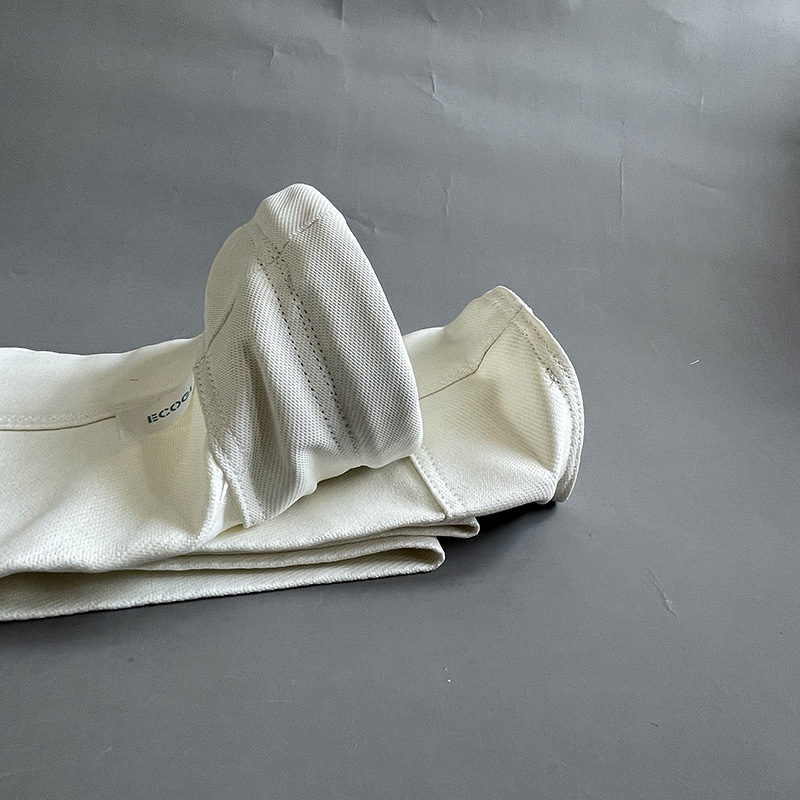
What Are PPS Filter Bags? — Complete Material Overview
PPS (polyphenylene sulfide) is a semi-crystalline, high-performance engineering thermoplastic with an inherently flame-resistant molecular structure. When converted into staple fiber and needle-punched into nonwoven felt, PPS delivers an exceptional combination of thermal stability, chemical resistance, and mechanical durability that has made it the dominant filter media choice for coal-fired power generation and acid gas-rich industrial applications since the 1990s.
Key Properties of PPS Filter Fiber
Thermal Performance
Continuous operating temperature: 190 °C. Surge tolerance: 220 °C (short-term). Melting point: 285 °C. PPS maintains > 85 % tensile strength retention after 12 months at 190 °C. Heat shrinkage ≤ 1 % at 200 °C (dry). This thermal envelope covers the vast majority of coal-fired boiler, CFBC, and chemical process flue gas temperatures.
Acid Resistance
Excellent resistance to sulfuric acid (H₂SO₄), hydrochloric acid (HCl), and most mineral acids at concentrations found in flue gas. PPS is the primary media choice for high-sulfur coal combustion where SO₂ concentrations reach 500 – 3 000 ppm and acid dew point condensation is a constant threat. Acid resistance rating: pH 1 – 2 at operating temperature.
Hydrolysis Resistance
PPS provides good hydrolysis resistance under typical power plant conditions (8 – 12 % moisture, 130 – 170 °C). However, combined high moisture (> 12 %) + high temperature (> 170 °C) + acid gas can accelerate hydrolytic degradation over time. For severe hydrolysis environments, ECOGRACE recommends PPS/PTFE fiber blend for enhanced protection.
Oxidation Limitation
PPS has a known weakness: oxidation above 170 °C in oxygen-rich environments (O₂ > 6 %). Oxidative attack causes fiber embrittlement and tensile strength loss. This is the primary failure mode for PPS bags in CFBC boilers and kilns with high excess air. Solutions: limit O₂ exposure, use PPS/PTFE blend, or switch to fiberglass above 200 °C.
Flame Resistance
Limiting Oxygen Index (LOI): 34 % — inherently flame-resistant without chemical treatment. PPS will not sustain combustion in normal atmospheric oxygen concentrations (21 %). This makes PPS suitable for environments with occasional spark exposure, though not as resistant as fiberglass (LOI 100 %) or PTFE (LOI 95 %).
Mechanical Strength
PPS needle felt provides good abrasion resistance and flex fatigue life — superior to fiberglass (which is brittle) and comparable to Nomex. Typical tensile strength: warp > 800 N/5cm, weft > 1 000 N/5cm at 550 g/m². Elongation at break: 30 – 50 %. These mechanical properties ensure reliable pulse-jet cleaning performance over 24 – 36 month service life.
ECOGRACE PPS Filter Bag Product Range
ECOGRACE manufactures a complete range of PPS filter bags covering every application scenario from standard coal-fired boiler dust collection to extreme chemical processing environments. All products are available in custom dimensions with application-specific surface treatments.
PPS Filter Bag Technical Specifications
| Parameter | Standard PPS | PPS + PTFE Membrane | PPS/PTFE Blend |
|---|---|---|---|
| Fiber Material | 100 % PPS | 100 % PPS + ePTFE film | PPS/PTFE 80/20 or 70/30 |
| Felt Weight | 500 / 550 / 600 g/m² | 550 g/m² + membrane | 550 / 600 g/m² |
| Thickness | 1.6 – 1.9 mm | 1.7 – 2.0 mm | 1.6 – 2.0 mm |
| Tensile Strength (Warp/Weft) | > 800 / > 1 000 N/5cm | > 800 / > 1 000 N/5cm | > 900 / > 1 100 N/5cm |
| Elongation at Break | 30 – 50 % | 30 – 50 % | 30 – 45 % |
| Air Permeability (@ 200 Pa) | 120 – 180 L/m²/s | 80 – 120 L/m²/s | 100 – 160 L/m²/s |
| Max Continuous Temp | 190 °C | 190 °C | 200 °C |
| Surge Temperature | 220 °C | 220 °C | 230 °C |
| Acid Resistance | Excellent | Excellent | Excellent + |
| Oxidation Resistance | Fair (above 170 °C) | Fair (above 170 °C) | Good (PTFE fiber) |
| Filtration Efficiency | ≥ 99.5 % @ 0.3 μm | ≥ 99.99 % @ 0.3 μm | ≥ 99.9 % @ 0.3 μm |
| Stack Emission Achievable | 20 – 30 mg/Nm³ | ≤ 5 mg/Nm³ | ≤ 10 mg/Nm³ |
| LOI (Flame Resistance) | 34 % | 34 % | 38 – 65 % (blend ratio) |
| Bag Diameters | Ø 120, 130, 150, 160, 180 mm (custom available) | ||
| Bag Lengths | 2 000 – 10 000 mm (common: 5 000, 6 000, 7 000, 8 000 mm) | ||
| Top/Bottom Construction | Snap band (spring/wire), sewn flange, raw edge / sewn closed, wear pad | ||
| Service Life | 24 – 36 months | 24 – 36 months | 30 – 48 months |
PPS Filter Bag Application Guide — By Industry
Use the table below to identify the recommended ECOGRACE PPS filter bag specification for your specific industry and process conditions.
| Industry | Application | Temp (°C) | Key Challenge | Recommended PPS Product | Bag Life |
|---|---|---|---|---|---|
| Power Generation | |||||
| Coal Power Plant | PC Boiler Baghouse | 130 – 170 | SO₂ acid dew point | PPS 550 g/m² + PTFE Membrane | 24 – 36 mo |
| Coal (High-Sulfur) | PC / Stoker Boiler | 140 – 180 | Severe acid + hydrolysis | PPS/PTFE Blend 600 g/m² + Membrane | 30 – 42 mo |
| CFBC Power Plant | Circulating Fluidized Bed | 140 – 190 | Alkaline ash + oxidation | PPS 550 g/m² + PTFE Membrane | 24 – 36 mo |
| Biomass Power | Wood / Straw / Palm Boiler | 140 – 190 | Sticky K/Cl ash + HCl | PPS 550 g/m² + Anti-Stick + W&O | 18 – 30 mo |
| Waste-to-Energy | MSW / RDF (lower temp zone) | 150 – 190 | HCl + dioxin + heavy metals | PPS/PTFE Blend + Membrane + Acid Coat | 24 – 36 mo |
| Chemical & Industrial | |||||
| Chemical Processing | Acid gas scrubber tail gas | 130 – 180 | H₂SO₄ + HCl mist | PPS/PTFE Blend + Acid Coat | 24 – 36 mo |
| Carbon Black | Reactor tail gas filtration | 140 – 180 | Fine carbon + combustible | PPS Anti-Static + PTFE Membrane | 24 – 36 mo |
| Cement / Lime | Kiln tail / clinker cooler | 150 – 190 | Alkaline + abrasive | PPS 600 g/m² HD + Calendar | 18 – 30 mo |
| Asphalt Plant | Drum dryer / mixer exhaust | 130 – 170 | Sticky bitumen + SO₂ | PPS 550 g/m² + W&O + Membrane | 24 – 36 mo |
| Sinter / Pellet Plant | Windbox / cooler off-gas | 120 – 180 | SO₂ + dioxin range temp | PPS 550 g/m² + PTFE Membrane | 24 – 36 mo |
| Non-Ferrous Smelter | Zn / Pb refinery off-gas | 150 – 190 | SO₂ + heavy metals | PPS/PTFE Blend + Membrane | 24 – 36 mo |
PPS Filter Bags vs. Alternative Filter Media — Comparison
How do PPS filter bags compare against other filter media options? This comparison helps you understand when PPS is the optimal choice and when alternative media may be more appropriate.
| Parameter | PPS (Ryton) | PTFE Felt | Fiberglass | Nomex (Aramid) | P84 (Polyimide) |
|---|---|---|---|---|---|
| Max Continuous Temp | 190 °C | 260 °C | 260 °C | 204 °C | 240 °C |
| Acid Resistance | Excellent | Excellent | Fair | Good | Good |
| Oxidation Resistance | Poor (>170°C) | Excellent | Good | Good | Good |
| Abrasion Resistance | Good | Fair | Poor | Excellent | Fair |
| Hydrolysis Resistance | Good | Excellent | Excellent | Poor | Good |
| Cost (1 = lowest) | 4 (best value) | 7 | 2 | 3 | 6 |
| Best Application | Coal boiler, CFBC, chemical | WtE, hazardous waste | EAF, high-temp boiler | Foundry, low-sulfur | WtE, mixed fuel |
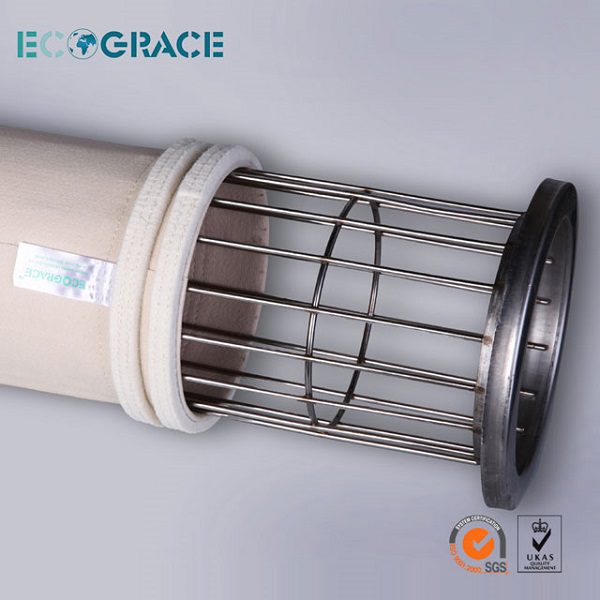
Customer Case Studies — ECOGRACE PPS Filter Bags in Action
Why Choose ECOGRACE PPS Filter Bags
Toray
Premium PPS Fiber Only
ECOGRACE uses exclusively Toray and Toyobo PPS staple fiber — the world’s leading PPS fiber producers. No recycled or off-grade fiber. Every batch with full mill certificate and fiber diameter verification.
100%
In-House Manufacturing
Complete vertical integration: fiber opening → carding → cross-lapping → needle punching → heat setting → surface treatment → membrane lamination → bag sewing. Full quality control at every stage.
QC
Every Bag Tested
Every production lot undergoes tensile strength, air permeability, felt weight, and dimensional verification. PTFE membrane bags receive additional membrane adhesion peel testing. Full test reports included with shipment.
800+
Power Plant Installations
Over 800 successful PPS filter bag installations across coal-fired, CFBC, biomass, and WtE power plants in 80+ countries. Proven track record from 10 MW industrial boilers to 1 000 MW supercritical stations.
OEM
All Brands Compatible
Exact-fit replacement PPS filter bags for Donaldson, GEA, FLSmidth, Hamon, Babcock, BHEL, Longking, and all OEM baghouse dust collectors. Reverse engineering from sample bags available.
Lab
Free Used-Bag Analysis
Send us your used PPS bags — our laboratory will perform tensile testing, acid resistance analysis, microscopic examination, and failure root-cause identification. Free for all ECOGRACE customers.
Related Filter Bag Products
PTFE Filter Bags
260 °C, ultimate chemical resistance for WtE and extreme acid environments
Nomex Filter Bags
204 °C, best abrasion resistance for foundry, asphalt, and metallurgy
High Temperature Filter Bags
Fiberglass, P84, PTFE for 200 – 280 °C applications
Power Plant Filter Bags
Complete solutions for coal, biomass, CFBC, and WtE power generation
Dust Collector Filter Bags
Full range of baghouse filter bags for all industries and temperatures
Filter Bag Cages
Galvanized, stainless steel, and organic silicon coated cages
Coal Fired Boiler Filter Bags
Application-specific solutions for coal-fired power generation
Industrial Dust Collectors
Complete baghouse systems for industrial dust collection
Frequently Asked Questions — PPS Filter Bags
1. What does PPS stand for in filter bags?
PPS stands for polyphenylene sulfide, a semi-crystalline high-performance engineering thermoplastic. In the filtration industry, PPS is also widely known by its trade name Ryton® (originally by Chevron Phillips, now Solvay). PPS fiber is produced by melt-spinning PPS resin into staple fiber, which is then needle-punched into nonwoven felt for use as baghouse filter media. The polymer’s inherent sulfur-containing molecular structure gives it exceptional acid resistance, making PPS filter bags the preferred choice for SO₂-rich flue gas environments like coal-fired power plants.
2. What temperature can PPS filter bags withstand?
PPS filter bags have a maximum continuous operating temperature of 190 °C and can tolerate short-term temperature surges up to 220 °C. The melting point of PPS is 285 °C. PPS maintains > 85 % of its original tensile strength after 12 months of continuous operation at 190 °C. This thermal range covers the vast majority of coal-fired boiler (130 – 170 °C), CFBC (140 – 190 °C), and biomass boiler (140 – 190 °C) flue gas temperatures. For applications above 190 °C, ECOGRACE recommends upgrading to fiberglass, P84, or PTFE filter bags.
3. Why do coal-fired power plants use PPS filter bags?
Coal combustion produces flue gas with high SO₂ concentrations (500 – 3 000 ppm) that form sulfuric acid below the acid dew point. PPS is one of the few filter media with excellent resistance to sulfuric acid at the temperatures found in coal boiler baghouses (130 – 170 °C). Combined with good mechanical properties, inherent flame resistance (LOI 34 %), and reasonable cost, PPS delivers the optimal balance of performance and economics for coal power applications. ECOGRACE PPS filter bags with PTFE membrane are the industry-standard solution for coal-fired power plant baghouse filtration worldwide.
4. What is the difference between PPS and PPS/PTFE blend filter bags?
Standard PPS (100 % PPS fiber) provides excellent acid resistance but has limited oxidation resistance above 170 °C. PPS/PTFE fiber blend (typically 70 – 80 % PPS + 20 – 30 % PTFE staple fiber) adds PTFE’s superior oxidation resistance, raising the effective oxidation threshold from 170 °C to above 200 °C. The blend also enhances hydrolysis resistance and acid resistance. ECOGRACE recommends PPS/PTFE blend for: (1) CFBC boilers with high excess air (O₂ > 6 %), (2) high-sulfur coal with severe acid conditions, (3) chemical processing with mixed acid gas, and (4) any application where extended bag life justifies the 30 – 50 % price premium over standard PPS.
5. How long do PPS filter bags last in power plants?
ECOGRACE PPS filter bags typically achieve 24 – 36 months in coal-fired power plants with proper operating conditions. Key factors: (1) Temperature control: maintaining flue gas above acid dew point and below 190 °C. (2) Oxygen level: limiting O₂ below 6 % at temperatures above 170 °C. (3) Pulse cleaning: proper pressure (3.5 – 5.0 bar) and interval. (4) Media choice: PPS/PTFE blend extends life 20 – 40 % in challenging conditions. ECOGRACE offers free used-bag laboratory analysis to determine remaining service life and optimize replacement timing.
6. What emission levels can PPS filter bags achieve?
Standard PPS (singed + calendered): 20 – 30 mg/Nm³. PPS + PTFE membrane: ≤ 5 mg/Nm³ steady state, ≤ 10 mg/Nm³ during pulse cleaning. These levels comply with EU IED/BAT-AEL for Large Combustion Plants (2 – 10 mg/Nm³), US EPA MATS, China Ultra-Low Emission (≤ 5 mg/Nm³), and all other major international standards. For ultra-low emission compliance, ECOGRACE PTFE membrane lamination is essential — standard singed/calendered PPS cannot achieve ≤ 10 mg/Nm³ reliably.
7. What causes PPS filter bag oxidation failure?
PPS oxidation occurs when the combination of temperature (> 170 °C) + oxygen concentration (> 6 %) + time exceeds the fiber’s chemical stability threshold. Oxidative attack causes cross-linking of PPS polymer chains, leading to fiber embrittlement, tensile strength loss, color darkening (brown to black), and eventual bag failure. CFBC boilers are particularly prone because of higher operating temperatures (170 – 190 °C) with excess air. Prevention: (1) Monitor O₂ and temperature simultaneously. (2) Use PPS/PTFE fiber blend for environments with O₂ > 6 % at > 170 °C. (3) Limit air infiltration into baghouse. (4) Consider fiberglass if temperature consistently exceeds 200 °C.
8. What is the price range for PPS filter bags?
ECOGRACE PPS filter bag pricing for standard Ø 160 × 6 000 mm size: Standard PPS 550 g/m²: $10 – $18/pc. PPS + PTFE membrane: $14 – $24/pc. PPS/PTFE blend + membrane: $18 – $30/pc. PPS anti-static: $12 – $22/pc. Pricing depends on felt weight, surface treatment, quantity, and customization. Despite higher initial cost, PTFE membrane PPS bags deliver 20 – 40 % lower total cost of ownership over 3 – 5 years through extended life, lower ΔP (energy savings), and reduced maintenance. Request a detailed quotation for your requirements.
Can PPS filter bags be used in waste-to-energy plants?
PPS filter bags can be used in waste-to-energy (WtE) applications only if the flue gas temperature is consistently below 190 °C after the semi-dry scrubber or spray dryer. Many modern WtE plants with efficient flue gas cooling achieve 160 – 185 °C at the baghouse inlet, making PPS a viable option. However, PPS has limited resistance to HCl at high concentrations compared to PTFE felt. For WtE applications, ECOGRACE recommends PPS/PTFE fiber blend with PTFE membrane and acid-resistant coating for maximum chemical protection. For WtE plants operating above 200 °C, PTFE felt or fiberglass is the better choice.
How do I know if my PPS filter bags need replacing?
Key indicators: (1) Rising baseline ΔP — if operating ΔP increases > 30 % despite pulse cleaning, bags are likely blinded. (2) Emission spikes — triboelectric or opacity monitor shows increasing breakthrough. (3) Visual inspection — bags showing color change (brown/black = oxidation), holes, cracks at fold lines, or worn cage contact points. (4) Lab analysis — tensile strength below 60 % of original, air permeability drop > 50 %. ECOGRACE recommends sampling 3 – 5 bags for lab analysis at 18 – 24 months to assess remaining life and plan replacement proactively.
What is the difference between PTFE membrane and PTFE coating on PPS bags?
PTFE membrane (ePTFE film lamination) is a microporous expanded PTFE film (pore size 0.2 – 2.0 μm) bonded to the gas-side surface of the PPS felt. It provides true surface filtration — dust collects on the membrane surface and is released cleanly by pulse-jet. Result: ≤ 5 mg/Nm³ emission. PTFE coating (dispersion coating) is a liquid PTFE dispersion applied to the felt surface for chemical protection — it fills the surface fiber interstices to resist acid condensation but does not provide surface filtration. Result: improved acid life but emission remains 15 – 25 mg/Nm³. For ultra-low emission compliance, PTFE membrane is required. For pure acid protection without emission targets, PTFE coating is a lower-cost option.
Does ECOGRACE provide technical support for PPS filter bag selection?
Yes — ECOGRACE provides comprehensive technical support: (1) Media selection consultation — analyze your flue gas composition, temperature, O₂ level, and emission target to recommend the optimal PPS product. (2) Used-bag laboratory analysis — free diagnostic testing of your current bags. (3) On-site assessment — baghouse audit, cage inspection, ΔP analysis. (4) Commissioning support — pulse cleaning optimization, emission verification. (5) Preventive maintenance program — scheduled bag sampling and lab testing to maximize service life and prevent unplanned failures. Contact our engineering team for a consultation.
Get the Right PPS Filter Bags for Your Application
Tell us your flue gas temperature, SO₂ concentration, O₂ level, and emission target — our engineering team will recommend the optimal PPS specification and provide a competitive quotation within 48 hours.
Email: [email protected] | Phone: +86 135 8806 5995