
Waste Incineration Filter Bags – Advanced Filtration for WTE Plants & Waste Recycling Facilities
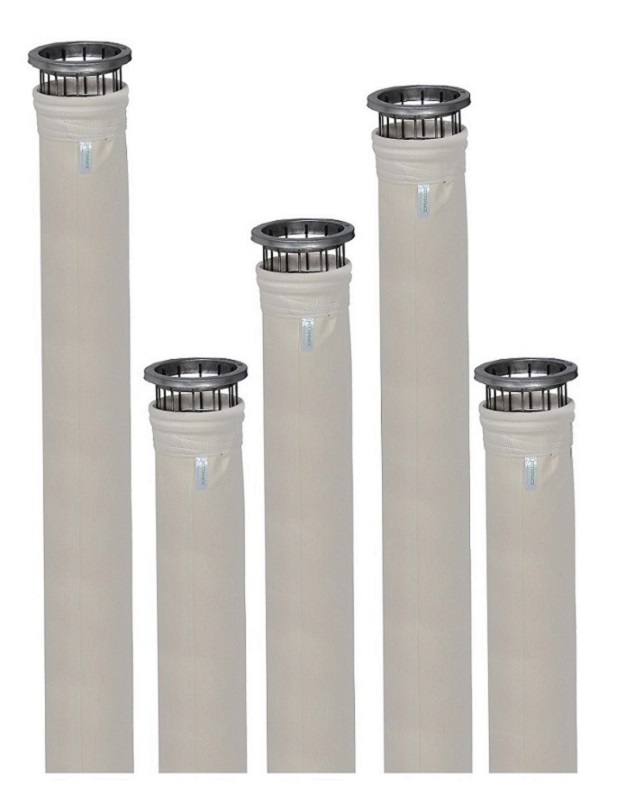
Waste incineration filter bags are the most critical component in the air pollution control (APC) system of any waste-to-energy (WTE) plant. Municipal solid waste (MSW) incineration, hazardous waste treatment, medical waste disposal, and waste recycling facilities produce some of the most challenging flue gas conditions in industrial filtration — extreme chemical aggression from HCl, HF, SO₂, heavy metals, dioxins/furans, and mercury, all at temperatures between 160–260°C. Only purpose-engineered filter bags can reliably meet the stringent emission limits while delivering acceptable service life in these demanding environments.
ECOGRACE is a leading manufacturer of premium waste incineration filter bags for WTE plants, hazardous waste incinerators, medical waste facilities, biomass power plants, and waste recycling operations across 60+ countries. Our filter bags are specifically engineered for the aggressive chemical environment of incineration flue gas, utilizing PTFE, fiberglass, P84®, and PPS filter media with PTFE membrane lamination to achieve near-zero particulate emissions and effective dioxin/heavy metal capture.
Why ECOGRACE for Waste Incineration Filter Bags
- Extreme Chemical Resistance: PTFE and fiberglass media withstand HCl, HF, SO₂, and heavy metal compounds at 200–260°C continuous operation
- Dioxin & Mercury Control: PTFE membrane surface filtration combined with activated carbon injection achieves >99% dioxin/furan and mercury removal efficiency
- Ultra-Low Emissions: PTFE membrane lamination delivers <5 mg/Nm³ particulate emissions — well below EU IED, US EPA, and all global WTE emission limits
- Acid Gas Compatibility: Fully compatible with dry and semi-dry acid gas scrubbing systems using hydrated lime (Ca(OH)₂) or sodium bicarbonate (NaHCO₃) injection
- Extended Service Life: 36–48 months typical bag life in properly operated WTE plants — reducing replacement frequency and disposal costs
- Complete Compliance Package: Filter bags engineered to meet EU IED 2010/75/EU, US EPA MACT, China GB 18485, and all national WTE emission standards worldwide
Why Waste Incineration Is the Most Demanding Filtration Application
Unlike cement, steel, or power plant filtration where gas composition is relatively predictable, waste incineration filter bags must handle a highly variable and aggressive flue gas cocktail that changes with every load of waste fed into the furnace. Understanding these challenges is essential for proper media selection:
Chemical Challenges
- Acid Gases: HCl (500–2000 mg/Nm³), HF (5–50 mg/Nm³), SO₂ (200–1000 mg/Nm³) from combustion of PVC, sulfur-containing waste, and fluorine compounds
- Dioxins & Furans (PCDD/F): Form during combustion and de novo synthesis in the 200–400°C temperature range. Must be captured on activated carbon injected upstream of the baghouse
- Heavy Metals: Lead (Pb), cadmium (Cd), mercury (Hg), arsenic (As) present as particulates and vapors. PTFE membrane ensures near-complete particulate capture; activated carbon adsorbs vapor-phase mercury
- Moisture Content: 15–25% moisture in flue gas creates acid dew point risk. Operating temperature must remain above dew point (typically 150–170°C) at all times
- Variable Composition: Waste heterogeneity means flue gas composition changes continuously, requiring filter media with broad chemical resistance rather than optimization for a single chemical environment
Operational Challenges
- Temperature Fluctuations: Normal operating range 160–220°C, with surges to 250–280°C during waste composition changes or combustion upsets
- Sorbent Injection: Dry sorbent injection (DSI) of lime, sodium bicarbonate, and activated carbon adds 5–20 g/Nm³ of reactive reagent to the gas stream, increasing dust load and bag cake thickness
- Continuous Operation: WTE plants operate 7,500–8,200 hours/year with minimal shutdown windows, demanding high reliability and long bag life
- Sticky Dust Cake: The combination of sorbent reagents, fly ash, heavy metals, and moisture creates a dense, sometimes sticky dust cake that challenges pulse cleaning effectiveness
- Regulatory Pressure: Emission limits for WTE are among the strictest in any industry — continuous emission monitoring (CEMS) means every exceedance is recorded and reported
Filter Media Selection for Waste Incineration Applications
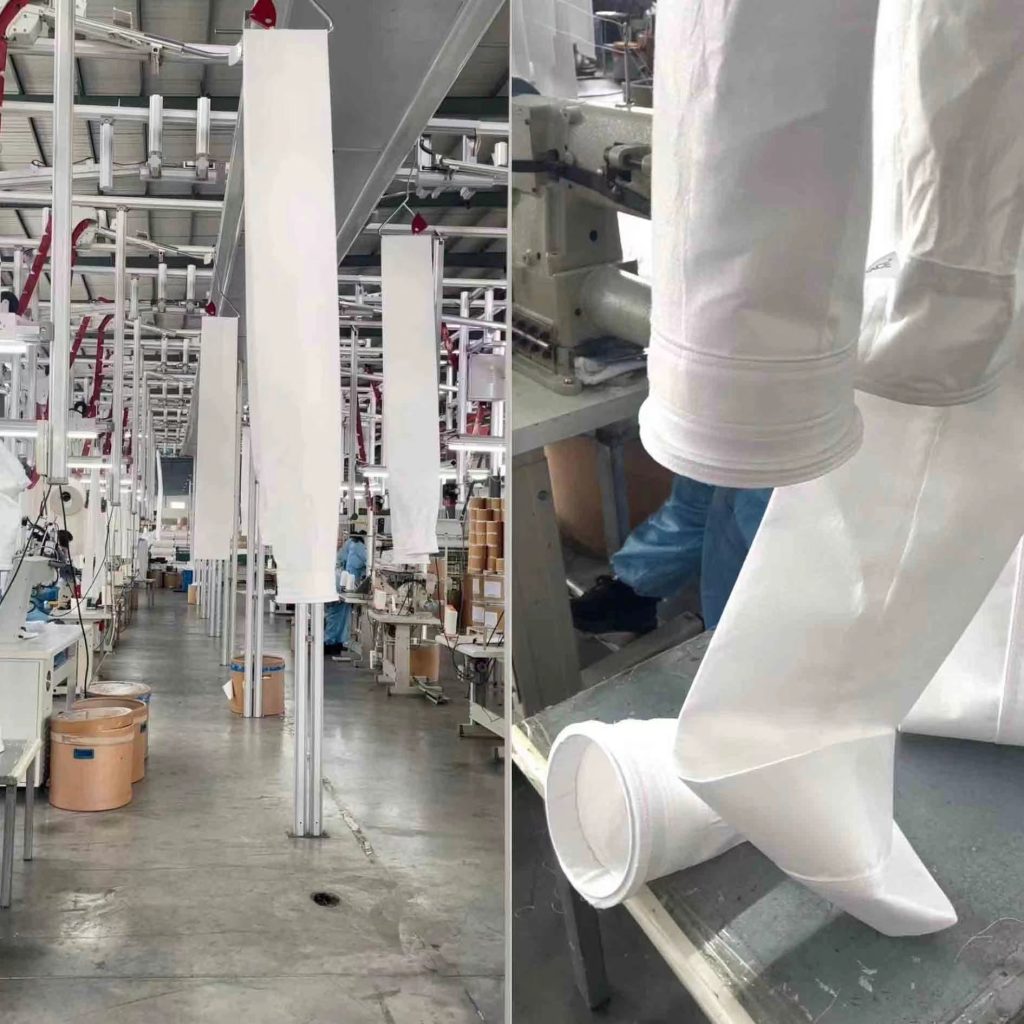
Selecting the right filter media for waste incineration filter bags is a critical engineering decision that directly impacts emission compliance, bag service life, and total cost of ownership. The table below compares all viable media options for WTE plant baghouse systems:
| Parameter | PTFE Felt | Fiberglass + PTFE Membrane | P84® + PTFE Membrane | PPS + PTFE Membrane | Aramid (Nomex®) |
|---|---|---|---|---|---|
| Continuous Temp (°C) | 260 | 260 | 240 | 190 | 204 |
| HCl Resistance | Excellent | Good | Good | Excellent | Fair |
| SO₂ / H₂SO₄ Resistance | Excellent | Good | Good | Excellent | Fair |
| HF Resistance | Excellent | Poor (attacked by HF) | Good | Good | Good |
| Hydrolysis Resistance | Excellent | Good | Poor | Poor | Excellent |
| Oxidation Resistance | Excellent | Good | Good | Poor (>12% O₂) | Good |
| Abrasion Resistance | Good | Poor | Fair | Good | Excellent |
| Typical Bag Life (WTE) | 48–72 months | 30–42 months | 36–48 months | 24–36 months | 18–30 months |
| Relative Cost | $$$$$ | $$$ | $$$$ | $$$ | $$ |
| Best WTE Application | MSW, hazardous waste, medical waste — highest chemical aggression | MSW with low HF, cost-effective at high temp | MSW with fine particle emphasis | Low-O₂ applications <190°C | Biomass, RDF, low-acid applications only |
ECOGRACE Recommendation: For MSW and hazardous waste incineration with full acid gas scrubbing systems, 100% PTFE needle felt with PTFE membrane provides the ultimate chemical resistance and longest service life. For cost-conscious projects with controlled flue gas conditions, fiberglass with PTFE membrane offers an excellent balance of performance and value. Contact our technical team for a site-specific media recommendation based on your actual flue gas analysis data.
How Waste Incineration Filter Bags Work Within the APC System
The baghouse is one critical component within a multi-stage air pollution control (APC) system in modern waste-to-energy plants. Understanding the complete APC flow helps engineers optimize waste incineration filter bag selection and performance:
| Stage | APC Component | Function | Impact on Filter Bags |
|---|---|---|---|
| 1 | Combustion Chamber | Burns waste at 850–1100°C. Residence time >2 seconds to destroy organic pollutants | Determines raw flue gas composition. Incomplete combustion increases CO, soot, and unburned carbon load on bags |
| 2 | Boiler / Heat Recovery | Cools flue gas from 850°C to 200–300°C while generating steam | Temperature exiting boiler determines media selection. De novo dioxin synthesis occurs in 200–400°C range |
| 3 | Spray Cooling Tower (optional) | Evaporative cooling reduces gas temperature to 160–200°C | Lower temperature allows use of PPS or aramid media. Risk: over-cooling below dew point causes acid condensation on bags |
| 4 | Dry Sorbent Injection (DSI) | Injects hydrated lime or sodium bicarbonate to neutralize HCl, HF, SO₂. Activated carbon injected for dioxin/mercury adsorption | Increases dust load by 5–20 g/Nm³. Sorbent-laden dust cake on filter bags acts as secondary reaction layer for additional acid gas removal |
| 5 | Baghouse (Filter Bags) | Captures particulate matter, heavy metals, and sorbent-bound dioxins/mercury on filter bag surface | PTFE membrane bags provide surface filtration for maximum capture efficiency. The reagent-laden dust cake provides additional acid gas and dioxin removal |
| 6 | SCR / SNCR (optional) | Selective catalytic/non-catalytic reduction of NOx using ammonia or urea | If SCR is downstream, ammonia slip can form ammonium salts that blind filter bags. Tail-end SCR avoids this issue |
Key Insight: In modern WTE plants using the “dry” or “semi-dry” APC approach, the waste incineration filter bags serve a dual role: (1) particulate capture and (2) providing a reactive surface where the sorbent-laden dust cake continues to neutralize acid gases and adsorb dioxins/mercury. This means the filter bag is not merely a dust collector — it is an active chemical reactor that contributes significantly to overall APC system performance.
Waste Incineration Filter Bag Applications by Waste Type
Different waste streams create different flue gas challenges. ECOGRACE provides application-specific waste incineration filter bags optimized for each waste type:
Municipal Solid Waste (MSW) Incineration
MSW incineration is the largest application for waste incineration filter bags. The heterogeneous waste composition produces variable acid gas concentrations, requiring broadly resistant filter media. Plants range from 100 TPD to 3000+ TPD capacity.
- Temperature: 160–220°C (after cooling)
- Key pollutants: HCl, SO₂, dioxins, heavy metals
- Media: PTFE felt or fiberglass + PTFE membrane
- Sorbent: Lime / NaHCO₃ + activated carbon
- Expected bag life: 36–48 months
Hazardous Waste Incineration
Hazardous waste incinerators handle the most aggressive flue gas in the filtration industry. Chemical waste, pesticide containers, contaminated soil, and industrial solvents produce extreme acid gas concentrations and heavy metal loads.
- Temperature: 180–260°C
- Key pollutants: HCl (very high), HF, heavy metals, VOCs
- Media: 100% PTFE needle felt (mandatory)
- Sorbent: NaHCO₃ + activated carbon (high dosage)
- Expected bag life: 24–36 months
Medical Waste Incineration
Medical waste incinerators process infectious hospital waste, pharmaceuticals, and pathological materials. Strict emission limits and zero-tolerance for visible emissions require premium filtration performance.
- Temperature: 180–230°C
- Key pollutants: HCl, dioxins, pathogens (destroyed by temp)
- Media: PTFE felt or P84 + PTFE membrane
- Sorbent: Lime + activated carbon
- Expected bag life: 30–42 months
Biomass & RDF Combustion
Biomass power plants and refuse-derived fuel (RDF) combustion facilities produce lower acid gas concentrations than MSW incineration, allowing more cost-effective media options while maintaining strict emission compliance.
- Temperature: 150–200°C
- Key pollutants: Particulates, moderate HCl, KCl fouling
- Media: Aramid or PPS + PTFE membrane
- Sorbent: Lime (lower dosage than MSW)
- Expected bag life: 30–42 months
Waste Tyre & Rubber Recycling
Tyre pyrolysis and rubber recycling facilities produce sulfur-rich flue gas and carbon black dust. The combination of high SO₂, oily particulates, and elevated temperatures requires chemically resistant filter media with oil-repellent treatment.
- Temperature: 160–220°C
- Key pollutants: SO₂, carbon black, oily condensates
- Media: PPS or PTFE + PTFE membrane + W/O treatment
- Anti-static treatment recommended
- Expected bag life: 24–36 months
Waste Battery & E-Waste Processing
Battery recycling and electronic waste processing generate flue gas rich in heavy metals (lead, cadmium, lithium, cobalt) and acid fumes. Ultra-high filtration efficiency is critical to prevent heavy metal emissions and recover valuable materials.
- Temperature: 150–250°C
- Key pollutants: Pb, Cd, Li, Co, HCl, HF
- Media: PTFE felt or fiberglass + PTFE membrane
- 99.99%+ efficiency critical for metal capture
- Expected bag life: 24–36 months
Global Emission Standards for Waste Incineration Plants
Waste incineration is one of the most heavily regulated industrial sectors worldwide. Waste incineration filter bags must be engineered to meet or exceed the following emission limits under all operating conditions:
| Standard / Region | PM (mg/Nm³) | HCl (mg/Nm³) | SO₂ (mg/Nm³) | Dioxin (ng TEQ/Nm³) | Hg (mg/Nm³) |
|---|---|---|---|---|---|
| EU IED 2010/75/EU | 10 | 10 | 50 | 0.1 | 0.05 |
| EU BREF (BAT-AEL) | 2–5 | 2–8 | 5–30 | 0.01–0.04 | 0.005–0.02 |
| US EPA MACT (40 CFR 60) | 20 (large) / 70 (small) | 25 | 29 | 0.1–0.4 | 0.05–0.08 |
| China GB 18485-2014 | 20 | 50 | 80 | 0.1 | 0.05 |
| Japan | 10–50 (varies) | 430 | K-value | 0.1–5 | — |
| ECOGRACE Filter Bag Performance | <5 | Captured in dust cake | Captured in dust cake | With activated carbon injection | With activated carbon injection |
ECOGRACE waste incineration filter bags with PTFE membrane consistently achieve particulate emissions below 5 mg/Nm³ — meeting even the most stringent EU BREF BAT-AEL requirements. When combined with proper sorbent injection dosing, the integrated baghouse system ensures compliance with all acid gas, dioxin, and heavy metal limits worldwide.
Customer Case Studies: Waste Incineration Filter Bags in Action
Case Study 1: 2 × 750 TPD MSW Incineration Plant — South Korea
Challenge: The plant operated a dry APC system with lime + activated carbon injection at 190–210°C. Previous fiberglass bags were experiencing chemical degradation from HCl and HF, failing at 18–24 months with unacceptable emission exceedances during the final months of bag life.
Solution: ECOGRACE supplied 100% PTFE needle felt (750 g/m²) with PTFE membrane lamination. The PTFE fiber provides complete chemical inertness to all acid gas species, while the membrane ensures surface filtration and <5 mg/Nm³ emissions from the first cycle.
Result: 48 months of operation with zero emission violations. Continuous emission monitoring (CEMS) data confirmed: particulate <3 mg/Nm³ (average), HCl <8 mg/Nm³, dioxin <0.02 ng TEQ/Nm³. Differential pressure stable at 1.0–1.3 kPa. The client estimated 40% lower total filtration cost compared to the previous fiberglass bags due to doubled service life.
Case Study 2: Hazardous Waste Incinerator — Germany
Challenge: The hazardous waste rotary kiln incinerator processed chemical waste, contaminated soil, and industrial sludge at temperatures reaching 240°C. Flue gas contained HCl >2000 mg/Nm³, HF >30 mg/Nm³, and extremely high heavy metal concentrations. The plant must comply with the stringent German 17. BImSchV limits and EU BREF BAT-AELs.
Solution: ECOGRACE supplied heavy-duty 100% PTFE needle felt (850 g/m²) with PTFE membrane. The heavier felt weight was specified to withstand the extreme chemical load, and the all-PTFE construction ensured zero fiber degradation from acid gas attack.
Result: 36 months service life in the most aggressive chemical environment. CEMS data: particulate <2 mg/Nm³, HCl <5 mg/Nm³ (after scrubbing), meeting EU BREF BAT-AEL limits throughout the entire bag life. No emergency shutdowns related to filter performance. Bag condition at replacement showed >80% retained tensile strength, indicating potential for even longer life in future sets.
Case Study 3: Biomass Power Plant — Philippines
Challenge: The biomass plant burned rice husk and coconut shell at 165–185°C with moderate acid gas but high potassium chloride (KCl) content typical of agricultural biomass. Previous aramid bags without membrane were experiencing KCl fouling and blinding within 12 months.
Solution: ECOGRACE supplied PPS 550 g/m² with PTFE membrane and water/oil repellent treatment. PPS was chosen for its acid resistance, while the PTFE membrane prevented KCl crystal penetration into the felt, and W/O treatment resisted hygroscopic salt absorption.
Result: 36 months of operation with no fouling issues. Differential pressure stable at 1.1–1.4 kPa. Stack emissions consistently <15 mg/Nm³, meeting Philippines DENR standards. The cost savings from tripled bag life justified the PPS+membrane upgrade over the previous standard aramid bags.
Waste Incineration Filter Bag Installation & Maintenance
Installation Best Practices
- Pre-Installation Cleaning: Thoroughly clean all tube sheets, cage sockets, and compartments of residual ash and sorbent deposits. Corrosive residue from previous bags can accelerate new bag degradation at seal points.
- Cage Quality: Use only stainless steel (SS304 minimum) or epoxy-coated cages in WTE applications. Standard galvanized cages corrode rapidly in the acid gas environment, causing bag-to-cage abrasion damage.
- PTFE Membrane Protection: Handle membrane bags with care during installation — avoid dragging across rough surfaces or sharp edges. Membrane damage creates localized high-emission points that cannot be repaired.
- Seal Integrity: Verify 100% snap ring seal against tube sheet. Even small air leaks bypass filtration and cause corrosive gas attack on the clean side of the baghouse structure.
- First Startup: Preheat the baghouse above acid dew point (minimum 160°C) before introducing flue gas. Start sorbent injection before opening the baghouse inlet damper to ensure immediate acid gas neutralization.
Maintenance Priorities for WTE Plants
- CEMS Correlation (Continuous): Monitor particulate, HCl, and SO₂ emissions continuously. Rising particulate levels indicate potential bag failure; rising acid gas levels may indicate insufficient sorbent dosing or bag blinding reducing contact time.
- Temperature Control (Critical): Maintain baghouse inlet between 160–220°C. Below 150°C risks acid dew point condensation. Above rated temperature accelerates bag degradation. Install redundant temperature monitoring with automatic sorbent boost and bypass systems.
- Sorbent Dosing Optimization: Monitor outlet HCl and SO₂ to optimize lime/NaHCO₃ injection rate. Over-dosing wastes reagent cost; under-dosing risks emission violations AND bag damage from unreacted acid gas.
- Pulse Cleaning: Optimize for online dP-triggered cleaning at 1.2–1.5 kPa. Over-cleaning removes the beneficial reagent cake that contributes to acid gas removal. Under-cleaning causes excessive dP rise and fan energy waste.
- Bag Sampling (Annual): Pull 2–3 bags per compartment for laboratory testing of tensile strength, air permeability, chemical analysis of residual, and membrane integrity inspection.
Critical Safety Note: Spent waste incineration filter bags contain captured heavy metals, dioxins, and other hazardous substances. Disposal must comply with hazardous waste regulations in your jurisdiction. Never handle spent bags without proper PPE (respiratory protection, gloves, coveralls). ECOGRACE can advise on disposal requirements for your specific application.
Frequently Asked Questions About Waste Incineration Filter Bags
What is the best filter media for waste incineration?
For MSW and hazardous waste incineration, 100% PTFE needle felt with PTFE membrane provides the best chemical resistance and longest service life (48–72 months). For budget-sensitive projects with controlled flue gas conditions, fiberglass with PTFE membrane offers a cost-effective alternative at 260°C. For biomass and RDF applications with lower acid gas, PPS or aramid with PTFE membrane can be suitable at lower cost.
How do waste incineration filter bags capture dioxins?
Dioxins (PCDD/F) are primarily captured through activated carbon injection upstream of the baghouse. The activated carbon particles adsorb gas-phase dioxins, and the waste incineration filter bags then capture both the carbon particles and any particulate-bound dioxins. The PTFE membrane surface prevents any particle bypass, ensuring >99% capture efficiency. The reagent-laden dust cake on the bag surface provides additional residence time for dioxin adsorption, making the baghouse itself a secondary dioxin reactor.
Why is PTFE membrane essential for WTE filter bags?
PTFE membrane is essential for waste incineration because: (1) It achieves <5 mg/Nm³ particulate emissions from the first cycle — no “seasoning” period where emissions are high, (2) It prevents fine heavy metal particles and sub-micron sorbent from penetrating the felt depth, (3) The non-stick PTFE surface allows efficient pulse cleaning of the dense sorbent/ash cake, (4) It extends bag life by 20–40% by preventing depth clogging. For WTE plants under continuous CEMS monitoring, membrane bags eliminate the emission spikes during startup that can trigger regulatory violations.
How long do waste incineration filter bags last?
Service life depends on media choice and operating conditions: PTFE felt (48–72 months), fiberglass + PTFE membrane (30–42 months), P84 + membrane (36–48 months), PPS + membrane (24–36 months), aramid (18–30 months in WTE conditions). Operating temperature, acid gas concentration, sorbent type, and maintenance quality all influence actual bag life. ECOGRACE recommends annual bag sample testing to predict remaining useful life and plan replacements during scheduled maintenance.
What temperature should WTE baghouse operate at?
The optimal operating range for waste incineration filter bags is typically 170–210°C. This range is: above the acid dew point (150–170°C) to prevent corrosive condensation, below the de novo dioxin synthesis peak (250–350°C) to minimize dioxin formation, and within the optimal sorbent reaction temperature for lime and sodium bicarbonate. Operating below 150°C risks catastrophic acid condensation damage. Operating above 220°C increases dioxin formation risk.
Can fiberglass bags replace PTFE in waste incineration?
Fiberglass with PTFE membrane is a viable alternative to PTFE felt for WTE applications where HF concentrations are low (<10 mg/Nm³ raw gas). Fiberglass offers excellent temperature resistance (260°C) at 40–60% lower cost than PTFE felt. However, fiberglass has poor flex fatigue resistance (shorter life in pulse-jet systems), poor abrasion resistance, and is attacked by HF acid. For hazardous waste or medical waste with significant fluorine-containing waste streams, PTFE felt is the safer choice.
What sorbent system works best with waste incineration filter bags?
The two main sorbent systems used with waste incineration filter bags are: (1) Hydrated lime (Ca(OH)₂): Lower cost, good HCl and SO₂ removal, requires higher dosing ratio (3–5x stoichiometric). Creates a denser dust cake. (2) Sodium bicarbonate (NaHCO₃): Higher cost, superior acid gas removal efficiency (1.2–1.5x stoichiometric), lighter dust cake with lower pressure drop impact. Both systems include activated carbon co-injection for dioxin/mercury control. NaHCO₃ is preferred for plants targeting EU BREF BAT-AEL compliance.
How do I order waste incineration filter bags from ECOGRACE?
To receive a quotation, provide: (1) Plant type (MSW, hazardous, medical, biomass), (2) Plant capacity (TPD or MW), (3) APC system configuration (dry/semi-dry, sorbent type), (4) Bag dimensions (diameter × length), (5) Quantity, (6) Operating temperature and gas analysis data if available, (7) Current baghouse OEM/model. ECOGRACE provides free technical consultation and can recommend the optimal media specification based on your specific flue gas conditions. Contact us via the form below or WhatsApp.
Related Products & Resources
PTFE Filter Bags →
100% Teflon needle felt for ultimate chemical resistance in WTE applications
Fiberglass Filter Bags →
260°C operation for cost-effective WTE and kiln exhaust filtration
High Temperature Filter Bags →
Complete guide to PPS, P84, PTFE & fiberglass for 190–260°C
Aramid (Nomex®) Filter Bags →
204°C operation for biomass and low-acid waste applications
Dust Collector Filter Bags →
Complete range for all industrial dust collection applications
Baghouse Filter Bags →
Selection, sizing & maintenance for all baghouse types
Need Filter Bags for Your Waste Incineration Plant?
ECOGRACE provides premium PTFE, fiberglass, and P84 filter bags engineered for the most demanding WTE and waste recycling applications. Free technical consultation, flue gas analysis support, and worldwide delivery.