
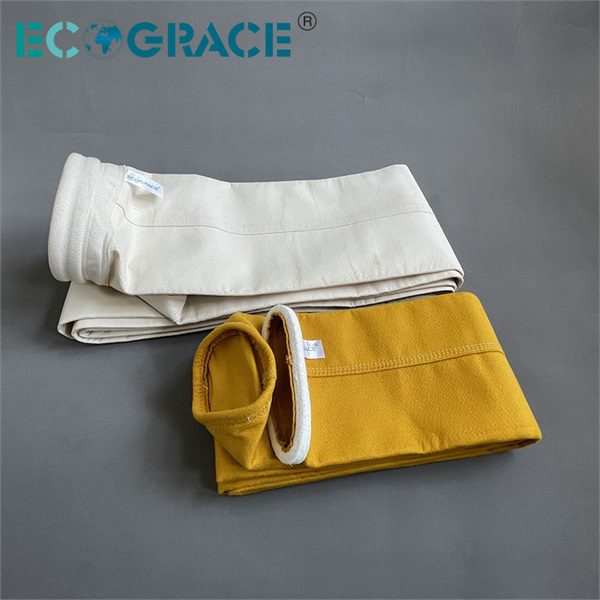
Biomass Boiler Filter Bags
Flue Gas Filtration for Biomass-Fired Power & Heating Systems
Engineered by ECOGRACE
Product Overview
ECOGRACE biomass boiler filter bags are purpose-engineered for the unique flue gas challenges of biomass combustion. Unlike coal-fired systems, biomass boilers burn wood chips, straw, rice husks, palm kernel shells, bagasse, and other organic fuels that produce sticky, high-moisture fly ash with aggressive alkali metal compounds — conditions that destroy standard industrial filter bags within months.
Our biomass filter bags deliver 99.9% particulate capture efficiency at 0.3 microns across operating temperatures from 130°C to 260°C. Each bag features specialized surface treatments to resist the potassium and sodium-rich ash deposits, acid dew point corrosion, and hydrocarbon condensation that are unique to biomass flue gas environments.
With installations across biomass power plants, combined heat and power (CHP) facilities, pellet manufacturing plants, and agricultural waste-to-energy projects worldwide, ECOGRACE provides proven dust collector filter bags that meet the strictest emission limits while maximizing boiler uptime and minimizing filtration operating costs.
Filter Bags by Biomass Fuel Type
Wood Chips & Sawdust
Flue gas at 150-200°C with fine ash and tar vapor. NOMEX filter bags with oleophobic treatment to resist resin and tar condensation. PTFE membrane recommended for plants near residential areas.
Straw & Agricultural Residue
High alkali content (potassium, chlorine) at 160-220°C causing aggressive chemical attack. PPS filter bags or PPS/PTFE blended media for superior acid and alkali resistance.
Rice Husk & Palm Kernel Shell
High silica ash with sticky characteristics at 150-200°C. Requires PTFE membrane surface filtration to prevent ash penetration into fiber depth. Anti-stick coating critical for effective pulse cleaning.
Bagasse (Sugarcane Waste)
High-moisture flue gas at 130-180°C with sugar residue deposits. Hydrophobic-treated polyester or acrylic media with moisture-resistant finish to prevent bag blinding during startup/shutdown cycles.
Wood Pellets & Briquettes
Cleaner combustion at 160-220°C with lower ash content but fine particulates. NOMEX or fiber glass filter bags for larger utility-scale pellet boilers operating above 200°C.
Recommended Filter Media for Biomass Boilers
PPS Filter Bags
160-190°C with excellent resistance to acid, alkali, and hydrolysis. Top choice for straw, agricultural residue, and high-chlorine biomass fuels. Withstands aggressive potassium and sodium compounds.
NOMEX (Aramid) Filter Bags
200-260°C continuous. Superior mechanical strength and flex resistance for large-scale biomass power plants. Ideal for wood chip and pellet boilers with higher exhaust temperatures.
PTFE Membrane Filter Bags
Surface filtration prevents sticky biomass ash from penetrating fiber depth. Achieves <5 mg/Nm³ outlet emissions. Essential for plants with stringent EU IED or EPA MACT limits.
Fiber Glass Filter Bags
Up to 280°C for biomass co-firing with coal or waste-derived fuels. Excellent dimensional stability under sustained high temperatures. Acid-resistant finish for SO2-rich flue gases.
Material Comparison for Biomass Applications
| Material | Temperature | Best Biomass Application | Chemical Resistance | Service Life |
|---|---|---|---|---|
| PPS | 160-190°C | Straw, agricultural waste, high-Cl fuels | Excellent | 24-36 months |
| NOMEX (Aramid) | 200-260°C | Wood chip, pellet boilers | Good | 24-36 months |
| PTFE Membrane | Up to 260°C | Sticky ash, ultra-low emission zones | Excellent | 24-36 months |
| Fiber Glass | Up to 280°C | Biomass-coal co-firing | Good | 18-24 months |
| Acrylic | Up to 140°C | Bagasse, low-temp biomass | Good | 18-24 months |
| Polyester | Up to 130°C | Fuel handling, pellet production | Moderate | 12-18 months |
Technical Parameters
| Parameter | Specification |
|---|---|
| Filtration Efficiency | 99.9% at 0.3 microns |
| Outlet Emission | <10 mg/Nm³ (PTFE membrane <5 mg/Nm³) |
| Temperature Range | 130°C – 280°C (material dependent) |
| Flue Gas Moisture Tolerance | Up to 15% vol. with hydrophobic treatment |
| Air-to-Cloth Ratio | 0.8-1.2 m/min (biomass boiler applications) |
| Service Life | 18-36 months (fuel dependent) |
| Tensile Strength | ≥800N/5cm (warp) / ≥1000N/5cm (weft) |
| Air Permeability | 8-14 m³/m²/min @ 200Pa |
| Surface Treatment | PTFE membrane, oleophobic, hydrophobic, acid-resistant finish |
| Certification | ISO 9001, ISO 14001, CE |
Why Biomass Boilers Need Specialized Filter Bags
Biomass flue gas is fundamentally different from coal or natural gas exhaust. The high variability of fuel composition, elevated moisture content, and aggressive alkali chemistry create a filtration environment where standard baghouse filter bags fail prematurely. Understanding these challenges is critical for selecting the right filter media.
Sticky Alkali Ash
Biomass ash is rich in potassium (K) and sodium (Na) compounds that form sticky, low-melting-point deposits on filter surfaces. These deposits resist pulse cleaning and permanently blind filter pores, especially at temperatures above 160°C.
Acid Dew Point Corrosion
HCl and SO2 in biomass flue gas condense as hydrochloric and sulfuric acid below the acid dew point (typically 120-150°C). This rapidly corrodes non-resistant filter fibers during startup, shutdown, and load changes.
High Moisture Content
Biomass flue gas contains 10-15% moisture by volume — 2-3x higher than coal combustion. During startup and low-load operation, condensation soaks filter bags, causing dust cake cement and catastrophic pressure drop increase.
Tar & Hydrocarbon Condensation
Incomplete combustion of biomass produces tar vapors and volatile organic compounds that condense on cooler filter surfaces, creating a sticky coating that traps particulates and resists pulse-jet cleaning.
Fuel Variability
Biomass fuel quality varies significantly between batches — moisture content from 10-55%, ash content from 0.5-15%, chlorine levels fluctuating with crop season. Filter media must tolerate wide swings in operating conditions.
Spark & Smoldering Risk
Unburned biomass particles and embers entering the baghouse can ignite accumulated dust cake. Flame-retardant filter media and proper spark detection systems are essential for fire prevention.
Biomass Applications We Serve
ECOGRACE Advantages for Biomass Boilers
Fuel-Specific Engineering
Filter bags customized to your specific biomass fuel — wood, straw, rice husk, palm, or mixed feedstock. We analyze your fuel composition, ash chemistry, and flue gas conditions before recommending optimal filter media and surface treatment.
Anti-Stick Technology
PTFE membrane lamination combined with oleophobic and hydrophobic treatments creates a non-stick surface that releases sticky biomass ash during pulse cleaning. Maintains stable pressure drop and prevents bag blinding throughout service life.
EU IED & EPA Compliance
Our biomass filter bags consistently achieve outlet emissions below 5 mg/Nm³ with PTFE membrane, meeting EU Industrial Emissions Directive (IED), EPA MACT, and local air quality standards for biomass combustion plants.
Global Biomass Experience
Proven installations across Europe, Southeast Asia, South America, and Africa covering every major biomass fuel type. From 5 MW district heating plants to 100 MW+ utility-scale biomass power stations.
Frequently Asked Questions
What filter bag material is best for wood chip biomass boilers?
For wood chip boilers operating at 150-220°C, NOMEX filter bags with PTFE membrane and oleophobic treatment provide the best combination of heat resistance, tar rejection, and ash release. For boilers below 190°C, PPS filter bags offer superior chemical resistance at lower cost.
How do you prevent bag blinding from sticky biomass ash?
We use a three-layer defense: (1) PTFE membrane surface filtration that prevents ash particles from penetrating fiber depth, (2) oleophobic coating that repels sticky tar and resin compounds, and (3) hydrophobic treatment that prevents moisture-induced cake hardening. This combination maintains cleanable filter surfaces throughout the bag’s 24-36 month service life.
Can your filter bags handle high-chlorine biomass fuels like straw?
Yes. Straw and agricultural residues contain high chlorine and potassium levels that produce HCl in flue gas. PPS filter bags with acid-resistant finish and PTFE membrane are specifically designed for these aggressive conditions, providing 24-36 months of reliable service.
Do you supply filter bags for biomass-coal co-firing plants?
Yes. Co-firing introduces both coal fly ash and biomass alkali compounds. We recommend fiber glass filter bags with PTFE membrane for temperatures above 200°C, or PPS/PTFE blended media for lower temperature co-firing configurations with high-sulfur coal.
What is the minimum order quantity and delivery time?
MOQ is 100 pieces for standard sizes. Standard delivery 15-20 days. Large-scale power plant orders (1,000+ pieces) within 25-30 days. Free samples available for quality evaluation before bulk ordering.
Request a Technical Quote for Biomass Boiler Filter Bags
Contact ECOGRACE for customized flue gas filtration solutions for your biomass combustion system
[email protected]WhatsApp: +86-13588065995
Learn more about baghouse filter bags