
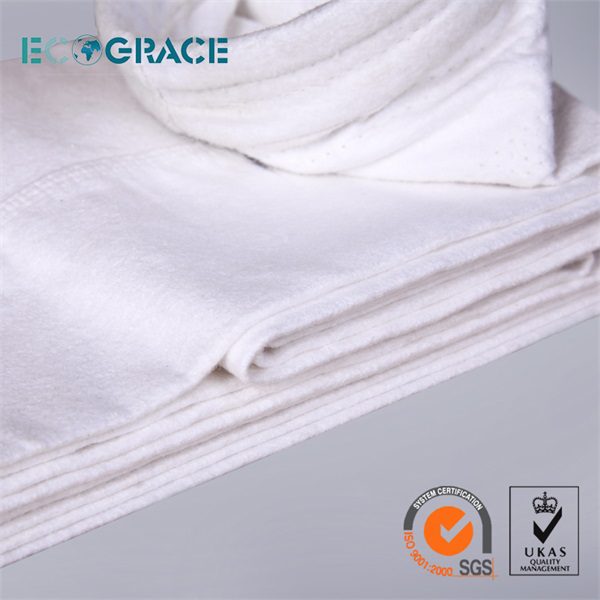
Glass Manufacturing Filter Bags
Furnace Fume & Batch Dust Collection for Glass Production Lines
Engineered by ECOGRACE
Product Overview
ECOGRACE glass manufacturing filter bags are purpose-engineered for the extreme thermal and chemical demands of glass production. Glass melting furnaces operate at temperatures exceeding 1,500°C, producing flue gas laden with volatile alkali condensates, boron compounds, fluorides, SO2, and fine silica particulates — a uniquely corrosive mix that rapidly destroys standard industrial filter media.
Our glass industry filter bags deliver 99.9% particulate capture efficiency at 0.3 microns across operating temperatures from 180°C to 280°C. Each bag features specialized acid-resistant finishing and alkali-resistant treatments to withstand the sodium sulfate, boron trioxide, and hydrofluoric acid condensation that characterize glass furnace exhaust streams.
With proven installations in float glass, container glass, fiberglass insulation, specialty glass, and glass fiber production facilities worldwide, ECOGRACE provides dust collector filter bags that meet the strictest emission limits while handling the aggressive gas chemistry unique to glass manufacturing.
Filter Bags for Each Glass Production Stage
Batch Mixing & Handling
Fine silica sand, soda ash, and limestone dust at ambient to 80°C. Polyester needle felt with anti-static treatment for explosion prevention. PTFE membrane for respirable silica compliance in batch house operations.
Glass Melting Furnace
Volatile alkali condensates, SO2, HF, and boron at 200-280°C. Fiber glass filter bags with PTFE membrane and acid-resistant finish — the industry standard for glass furnace baghouses.
Regenerator & Exhaust
Heavy sodium sulfate (Na2SO4) condensation at 180-240°C during regenerator cycling. Requires hydrophobic and oleophobic treatment to prevent sticky sulfate deposits from blinding filter surfaces.
Annealing & Cutting
Fine glass dust and cutting debris at 80-150°C from annealing lehrs and cutting lines. Polyester or acrylic bags with calendered surface for fine particle capture and easy cake release.
Glass Fiber & Insulation Production
Fine glass fiber fragments, phenolic binder fume, and boron compounds at 150-220°C. NOMEX filter bags with oleophobic treatment to resist binder condensation and fiber embedding.
Recommended Filter Media for Glass Manufacturing
Fiber Glass Filter Bags
Up to 280°C continuous. Industry standard for glass melting furnace baghouses. Excellent resistance to alkali condensates and SO2. PTFE membrane option for maximum particulate and acid gas capture.
PTFE Membrane Filter Bags
Surface filtration prevents alkali and boron condensate penetration. Achieves <5 mg/Nm³ outlet emissions. Resists all acids including HF. Essential for plants with EU IED or stringent local limits.
NOMEX (Aramid) Filter Bags
200-260°C with superior flex resistance. Ideal for glass fiber and insulation production where mechanical abrasion from stiff fiber fragments demands high-durability media.
PPS Filter Bags
160-190°C with excellent acid resistance. Cost-effective option for container glass and specialty glass furnaces operating below 200°C with moderate SO2 and HF concentrations.
Material Comparison for Glass Applications
| Material | Temperature | Best Glass Application | Acid Resistance | Service Life |
|---|---|---|---|---|
| Fiber Glass | Up to 280°C | Melting furnace, regenerator | Good | 18-30 months |
| PTFE Membrane | Up to 260°C | Ultra-low emission, alkali condensate | Excellent | 24-36 months |
| NOMEX (Aramid) | 200-260°C | Glass fiber production, insulation | Good | 24-36 months |
| PPS | 160-190°C | Container glass, specialty glass | Excellent | 24-30 months |
| Polyester | Up to 130°C | Batch house, cutting, annealing | Moderate | 12-18 months |
Technical Parameters
| Parameter | Specification |
|---|---|
| Filtration Efficiency | 99.9% at 0.3 microns |
| Outlet Emission | <10 mg/Nm³ (PTFE membrane <5 mg/Nm³) |
| Temperature Range | 130°C – 280°C (material dependent) |
| Acid Gas Tolerance | SO2, HF, HCl, B2O3 resistant |
| Air-to-Cloth Ratio | 0.7-1.0 m/min (glass furnace applications) |
| Service Life | 18-36 months (application dependent) |
| Tensile Strength | ≥800N/5cm (warp) / ≥1000N/5cm (weft) |
| Air Permeability | 8-14 m³/m²/min @ 200Pa |
| Surface Treatment | PTFE membrane, acid-resistant, oleophobic, hydrophobic finish |
| Certification | ISO 9001, ISO 14001, CE |
Why Glass Manufacturing Needs Specialized Filter Bags
Glass furnace flue gas is among the most chemically aggressive environments any baghouse filter bag must endure. The volatilization of batch raw materials at furnace crown temperatures above 1,500°C creates a complex cocktail of condensable alkali vapors, acid gases, and fine particulates that attack filter fibers through multiple degradation mechanisms simultaneously.
Alkali Condensate Attack
Sodium sulfate (Na2SO4) and sodium chloride condensate from soda-lime glass formulations deposit on filter surfaces as sticky, hygroscopic layers. These deposits absorb moisture and harden into cement-like cake that resists pulse cleaning.
Multi-Acid Gas Corrosion
SO2 from sulfate fining agents, HF from fluoride fluxes, and HCl from salt cake simultaneously attack filter fibers. Glass furnace flue gas can contain 500-2,000 mg/Nm³ SO2 and 50-200 mg/Nm³ HF — far higher than most industrial sources.
Boron Compound Deposits
Borosilicate and fiberglass production releases boron trioxide (B2O3) vapor that condenses as a glassy film on filter surfaces, permanently sealing filter pores. PTFE membrane surface filtration prevents boron penetration into fiber depth.
Regenerator Cycle Temperature Swings
Cross-fired and end-fired regenerative furnaces create 20-30 minute temperature cycling as regenerators switch. Filter bags must maintain performance through thousands of thermal cycles without dimensional distortion.
Continuous 24/7 Operation
Glass furnaces run continuously for 10-15 year campaigns. Baghouse filter bags must deliver reliable, uninterrupted performance for 24-36 months between planned replacements without unscheduled production stoppages.
Binder Fume in Fiber Production
Glass fiber and insulation manufacturing uses phenolic and formaldehyde-based binders that produce sticky organic condensates. Oleophobic treatment is essential to prevent binder buildup and maintain pulse cleaning effectiveness.
Glass Industry Segments We Serve
ECOGRACE Advantages for Glass Manufacturers
Furnace-Specific Engineering
Filter bags optimized for your specific furnace type — float, container, oxy-fuel, or electric melter. We analyze your glass batch formula, flue gas composition, and temperature profile to select the best media and treatment combination.
Anti-Condensate Technology
PTFE membrane with oleophobic and hydrophobic treatments prevents alkali sulfate, boron, and organic binder condensates from penetrating fiber structures. Maintains stable pressure drop and pulse cleaning efficiency throughout service life.
Multi-Pollutant Compliance
Meet EU BREF/BAT-AELs for glass manufacturing, EPA MACT standards, and local air quality limits for particulates, SO2, HF, and heavy metals simultaneously. Outlet emissions consistently below 5 mg/Nm³ with PTFE membrane.
Campaign-Length Reliability
24-36 month service life aligned with glass furnace maintenance schedules. Eliminates unplanned bag replacements and minimizes the risk of emission exceedances during continuous furnace operations.
Frequently Asked Questions
What filter bag material is best for glass melting furnaces?
Fiber glass filter bags with PTFE membrane and acid-resistant finish are the industry standard for glass furnace baghouses operating above 200°C. For furnaces below 190°C, PPS filter bags provide excellent acid and alkali resistance at lower cost.
How do you handle sodium sulfate condensation in glass furnace baghouses?
We use PTFE membrane surface filtration combined with hydrophobic treatment to prevent sodium sulfate deposits from penetrating fiber depth. The membrane creates a smooth, non-stick surface that releases condensate deposits during pulse cleaning, maintaining stable differential pressure and avoiding bag blinding.
Can your filter bags handle borosilicate glass production?
Yes. Borosilicate glass produces boron trioxide vapor that condenses as a glassy film on filter surfaces. Our fiber glass bags with PTFE membrane prevent B2O3 from sealing filter pores, combined with optimized pulse cleaning parameters to remove boron deposits effectively.
Do you supply filter bags for glass fiber and insulation manufacturing?
Yes. Glass fiber production generates stiff fiber fragments and phenolic binder fume. We supply NOMEX filter bags with oleophobic treatment and PTFE membrane for combined fiber capture and binder condensation resistance in dust collector systems.
What is the minimum order quantity and delivery time?
MOQ is 100 pieces for standard sizes. Standard delivery 15-20 days. Large-scale furnace changeout orders within 25-30 days. Free samples available for laboratory testing and quality evaluation before bulk ordering.
Request a Technical Quote for Glass Manufacturing Filter Bags
Contact ECOGRACE for customized furnace dust collection solutions for your glass production line
[email protected]WhatsApp: +86-13588065995
Learn more about baghouse filter bags