
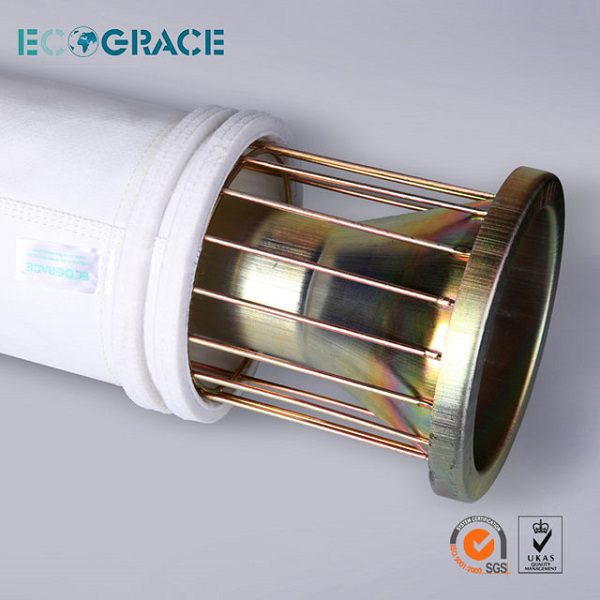
Steel Mill Filter Bags
High-Temperature Dust Collection for EAF, BOF, Blast Furnace, Sinter Plant & Steelmaking Operations
Engineered by ECOGRACE
Product Overview
ECOGRACE steel mill filter bags are purpose-engineered for the extreme dust loading, high temperatures, and aggressive chemical environment found throughout integrated steel plants and electric arc furnace (EAF) mini-mills. Steelmaking generates some of the heaviest particulate burdens in industrial processing — EAF fume contains zinc oxide, lead, cadmium, and iron oxide particles at temperatures reaching 250°C, while sinter plant off-gas carries alkali chlorides, SO2, and dioxins that destroy standard filtration media within months.
Our steel mill filter bags deliver ≥99.9% particulate capture efficiency across the full spectrum of steelmaking dust — from sub-micron zinc fume in EAF operations to coarse iron oxide scale dust in hot rolling mills. Each bag is constructed with application-specific fiber selection, surface treatment, and PTFE membrane lamination optimized for the exact temperature profile, chemical exposure, and dust characteristics of your specific steelmaking process. With PTFE membrane technology, outlet emissions consistently fall below 5 mg/Nm³, meeting the most stringent steel industry emission standards worldwide.
With over 500 installations across integrated steel works, EAF mini-mills, stainless steel plants, and specialty alloy producers in Asia, Europe, the Middle East, and South America, ECOGRACE provides dust collector filter bags that consistently meet EU BAT-AEL (Best Available Techniques – Associated Emission Levels), US EPA MACT standards, China GB 28664 ultra-low emission requirements, and the most demanding national air quality regulations for the steel industry.
Steel Mill Filter Bags by Steelmaking Process
Electric Arc Furnace (EAF) Fume
The most demanding steel mill filter bag application. EAF melting of scrap steel generates massive volumes of zinc oxide, lead, and iron oxide fume at 180–250°C with extreme dust loading (10–30 g/Nm³ at primary hood, 2–8 g/Nm³ at canopy). PTFE membrane filter bags on fiber glass or PPS substrate with high-temperature and abrasion-resistant treatment for maximum bag life under intense thermal cycling.
Basic Oxygen Furnace (BOF/LD Converter)
BOF primary off-gas is typically handled by wet scrubbers, but secondary fume capture at the converter mouth and charging/tapping operations requires high-capacity baghouse filter bags. Steel mill filter bags for BOF secondary dedusting handle iron oxide fume at 120–180°C with periodic temperature spikes during oxygen blowing. Polyester/PPS blended or NOMEX filter bags with anti-spark treatment provide reliable performance.
Blast Furnace Cast House Dedusting
Blast furnace tapping operations generate dense iron oxide and graphite dust clouds at 150–200°C from the tap hole, iron runner, torpedo ladle, and slag granulation area. Steel mill filter bags for cast house dedusting require excellent abrasion resistance (heavy, coarse particulate) combined with spark resistance. PPS or aramid fiber with singed and calendered surface finish and PTFE membrane lamination.
Sinter Plant Off-Gas Filtration
Sintering produces the most chemically complex off-gas in a steel mill — containing alkali chlorides (KCl, NaCl), SO2, dioxins/furans, heavy metals, and fine iron ore dust at 120–160°C. Steel mill filter bags for sinter plants must withstand simultaneous acid gas attack, alkali salt deposition, and dioxin capture with activated carbon injection. PPS with PTFE membrane is the proven standard configuration.
Ladle Furnace (LF) & Secondary Metallurgy
Ladle refining, vacuum degassing (VD/VOD), and alloy addition stations generate fine metallic fume rich in zinc, manganese, and chromium (especially in stainless steel production) at 150–220°C. These fine fumes require steel mill filter bags with PTFE membrane surface filtration to prevent sub-micron heavy metal particles from penetrating fiber depth and contaminating the clean side.
Coke Oven & By-Product Plant
Coke pushing, quenching, and coke oven gas desulfurization produce carbonaceous dust, tar aerosols, and sulfur compounds at 130–180°C. Steel mill filter bags for coke plants require oleophobic treatment to prevent tar blinding and hydrocarbon condensation. PPS or NOMEX filter bags with PTFE membrane and oil/water repellent surface finish.
Recommended Filter Media for Steel Mill Filter Bags
Fiber Glass Filter Bags
Continuous operating temperature up to 280°C — the primary choice for EAF primary fume collection where temperature excursions are frequent. PTFE membrane lamination with acid-resistant e-PTFE coating delivers <5 mg/Nm³ outlet emission. Woven fiber glass with PTFE finish provides excellent dimensional stability under high thermal cycling in EAF steel mill filter bag applications.
NOMEX Filter Bags
NOMEX filter bags (meta-aramid) operate continuously at 200°C with superior mechanical strength and abrasion resistance — ideal for BOF secondary dedusting, cast house, and rolling mill steel mill filter bag applications where coarse abrasive dust and thermal cycling demand exceptional fabric durability. Spark-resistant properties protect against molten metal splash.
PPS Filter Bags
Continuous operating temperature up to 190°C with outstanding acid, alkali, and hydrolysis resistance. The cost-effective standard for sinter plant, pelletizing, and coke oven dedusting where acid gas exposure (SO2, HCl) is significant. PPS/PTFE fiber-blended versions available for enhanced oxidation resistance in O2-rich environments common in sinter plant steel mill filter bag applications.
PTFE Membrane Lamination
Applied to any substrate (fiber glass, NOMEX, PPS, P84) for surface filtration that captures sub-micron zinc oxide and heavy metal fume at ≥99.99% efficiency. Prevents fine metallic dust from embedding into fiber depth, maintains low and stable pressure drop, and enables easy pulse-jet cleaning. The critical upgrade for any steel mill filter bag application targeting ultra-low emission compliance (<5 mg/Nm³).
Material Comparison for Steel Mill Filter Bags
| Material | Max Temp | Best Steel Mill Application | Abrasion Resistance | Acid Resistance | Service Life |
|---|---|---|---|---|---|
| Fiber Glass + PTFE Membrane | 280°C | EAF primary fume, ladle furnace | Moderate | Good | 18–30 months |
| NOMEX (Aramid) + PTFE Membrane | 200°C | BOF secondary, cast house, rolling mill | Excellent | Moderate | 24–36 months |
| PPS + PTFE Membrane | 190°C | Sinter plant, coke oven, pelletizing | Good | Excellent | 24–36 months |
| PPS/PTFE Fiber Blend | 200°C | Sinter with high O2/NOx, BF stove | Good | Superior | 30–42 months |
| P84 (Polyimide) + PTFE Membrane | 240°C | EAF with high temp excursions, ferroalloy | Good | Excellent | 24–36 months |
Technical Parameters — Steel Mill Filter Bags
| Parameter | Specification |
|---|---|
| Filtration Efficiency | ≥99.9% standard / ≥99.99% with PTFE membrane |
| Outlet Particulate Emission | <10 mg/Nm³ (standard) / <5 mg/Nm³ (PTFE membrane) |
| Operating Temperature Range | 120°C – 280°C (material dependent) |
| Inlet Dust Loading | 2–30 g/Nm³ (process dependent; EAF primary up to 30 g/Nm³) |
| Air-to-Cloth Ratio | 0.8–1.2 m/min (EAF/BOF) / 1.0–1.5 m/min (material handling) |
| Cleaning Mechanism | Pulse-jet (online or offline), 4–6 bar compressed air |
| Service Life | 18–42 months (material and process dependent) |
| Tensile Strength (Warp/Weft) | ≥900 N/5cm (warp) / ≥1,100 N/5cm (weft) |
| Burst Strength | ≥2,500 kPa (enhanced for high dust loading) |
| Surface Treatment | PTFE membrane, singeing, calendering, anti-static, acid-resistant, hydro/oleophobic finish |
| Available Diameters | 120 mm, 130 mm, 150 mm, 160 mm (custom available) |
| Available Lengths | 2,000 mm – 10,000 mm (custom to order) |
| Certification | ISO 9001, ISO 14001, CE, SGS tested |
Why Steel Mills Need Specialized Filter Bags
Steel production involves some of the most extreme dust generation conditions in all industrial processing. From the 1,600°C inferno of an EAF melting cycle to the chemical complexity of sinter plant off-gas, no single standard filter bag can survive across all steelmaking processes. Standard industrial baghouse filter bags designed for cement or power generation lack the specialized construction needed for the unique combination of extreme temperature cycling, heavy metal fume, abrasive iron oxide dust, and corrosive acid gases found in steel mills. Here is why steel mill filter bags demand purpose-built engineering:
Extreme Thermal Cycling
EAF operations produce rapid temperature swings from 80°C (between heats) to 250°C+ (during meltdown and refining) within minutes. This repeated thermal cycling fatigues filter media, cracks rigid fiber glass substrates, and degrades PTFE membrane adhesion. Steel mill filter bags require thermally resilient substrates with flexible membrane bonding technology that withstands 10,000+ thermal cycles per year without delamination.
Heavy Metal Fume & Zinc Oxide
EAF dust contains 15–35% zinc oxide from galvanized scrap, plus lead (2–7%), cadmium, chromium, and other regulated heavy metals. These fine metallic fume particles (<1 µm) penetrate conventional depth-filtration media and embed permanently, causing progressive blinding. PTFE membrane surface filtration is essential for steel mill filter bags to capture these sub-micron heavy metal particles on the bag surface where they can be pulse-jet cleaned effectively.
Abrasive Iron Oxide Scale Dust
Hot rolling mills, continuous casters, and material handling systems generate coarse, highly abrasive iron oxide scale dust (Fe2O3, Fe3O4) that erodes standard filter media at an accelerated rate. Steel mill filter bags for these applications require heavy-weight felt construction (≥550 g/m²), singeing and calendering to create a smooth surface that resists abrasive wear, and reinforced bottom cuffs to prevent premature failure at high-wear zones.
Sinter Plant Acid Gas & Dioxins
Sinter plant off-gas contains SO2 (500–2,000 mg/Nm³), HCl, alkali chlorides (KCl, NaCl), and dioxins/furans — requiring steel mill filter bags with the chemical resistance typically associated with waste incineration. Activated carbon injection for dioxin control adds another demand: PTFE membrane must maintain a uniform sorbent layer for maximum adsorption efficiency while resisting acid gas corrosion for 24–36 months.
Spark & Molten Metal Risk
Steelmaking operations generate sparks, molten metal droplets, and red-hot scale particles that can burn through standard filter media in seconds. Steel mill filter bags in EAF, BOF, and cast house applications require spark-resistant aramid or fiber glass substrates, metal spark arrestor pre-filters, and flame-retardant surface treatments to prevent catastrophic bag burnout.
Ultra-Low Emission Mandates
Regulators worldwide are tightening steel industry emission limits aggressively. China’s ultra-low emission policy (GB 28664) requires ≤10 mg/Nm³ organized PM from all steel plant sources, while EU BAT-AEL mandates 2–5 mg/Nm³ for EAF and sinter plants. These targets are only achievable with PTFE membrane steel mill filter bags — conventional depth-filtration media cannot consistently meet these limits across the variable dust conditions of steel production.
EAF Dust Recovery — Turning Filter Bag Catch into Revenue
Electric arc furnace dust collected by steel mill filter bags is classified as hazardous waste (K061 in the US, European Waste Catalogue 10 02 07*) due to its high zinc, lead, and cadmium content. However, this same dust is a valuable secondary raw material for zinc recovery — EAF dust typically contains 15–35% zinc, making it a higher-grade zinc ore than many primary mining operations.
Effective steel mill filter bags with PTFE membrane maximize both the quantity and quality of recovered EAF dust by capturing the finest zinc oxide particles (<0.5 µm) that carry the highest zinc concentration. This improves zinc recovery economics and reduces hazardous waste disposal costs. Plants using Waelz kiln or ESRF processes for EAF dust recycling report 10–15% higher zinc recovery rates after upgrading to PTFE membrane steel mill filter bags from conventional depth-filtration bags.
ECOGRACE steel mill filter bags help steel producers transform a costly waste management obligation into a revenue-generating zinc recovery operation while simultaneously achieving ultra-low emission compliance.
Steel Mill Applications We Serve
ECOGRACE Advantages for Steel Mill Filter Bags
Process-Specific Engineering
Every steel mill filter bag order is engineered for your specific steelmaking process, dust characteristics, temperature profile, and emission target. We analyze your EAF charge mix (galvanized scrap %, DRI ratio), sinter plant fuel composition, or coke oven operating mode to select the optimal fiber, weight, membrane type, and surface treatment — not a one-size-fits-all approach.
Ultra-Low Emission Guarantee
PTFE membrane steel mill filter bags consistently achieve <5 mg/Nm³ outlet PM across all steelmaking processes — meeting China ultra-low emission (≤10 mg/Nm³), EU BAT-AEL (2–5 mg/Nm³), and EPA MACT standards with significant compliance margin. Verified by third-party CEMS data from operating installations across 50+ steel plants.
Maximum Thermal Cycling Endurance
Proprietary flexible PTFE membrane bonding technology withstands 15,000+ thermal cycles without delamination — specifically developed for the extreme temperature swings of EAF and BOF operations. Unlike rigid membrane adhesives used by conventional suppliers, our flexible bonding survives the 80–260°C cycling that defines EAF steel mill filter bag service.
Complete OEM Replacement Compatibility
Drop-in replacement steel mill filter bags for all major dust collector OEM systems including Danieli, SMS Group, Primetals Technologies, Tenova, JP Steel Plantech, and Chinese-manufactured steelmaking equipment. Provide existing bag dimensions for exact-fit replacements with optimized media upgrading.
Frequently Asked Questions — Steel Mill Filter Bags
What filter bag material is best for EAF steel mill applications?
Fiber glass with PTFE membrane lamination is the most widely proven material for EAF primary fume collection where temperatures reach 250°C+ during meltdown. For EAF canopy hoods with lower temperatures (120–180°C), NOMEX filter bags with PTFE membrane offer superior abrasion resistance and longer service life. P84 (polyimide) is a premium alternative for EAF steel mill filter bags where both high temperature resistance and fine fume capture are required.
How do steel mill filter bags handle zinc oxide fume from galvanized scrap?
Zinc oxide fume from EAF melting of galvanized scrap is extremely fine (<1 µm) and tends to embed permanently in conventional depth-filtration media. PTFE membrane surface filtration captures zinc fume on the bag surface where it forms a releasable cake that is effectively removed by pulse-jet cleaning. This maintains stable pressure drop and maximizes zinc content in the collected EAF dust for downstream zinc recovery (Waelz kiln or ESRF process).
What steel mill filter bags do you recommend for sinter plant dedusting?
PPS filter bags with PTFE membrane are the proven standard for sinter plant off-gas filtration at 120–160°C. PPS provides excellent resistance to the SO2, HCl, and alkali chloride environment of sinter operations. For sinter plants with activated carbon injection for dioxin control, PTFE membrane is essential to maintain a uniform carbon cake layer for maximum dioxin/furan adsorption. PPS/PTFE fiber blend is recommended where O2 exceeds 15%.
Do you supply replacement steel mill filter bags for existing baghouse systems?
Yes. We manufacture drop-in replacement steel mill filter bags compatible with all major steelmaking dust collector OEM systems including Danieli, SMS Group (formerly Siemens VAI), Primetals Technologies (formerly Mitsubishi-Hitachi), Tenova, JP Steel Plantech, and Chinese-manufactured baghouse systems. Provide your current bag dimensions, snap-ring/cuff configuration, and process data for exact-fit replacements with optimized media selection.
What is the minimum order quantity, pricing, and lead time for steel mill filter bags?
MOQ is 200 pieces for standard sizes. Pricing ranges from $8–$25/piece depending on material (polyester vs. fiber glass vs. PPS), dimensions, PTFE membrane, and surface treatments. Full plant changeout orders (2,000–10,000+ bags) within 25–35 days. Standard delivery 15–25 days. Free samples available for laboratory testing and side-by-side comparison with your current bags.
Request a Technical Quote for Steel Mill Filter Bags
Contact ECOGRACE for process-specific filtration solutions for your steel plant
[email protected]WhatsApp: +86-13588065995
Learn more about baghouse filter bags from ECOGRACE