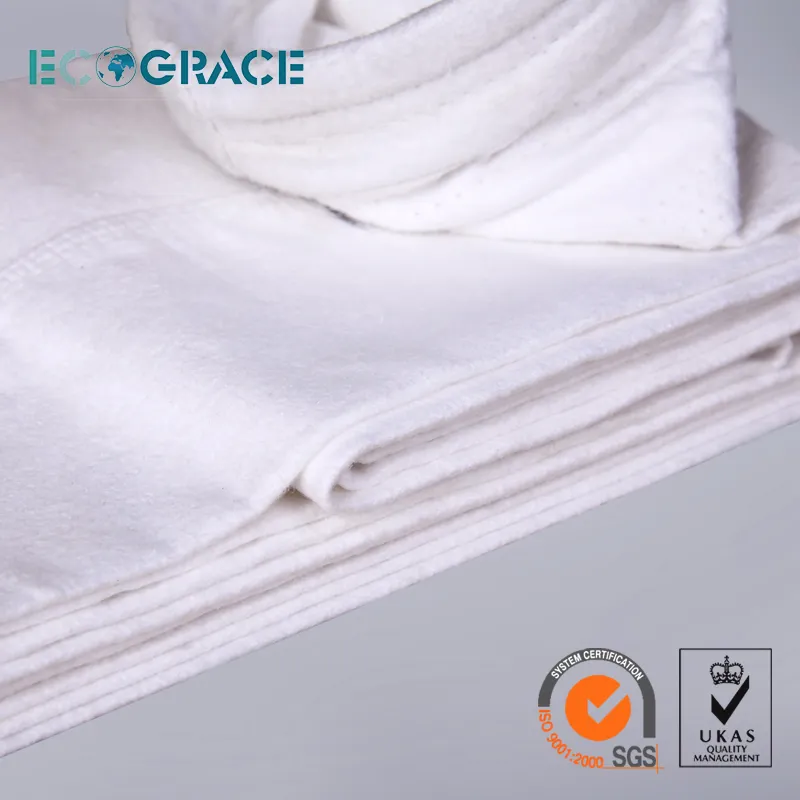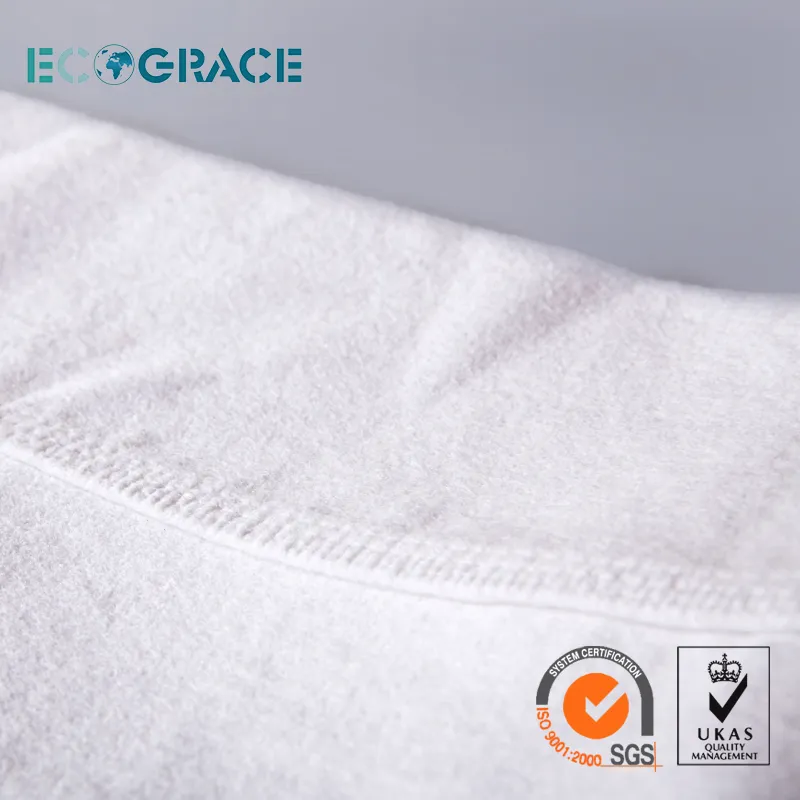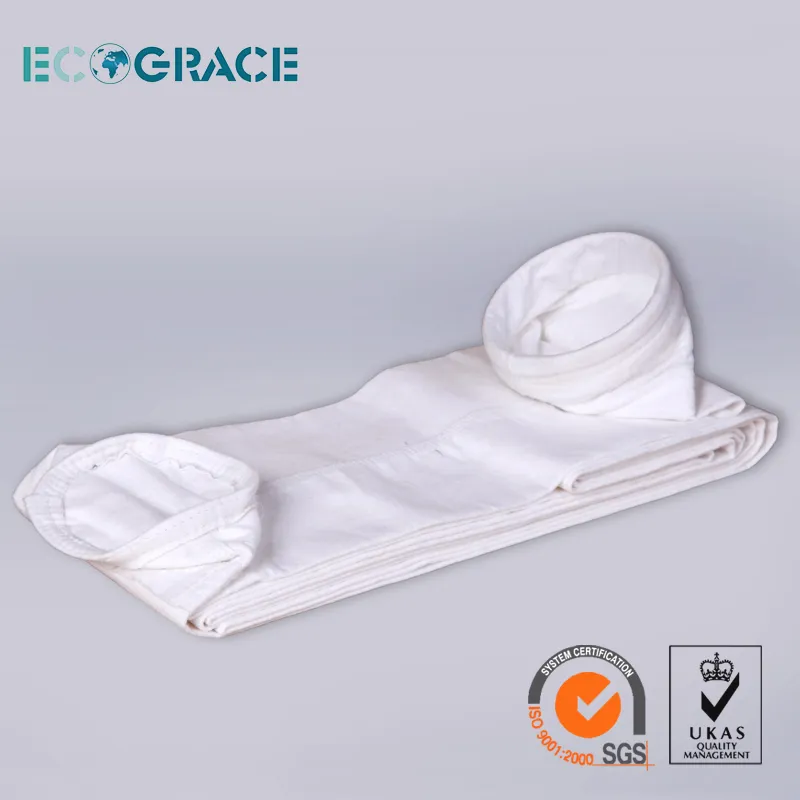
High Temperature Filter Bag


High Temperature Filter Bag – Advanced Filtration Media for 150°C to 260°C Applications

When process gas temperatures exceed 150°C, standard polyester filter bags fail rapidly — shrinking, weakening, and releasing uncontrolled emissions. High temperature filter bags manufactured from specialized heat-resistant media are the only reliable solution for effective dust collection in extreme thermal environments. ECOGRACE is a leading global manufacturer of high temperature filter bags engineered for continuous operation from 150°C to 260°C across the most demanding industrial applications.

Our high temperature filtration solutions include Nomex (Aramid) for up to 204°C, PTFE (Teflon) for up to 260°C, PPS (Ryton) for up to 190°C, P84 (Polyimide) for up to 260°C, and Fiberglass for up to 260°C — each optimized for specific temperature ranges, chemical environments, and dust characteristics.

Why High Temperature Filter Bags Require Specialized Engineering

  • Thermal Stability: Standard filter media degrades above 130°C; high temperature filter bags maintain structural integrity at 150–260°C continuously
  • Chemical Resistance: Hot flue gases contain aggressive compounds (SO&sub2;, SO&sub3;, HCl, HF, NOx) that accelerate media degradation at elevated temperatures
  • Thermal Shock Tolerance: Sudden temperature spikes from process upsets, kiln shell leaks, or startup/shutdown cycles can exceed 300°C momentarily
  • Hydrolysis Protection: Moisture in hot gas streams causes hydrolytic degradation in some media — correct material selection prevents premature failure
  • Oxidation Resistance: High-oxygen, high-temperature environments accelerate oxidative breakdown of susceptible fiber types
high temperature filter bag for industrial dust collection
ECOGRACE High Temperature Filter Bags – PTFE, Nomex, Fiberglass

260°C
Max Continuous Temperature
99.99%
Filtration Efficiency (PTFE)
60+
Countries Worldwide
25+
Years Manufacturing Excellence

High Temperature Filter Bag Material Comparison – Complete Selection Guide

Choosing the correct high temperature filter bag media is the most critical decision for any elevated-temperature dust collection system. Each material has specific temperature limits, chemical compatibility, and mechanical properties that determine its suitability for your application. The table below compares all five major high-temperature filter media.

Filter Media Continuous Temp (°C) Surge Temp (°C) Acid Resistance Alkali Resistance Hydrolysis Oxidation Abrasion Primary Applications
Nomex (Aramid) 204 220 Fair Good Fair Good Excellent Asphalt plants, cement kilns, metal smelting
PTFE Felt (Teflon) 260 280 Excellent Excellent Excellent Excellent Fair Waste incineration, chemical plants, power stations
PPS (Ryton) 190 210 Excellent Excellent Excellent Poor Good Coal-fired boilers, power plants, steel mills
P84 (Polyimide) 260 280 Good Fair Good Good Good Cement plants, carbon black, waste-to-energy
Fiberglass 260 280 Good Fair Good Fair Poor Glass furnaces, aluminum smelting, ferroalloy production

All ECOGRACE high temperature filter bags are available with PTFE membrane lamination, acid-resistant finish, anti-static treatment, and oleophobic/hydrophobic DWR coating for enhanced performance in extreme operating conditions.


In-Depth: High Temperature Filter Bag Media – When to Use Each Material

Nomex (Aramid) – Up to 204°C

Nomex aramid is the most popular high temperature filter bag material for applications between 150–204°C. Its outstanding abrasion resistance makes it the first choice for abrasive dust environments like asphalt plants and cement mills.

  • Best for: Asphalt mixing plants, cement clinker coolers, metal smelting furnaces, dryer exhaust
  • Key advantage: Highest abrasion resistance of all high-temperature media; excellent mechanical strength
  • Limitation: Susceptible to hydrolysis in high-moisture environments with acid gas presence; not suitable for SO&sub3; dew point conditions
  • Typical service life: 24–48 months with proper temperature management

PTFE Felt (Teflon) – Up to 260°C

PTFE felt is the ultimate high temperature filter bag material — offering the highest continuous temperature rating combined with universal chemical resistance. No other filter media matches PTFE’s combination of thermal, chemical, and hydrolysis performance.

  • Best for: Waste incinerators, chemical plants, hazardous waste treatment, power plants with aggressive flue gas
  • Key advantage: Excellent resistance to virtually all chemicals, acids, and alkalis; zero hydrolysis risk
  • Limitation: Lower abrasion resistance compared to Nomex; higher cost per unit
  • Typical service life: 48–72+ months in most applications

PPS (Ryton) – Up to 190°C

PPS (polyphenylene sulfide) is the preferred high temperature filter bag material for coal-fired applications with acid gas exposure. Its excellent chemical resistance at moderate high temperatures makes it the standard for power generation and steel industry baghouses.

  • Best for: Coal-fired boilers, industrial boilers, steel mill sinter plants, carbon black recovery
  • Key advantage: Outstanding acid and alkali resistance; excellent hydrolysis resistance; good cost-performance ratio
  • Limitation: Poor oxidation resistance above 150°C when O&sub2; >12%; requires low-oxygen environment for maximum life
  • Typical service life: 36–60 months in appropriate conditions

P84 (Polyimide) – Up to 260°C

P84 polyimide fiber offers a unique tri-lobal cross-section that provides 80% more surface area per fiber compared to round fibers. This makes P84 high temperature filter bags exceptionally efficient at capturing fine particles.

  • Best for: Cement kilns, carbon black, waste-to-energy, high-temperature chemical processes
  • Key advantage: Superior fine particle capture; high filtration efficiency; good acid resistance
  • Limitation: Lower alkali resistance; sensitive to strong alkaline environments (cement dust)
  • Typical service life: 36–60 months with proper chemical management

Fiberglass – Up to 260°C

Fiberglass is one of the oldest and most cost-effective high temperature filter bag materials, widely used in glass manufacturing, aluminum smelting, and ferroalloy production.

  • Best for: Glass furnaces, aluminum pot lines, ferrosilicon production, carbon bake ovens
  • Key advantage: Excellent thermal stability; lowest cost among 260°C media; good dimensional stability
  • Limitation: Very low abrasion and flex resistance — requires gentle pulse cleaning with reduced pressure
  • Typical service life: 36–60 months with careful handling and optimized cleaning

High Temperature Filter Bag Specifications & Configurations

Standard Dimensions

  • Diameter: 100mm, 120mm, 130mm, 150mm, 160mm (custom sizes available)
  • Length: 1000mm to 10000mm (standard range 2000–8000mm)
  • Fabric Weight: 500–750 g/m² depending on media type
  • Air Permeability: 80–200 L/dm²/min (optimized for each material)

Top & Bottom Closure Options

  • Top: Snap band, snap ring, spring ring, flange, cuff, raw edge
  • Bottom: Sewn bottom, round cap, flat bottom
  • Seam: Three-needle double-row stitching with PTFE thread (heat-resistant)
  • Cage Fit: Precision-engineered for all major pulse jet dust collector brands

Surface Treatments for High Temperature Service

  • PTFE Membrane Lamination: Surface filtration achieving emissions <5 mg/Nm³ with 50–70% lower ΔP; available on all high temperature media
  • Acid-Resistant Finish: Enhanced protection against SO&sub2;/SO&sub3; dew point condensation in flue gas applications
  • Anti-static Treatment: Conductive carbon or stainless steel fibers for ATEX compliance (<10&sup9; Ω) in combustible dust environments
  • Oleophobic/Hydrophobic DWR: Water and oil repellent coating for high-moisture, condensation-prone environments
  • Graphite/PTFE Impregnation (Fiberglass): Enhances flex resistance and reduces abrasion damage for fiberglass bags
  • Silicone Treatment (Fiberglass): Improves surface smoothness and dust cake release characteristics
high temperature filter bag PTFE fiberglass material
PTFE & Fiberglass High Temperature Filter Bags

High Temperature Filter Bag Selection by Temperature Range

Match your operating temperature to the recommended filter media

Temperature Range Recommended Media Acid Gas Environment Alkaline Dust Abrasive Dust Budget Priority
130–170°C Nomex or PPS PPS Nomex Nomex PPS
170–204°C Nomex PTFE Felt Nomex Nomex Nomex
204–230°C P84 or PTFE Felt PTFE Felt P84 P84 Fiberglass
230–260°C PTFE Felt or Fiberglass PTFE Felt Fiberglass PTFE Felt Fiberglass

Note: This is a general guide. Actual media selection requires complete process data analysis including gas chemistry, dust properties, and emission targets. Contact ECOGRACE for free application assessment.


High Temperature Filter Bags for Critical Industrial Applications

Proven performance in the world’s most demanding thermal environments

Asphalt Mixing Plants

Temperature: 180–220°C | Media: Nomex + PTFE membrane
Highly abrasive mineral aggregate dust at continuous high temperatures. Our aramid high temperature filter bags deliver 18–36 month service life with emissions <10 mg/Nm³. Asphalt solutions →

Cement & Lime Kilns

Temperature: 200–260°C | Media: P84, Fiberglass
Alkaline dust with temperature spikes from kiln shell leaks. P84 tri-lobal fibers capture ultra-fine cement particles with superior efficiency. Cement solutions →

Steel & Metal Smelting

Temperature: 180–260°C | Media: Fiberglass, P84, PTFE
EAF, BOF, and metal smelting furnaces with extreme thermal shocks. Reinforced high temperature filter bags resist temperature spikes to 280°C+.

Coal & Biomass Power Plants

Temperature: 150–190°C | Media: PPS, PTFE membrane
Acidic flue gas (SO&sub2;/SO&sub3;) from coal combustion. PPS + PTFE membrane delivers ultra-low emissions (<5 mg/Nm³) with 36–60 month bag life. Power plant solutions →

Waste-to-Energy Incinerators

Temperature: 190–260°C | Media: PTFE felt + membrane
Most aggressive flue gas chemistry (HCl, HF, SOx, dioxins). PTFE felt is the only high temperature filter bag material with complete chemical inertness. WtE solutions →

Glass & Aluminum Smelting

Temperature: 220–260°C | Media: Fiberglass
Glass furnace off-gas and aluminum pot room ventilation. Fiberglass with PTFE/graphite coating provides the most cost-effective 260°C filtration solution available.


Common Causes of High Temperature Filter Bag Failure & Prevention

Understanding the unique failure modes of high temperature filter bags is essential for maximizing service life and avoiding costly unplanned shutdowns. Below are the most common failure mechanisms specific to high-temperature applications.

Failure Mode Root Cause Symptoms Prevention Strategy
Thermal Over-Exposure Temperature exceeds media continuous rating Fabric shrinkage, embrittlement, color darkening Continuous temperature logging; install bypass damper; upgrade to higher-rated media
Hydrolytic Degradation Moisture + heat + acid gas attacking Nomex/P84 fibers Loss of tensile strength, fiber disintegration, pinholes Switch to PPS or PTFE for acid/moisture environments; maintain temp above dew point
Oxidative Attack (PPS) High O&sub2; concentration (>12%) + high temperature (>150°C) Fabric stiffening, brittleness, orange/brown discoloration Verify O&sub2; levels before specifying PPS; use PTFE felt for high-oxygen applications
Acid Dew Point Corrosion Flue gas cooling below acid dew point during low-load or shutdown Sticky paste on bag surface, rising ΔP, mud-like cake Insulate ductwork; maintain minimum temperature above dew point; hydrophobic treatment
Thermal Shock Damage Rapid temperature excursions during process upsets or startup Localized melting, stiffened spots, cracking (fiberglass) Install emergency bypass; preheat system before startup; use spark arrestors upstream
Fiberglass Flex Fatigue Excessive pulse cleaning pressure cracking glass fibers Vertical cracks along cage wires, fiber breakage, holes at flex points Reduce pulse pressure to 2.5–3.5 bar; increase cleaning interval; use PTFE/graphite coating

Proven Performance: High Temperature Filter Bag Case Studies

Waste Incinerator – Vietnam

500 TPD municipal solid waste incinerator operating at 230°C with aggressive HCl/HF flue gas. Previous supplier’s P84 bags failed after 8 months from chemical attack. ECOGRACE supplied PTFE felt high temperature filter bags with expanded membrane.

Result: 48-month bag life achieved. Dioxin emissions <0.08 ng-TEQ/Nm³. Particulate emissions consistently <5 mg/Nm³. Zero mid-cycle replacements.

Cement Kiln Baghouse – Turkey

6,000 TPD cement plant with kiln baghouse operating at 240°C. Frequent thermal shocks from kiln shell leaks damaged fiberglass bags every 12 months. ECOGRACE engineered P84/PTFE composite high temperature filter bags with acid-resistant finish.

Result: Bag life extended to 40+ months. Emissions reduced to <8 mg/Nm³. Annual filtration cost reduced by 65%. Thermal shock resistance improved significantly.

Coal Power Plant – Philippines

2×135 MW coal-fired units with flue gas at 165°C containing 1,200 ppm SO&sub2;. Original Nomex bags lasted only 10 months from hydrolytic degradation. ECOGRACE switched to PPS high temperature filter bags with PTFE membrane lamination.

Result: Service life extended to 48+ months (4.8x improvement). Stack emissions <8 mg/Nm³. Compressed air consumption reduced by 40% due to membrane.


High Temperature Filter Bag Installation & Thermal Management

Installation Best Practices

  1. Pre-Installation Inspection: Verify each high temperature filter bag for correct media type, dimensions, and closure. High-temperature media is more costly — damaged bags should never be installed
  2. Cage Condition: Inspect all cages for burrs, weld splatter, and corrosion. Damaged cages cause accelerated abrasion especially on fiberglass and PTFE bags with lower flex resistance
  3. Proper Insertion: Lower bags over cages gently without forcing, bunching, or pinching. Fiberglass bags are especially fragile — never pull or stretch
  4. Seal Verification: Confirm every snap band or cuff is fully seated. At high temperatures, even small leaks allow hot, dirty gas to bypass the filter
  5. Pre-Heating Protocol: Before introducing hot process gas, preheat the baghouse gradually (max 50°C/hour) to prevent thermal shock and condensation

Thermal Management for Maximum Bag Life

  • Continuous Temperature Monitoring: Install thermocouples at baghouse inlet, outlet, and hopper. Log temperature data for trend analysis and warranty documentation
  • Emergency Bypass System: Install automatic bypass damper that activates when inlet temperature exceeds media surge rating. This single measure prevents the most common cause of premature failure
  • Dew Point Management: Calculate acid dew point based on SO&sub3; and moisture concentration. Maintain gas temperature at least 20–30°C above dew point at all times
  • Startup/Shutdown Protocol: Develop written procedures for gradual heating and cooling. Never introduce cold, moist air into a hot baghouse or hot gas into a cold system
  • Insulation Audit: Inspect ductwork and baghouse insulation annually. Cold spots cause localized condensation, leading to acid attack and blinding on high temperature filter bags
  • Pulse Cleaning Optimization: High-temperature media (especially fiberglass) requires gentler cleaning: lower pulse pressure (2.5–4 bar), longer intervals, and on-demand ΔP-based triggering

Certifications & Quality Assurance

Manufacturing Quality Control:

  • Raw material incoming inspection (fiber composition, denier, thermal rating verification)
  • In-process monitoring (fabric weight, thickness, air permeability per batch)
  • Thermal shrinkage testing at rated temperature per lot
  • Seam strength and burst strength testing
  • Dimensional accuracy verification (diameter, length, closure fit)
  • Full lot traceability with quality certificates

Certifications & Standards:

  • ISO 9001:2015 Quality Management System
  • ISO 14001:2015 Environmental Management
  • ATEX 2014/34/EU (anti-static high temperature bags)
  • CE Marking for European Union Markets
  • Testing per ISO 9237, ISO 13934, ASTM D737, ASTM D5034
  • Thermal resistance testing per DIN EN ISO 6942
  • RoHS & REACH Material Compliance

Why Choose ECOGRACE High Temperature Filter Bags?

25+ Years of High-Temperature Filtration Expertise
Over two decades focused exclusively on industrial filtration including the most challenging high temperature filter bag applications worldwide. Proven track record across cement, steel, power generation, and waste incineration in 60+ countries.

Complete High-Temperature Media Range
We manufacture all five major high-temperature filter media in-house: Nomex, PTFE Felt, PPS, P84, and Fiberglass. This means we recommend the best solution for your application — not just the material we happen to stock.

Free Application Engineering
Every high temperature filter bag project includes complimentary application assessment: process data review, media recommendation, performance modeling, and pulse cleaning optimization. No minimum order quantity for custom specifications.

Lowest Total Cost of Ownership
Higher-quality high temperature filter bags with correctly matched media and surface treatments consistently deliver 2–5x longer service life, lower energy costs, and fewer maintenance interventions — resulting in 40–70% lower lifecycle cost despite higher unit price.

Global Supply & Fast Delivery
Standard lead time 3–4 weeks for custom orders. Emergency rush production in 2–3 weeks. Common high-temperature sizes stocked for immediate shipment. Multi-language technical support available 24/7.

Performance Guarantee
Documented service life guarantees backed by real field performance data. If high temperature filter bags fail prematurely due to material defects or incorrect specification by our engineering team, we provide full replacement at our cost.


Frequently Asked Questions – High Temperature Filter Bags

Q: What is the maximum temperature for high temperature filter bags?
A: The maximum continuous operating temperature is 260°C (500°F), achieved with PTFE felt, P84 polyimide, and fiberglass media. These materials can tolerate short-term temperature surges up to 280°C. Nomex (aramid) handles up to 204°C continuous, and PPS up to 190°C. For temperatures above 260°C, ceramic or metallic filter elements may be required.

Q: How do I choose between Nomex, PTFE, PPS, P84, and Fiberglass for my high temperature application?
A: The decision depends on four factors: (1) Operating temperature range, (2) Chemical composition of the flue gas (acid gases, moisture, oxygen level), (3) Dust characteristics (abrasiveness, particle size), and (4) Budget. Nomex excels for abrasive dust below 204°C, PTFE is the universal solution for chemically aggressive environments up to 260°C, PPS is best for acid gas at moderate temperatures, P84 captures the finest particles, and fiberglass is the most cost-effective 260°C option.

Q: Why do my high temperature filter bags keep failing prematurely?
A: The most common causes are: (1) Temperature excursions above media rating, (2) Hydrolysis from moisture combined with acid gas and heat (especially for Nomex), (3) Oxidative attack on PPS in high-oxygen environments, (4) Acid dew point corrosion during shutdown/low-load, (5) Wrong media for the application chemistry. Our engineers provide free failure analysis to identify root cause and recommend the correct media upgrade.

Q: What is PTFE membrane lamination and why should I use it on high temperature filter bags?
A: PTFE membrane is a thin expanded PTFE film laminated to the surface of the base filter media. It converts depth filtration to surface filtration, providing: (1) 99.99%+ efficiency from first use, (2) 50–70% lower pressure drop, (3) Better dust cake release requiring less aggressive cleaning, (4) 2–3x longer service life. Available on all high-temperature media including Nomex, PPS, P84, and fiberglass.

Q: Can ECOGRACE high temperature filter bags fit my existing baghouse system?
A: Yes. We manufacture custom-sized high temperature filter bags compatible with all major baghouse brands including Donaldson, Camfil, BWF, Hamon, GEA, FLSmidth, and any other pulse jet system. Provide your current bag dimensions and closure type for exact-fit replacements.

Q: What is the service life of high temperature filter bags?
A: Service life varies by media and application: Nomex 24–48 months, PPS 36–60 months, P84 36–60 months, PTFE Felt 48–72+ months, Fiberglass 36–60 months. Proper temperature management, pulse cleaning optimization, and correct media selection are the biggest factors. Many of our installations exceed these ranges with proper maintenance protocols.

Q: Do you supply anti-static high temperature filter bags?
A: Yes. Anti-static high temperature filter bags incorporate conductive fibers (carbon or stainless steel blended) achieving surface resistivity <10&sup9; Ω per ATEX 2014/34/EU. Available for all high-temperature media types. Essential for applications handling combustible dust at elevated temperatures such as carbon black, coal handling, and certain chemical powders.

Q: How do you handle emergency filter bag replacements?
A: We offer rush production in 2–3 weeks for urgent needs. Common high-temperature sizes and materials (Nomex 130×2000–6000mm, PPS 160×6000mm) are stocked for immediate shipment. For critical plant shutdowns, we can arrange expedited air freight to minimize downtime. 24/7 technical support for emergency situations.

Expert Technical Q&A – High Temperature Filter Bags

Q: Why does PPS fail in some high-temperature applications but not others?

PPS is susceptible to oxidative degradation when exposed to high oxygen concentrations (>12%) at temperatures above 150°C. In coal-fired power plants where O&sub2; is typically 5–8%, PPS performs excellently for 36–60 months. However, in applications with air infiltration (leaking ductwork, high excess air), oxygen levels can exceed safe limits, causing rapid PPS degradation. Always verify O&sub2; levels before specifying PPS. For high-oxygen environments, PTFE felt is the recommended alternative.

Q: What is the difference between PTFE felt and PTFE membrane on high temperature filter bags?

PTFE felt is the base filter fabric made entirely from PTFE fibers — it provides the structural body of the bag and handles the thermal/chemical environment. PTFE membrane is a thin expanded PTFE film laminated to the surface of any base media (Nomex, PPS, P84, fiberglass, or PTFE felt). The membrane provides surface filtration for higher efficiency and lower pressure drop. For the most extreme environments, we combine PTFE felt substrate with PTFE membrane for maximum performance.

Q: How should I handle baghouse startup and shutdown with high temperature filter bags?

Thermal cycling is one of the most stressful conditions for high temperature filter bags. During startup: preheat the baghouse gradually (max 50°C/hour), never introduce process gas until system temperature exceeds acid dew point, and disable pulse cleaning until initial dust cake forms. During shutdown: maintain temperature above dew point until all residual gas is purged, then seal the baghouse to prevent cold ambient air from entering while bags are still warm. Document every thermal cycle for warranty compliance.

Q: What is the minimum order quantity for high temperature filter bags?

No minimum order quantity for standard high-temperature sizes and materials. Custom specifications start at 50 pieces MOQ. We routinely supply sample orders of 5–10 bags for field testing before committing to full-scale procurement. Free application assessment and media recommendation included with every inquiry.