
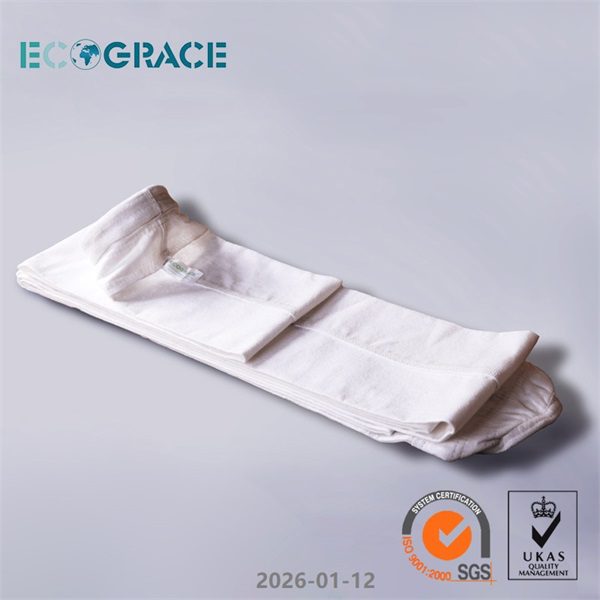
Waste Incinerator Filter Bags
High-Performance Flue Gas Filtration for Municipal Solid Waste, Hazardous Waste & Waste-to-Energy Incineration
Engineered by ECOGRACE
Product Overview
ECOGRACE waste incinerator filter bags are precision-engineered for the most chemically aggressive flue gas environment in industrial filtration. Waste incineration — whether municipal solid waste (MSW), hazardous waste, medical waste, or refuse-derived fuel (RDF) — produces a complex toxic cocktail of acid gases (HCl, HF, SO2, SO3), volatile heavy metals (mercury, cadmium, lead, arsenic), polychlorinated dioxins/furans (PCDD/PCDF), and fine alkaline fly ash. Every one of these pollutants must be captured at near-perfect efficiency before flue gas reaches the stack.
Our waste incinerator filter bags achieve ≥99.99% particulate capture efficiency at 0.3 µm across operating temperatures from 160°C to 280°C. Each bag features multi-layer chemical-resistant construction with PTFE membrane surface filtration, engineered to simultaneously capture particulates, adsorbed heavy metals on activated carbon, and dioxin/furan-laden sorbent particles — the critical last barrier in any air pollution control (APC) system before stack discharge. With PTFE membrane lamination, outlet particulate emissions consistently fall below 1 mg/Nm³, far surpassing the EU IED limit of 10 mg/Nm³.
With proven installations in municipal solid waste incinerators, hazardous waste treatment facilities, hospital waste incinerators, and RDF/SRF cement co-processing plants across Europe, Southeast Asia, the Middle East, and South America, ECOGRACE provides dust collector filter bags that consistently meet EU WID/IED Directive 2010/75/EU, US EPA MACT 40 CFR Part 60 Subpart Eb, Japan DXN Special Measures Law, China GB 18485-2014, and the most demanding national emission standards for waste incineration worldwide.
Waste Incinerator Filter Bags by Incineration Type
Municipal Solid Waste (MSW) Incineration
The largest segment for waste incinerator filter bags. MSW grate-fired incinerators generate flue gas at 180–220°C (after semi-dry or dry acid gas scrubber) containing HCl 800–2,000 mg/Nm³, SO2 200–500 mg/Nm³, and variable heavy metal loading. PTFE membrane filter bags on PPS or PPS/PTFE blended substrate deliver <1 mg/Nm³ particulate and <0.05 ng TEQ/Nm³ dioxin emissions with activated carbon injection. This is the most demanding and highest-volume waste incinerator filter bag application globally.
Hazardous Waste Incineration
Rotary kiln and liquid injection hazardous waste incinerators produce the most extreme acid gas concentrations in any filtration application — HCl can exceed 3,000 mg/Nm³ when chlorinated solvents or chemical waste are processed, combined with heavy metals (Hg, Cd, Pb, As) at 10–100x coal combustion levels. Only full PTFE felt or PTFE/PPS blended media with acid-resistant finish can survive this environment. Waste incinerator filter bags for hazardous waste require the highest chemical resistance of any industrial filtration application.
Medical & Clinical Waste Incineration
Hospital and clinical waste incinerators burn pathogen-contaminated sharps, pharmaceuticals, and PVC-heavy disposable medical supplies at 850–1,100°C, generating flue gas at 180–220°C with high chlorine from PVC plastics and pharmaceutical residues. PTFE membrane on PPS or fiber glass substrate with hydrophobic and acid-resistant treatment ensures reliable pathogen-bearing particulate and heavy metal containment.
Refuse-Derived Fuel (RDF/SRF) Combustion
Processed waste fuels (RDF/SRF) are burned in dedicated fluidized bed boilers or co-processed in cement kilns at 160–200°C flue gas temperature. While acid gas concentrations are lower than raw MSW incineration, variable fuel composition and high alkali content demand robust filtration. PPS filter bags with PTFE membrane provide cost-effective performance for dedicated RDF boilers and cement kiln co-processing APC systems.
Sewage Sludge Incineration
Fluidized bed sewage sludge incinerators produce high-moisture flue gas (20–30% H2O) with heavy metals, phosphorus compounds, and moderate acid gas loading at 160–200°C. The primary challenge for waste incinerator filter bags in sludge applications is moisture-induced bag blinding and acid dew point condensation during variable sludge feed moisture. Hydrophobic-treated PPS or PTFE media with enhanced drainage characteristics are essential.
Industrial & Chemical Waste Incineration
Dedicated on-site incinerators for petrochemical residues, pharmaceutical by-products, and industrial sludge operate at 200–260°C with highly variable flue gas composition depending on waste batch. These systems demand waste incinerator filter bags with the broadest chemical resistance spectrum — fiber glass substrate with PTFE membrane or full PTFE felt for maximum resilience against unpredictable acid/alkali/oxidizer combinations.
Recommended Filter Media for Waste Incinerator Filter Bags
PTFE Membrane Filter Bags
The gold standard for waste incinerator filter bags. PTFE membrane surface filtration prevents dioxin-laden activated carbon from penetrating fiber depth, maintaining a uniform sorbent layer for maximum dioxin/furan adsorption. Achieves <1 mg/Nm³ outlet particulate emissions. Universally resistant to all acid gases (HCl, HF, SO2, SO3). Required for all waste-to-energy facilities targeting EU BAT-AEL compliance.
PPS Filter Bags
Continuous operating temperature up to 190°C with outstanding acid, alkali, and hydrolysis resistance. The most cost-effective substrate for PTFE membrane lamination in MSW and RDF incinerators. PPS/PTFE fiber-blended versions available for enhanced oxidation resistance where O2 levels exceed 8% and NOx is elevated after SNCR systems.
Fiber Glass Filter Bags
Continuous operating temperature up to 280°C for waste incinerators without adequate flue gas cooling or those using direct quench systems. PTFE membrane lamination with acid-resistant e-PTFE coating provides reliable performance in high-temperature waste-to-energy applications. Ideal for industrial and chemical waste incinerators with elevated flue gas temperatures.
Full PTFE Felt Filter Bags
100% PTFE fiber construction for the most extreme chemical environments in hazardous waste incineration. Virtually indestructible against all acids, alkalis, oxidizers, and organic solvents. Maximum service life of 36–48 months in conditions that destroy PPS-based waste incinerator filter bags within 12 months. The premium choice for operators prioritizing maximum uptime and zero emission exceedance risk.
Material Comparison for Waste Incinerator Filter Bags
| Material | Max Temp | Best Application | Acid Resistance | Oxidation Resistance | Service Life |
|---|---|---|---|---|---|
| PTFE Membrane on PPS | 190°C | MSW, RDF, sewage sludge | Excellent | Moderate | 24–36 months |
| PTFE Membrane on PPS/PTFE Blend | 200°C | MSW with high O2/NOx | Excellent | Superior | 30–42 months |
| PTFE Membrane on Fiber Glass | 280°C | High-temp WtE, direct quench, industrial waste | Good | Good | 18–30 months |
| Full PTFE Felt | 260°C | Hazardous waste, extreme acid gas | Superior | Superior | 36–48 months |
| P84 / PI Felt | 240°C | High-temp MSW, irregular leaf shape for high efficiency | Excellent | Good | 24–36 months |
Technical Parameters — Waste Incinerator Filter Bags
| Parameter | Specification |
|---|---|
| Filtration Efficiency | ≥99.99% at 0.3 µm (with PTFE membrane) |
| Outlet Particulate Emission | <5 mg/Nm³ (standard) / <1 mg/Nm³ (PTFE membrane) |
| Dioxin/Furan Removal | >99% with activated carbon injection; outlet <0.05 ng TEQ/Nm³ |
| Heavy Metal Capture | Hg <0.02 mg/Nm³, Cd+Tl <0.01 mg/Nm³ (with sorbent injection) |
| Operating Temperature Range | 160°C – 280°C (material dependent) |
| Acid Gas Tolerance | HCl, HF, SO2, SO3 resistant (HCl >2,000 mg/Nm³ for PTFE media) |
| Air-to-Cloth Ratio | 0.7 – 1.0 m/min (waste incineration baghouse design) |
| Cleaning Mechanism | Pulse-jet (online or offline), 4–6 bar compressed air |
| Service Life | 24–48 months (waste type and APC system dependent) |
| Tensile Strength (Warp/Weft) | ≥800 N/5cm (warp) / ≥1,000 N/5cm (weft) |
| Surface Treatment | PTFE membrane lamination, acid-resistant finish, hydrophobic coating, anti-oxidation treatment |
| Available Diameters | 120 mm, 130 mm, 150 mm, 160 mm (custom available) |
| Available Lengths | 2,000 mm – 8,000 mm (custom to order) |
| Certification | ISO 9001, ISO 14001, CE, SGS tested |
Why Waste Incinerators Need Specialized Filter Bags
Waste incineration produces the most toxic and chemically complex flue gas in all industrial processing. Unlike coal, biomass, or natural gas combustion where fuel composition is relatively predictable, municipal solid waste contains plastics, metals, textiles, food waste, electronics, and hazardous materials in constantly varying proportions — making flue gas chemistry highly unpredictable from hour to hour. Standard industrial baghouse filter bags designed for power plants or cement kilns simply cannot survive these conditions. Here is why waste incinerator filter bags require purpose-built engineering:
Extreme Acid Gas Loading
PVC plastics in MSW produce raw HCl concentrations of 800–2,000 mg/Nm³ — 10 to 50 times higher than coal combustion. Combined with HF from fluoropolymers, SO2 from rubber vulcanization agents, and SO3 catalyzed by heavy metal fly ash, this creates the most corrosive acid gas cocktail in any industrial filtration application. Waste incinerator filter bags must resist simultaneous multi-acid attack for 24–48 months of continuous operation.
Dioxin & Furan Control
Polychlorinated dioxins (PCDD) and furans (PCDF) are among the most toxic substances known to science. They form in the 200–400°C “de novo synthesis” temperature window and are adsorbed onto activated carbon or lignite coke injected upstream of the baghouse. Waste incinerator filter bags must capture >99% of these sub-micron carbon sorbent particles to maintain dioxin emissions below 0.1 ng TEQ/Nm³ (EU IED) or 0.08 ng TEQ/Nm³ (EU BAT-AEL).
Heavy Metal Capture & Mercury Control
Mercury, cadmium, lead, arsenic, and thallium volatilize during combustion and condense onto fine fly ash and activated carbon particles as flue gas cools. PTFE membrane surface filtration on waste incinerator filter bags captures these sub-micron metal-bearing particles that would penetrate conventional depth-filtration media. This is especially critical for mercury control where activated carbon adsorption at the bag surface is the primary capture mechanism.
Scrubber Reagent Residue Management
Acid gas scrubbing with hydrated lime (Ca(OH)2), sodium bicarbonate (NaHCO3), or trona produces reactive calcium/sodium salt by-products that deposit on filter bags. These hygroscopic salts absorb ambient moisture, harden, and permanently blind conventional media. PTFE membrane surface filtration prevents these reactive reagent residues from penetrating fiber depth, maintaining low and stable pressure drop throughout the waste incinerator filter bag service life.
Wildly Variable Waste Composition
MSW composition changes daily, seasonally, and by region. A single incinerator may receive residential garbage, commercial waste, construction debris, and small-quantity hazardous waste in the same day. Waste incinerator filter bags must handle wide, unpredictable fluctuations in acid gas concentration (HCl ±50%), moisture content (8–15%), and particulate loading (5–30 g/Nm³) without performance degradation, bag failure, or emission exceedance events.
Regulatory Zero Tolerance
Waste incinerators face the strictest emission limits of any industrial source worldwide. EU IED mandates ≤10 mg/Nm³ PM, ≤0.1 ng TEQ/Nm³ dioxins, and heavy metal limits measured in micrograms per cubic meter. Many facilities must also comply with continuous emission monitoring (CEMS) with 30-minute averaging — meaning even brief filter bag failures trigger immediate regulatory violation, public reporting, and potential plant shutdown.
Emission Standards Compliance — ECOGRACE Waste Incinerator Filter Bags
| Pollutant | EU IED Limit | EU BAT-AEL | ECOGRACE Performance |
|---|---|---|---|
| Particulate Matter | 10 mg/Nm³ | 2–5 mg/Nm³ | <1 mg/Nm³ |
| Dioxins/Furans (PCDD/F) | 0.1 ng TEQ/Nm³ | 0.01–0.08 ng TEQ/Nm³ | <0.05 ng TEQ/Nm³ |
| Mercury (Hg) | 0.05 mg/Nm³ | 0.005–0.02 mg/Nm³ | <0.01 mg/Nm³ |
| Cadmium + Thallium (Cd+Tl) | 0.05 mg/Nm³ | 0.005–0.02 mg/Nm³ | <0.01 mg/Nm³ |
| Sb+As+Pb+Cr+Co+Cu+Mn+Ni+V | 0.5 mg/Nm³ | 0.01–0.3 mg/Nm³ | <0.1 mg/Nm³ |
| HCl | 10 mg/Nm³ | 2–6 mg/Nm³ | Scrubber dependent* |
* HCl outlet concentration is primarily determined by the upstream acid gas scrubber (semi-dry or dry). Filter bags contribute to HCl reduction through residual lime cake filtration.
Waste Incineration Applications We Serve
ECOGRACE Advantages for Waste Incinerator Filter Bags
WtE-Specific Engineering
Every waste incinerator filter bag order is engineered for your specific waste stream, APC system configuration (semi-dry scrubber, dry injection, wet scrubber), activated carbon dosing rate, and emission permit limits. We analyze your flue gas composition data, acid gas scrubbing efficiency, and baghouse operating conditions to optimize media selection, weight, membrane type, and surface treatment for maximum service life.
Guaranteed Dioxin Capture Performance
PTFE membrane surface filtration maintains a uniform, stable activated carbon cake layer on the bag surface, maximizing gas-solid contact time for dioxin/furan adsorption. Our waste incinerator filter bags consistently achieve <0.05 ng TEQ/Nm³ dioxin emissions — 50% below the EU IED limit and within the EU BAT-AEL range — verified by third-party continuous monitoring data from operating installations.
Maximum Chemical Survival & Uptime
PPS/PTFE blended and full PTFE felt waste incinerator filter bags deliver 36–48 months of continuous service life in extreme acid gas environments. This eliminates mid-campaign bag failures that cause emission exceedances, unplanned shutdowns, and regulatory penalties — the single biggest operational risk for waste incinerator operators.
Global Regulatory Compliance Documentation
Full documentation package for permit applications: material test certificates, emission performance guarantees, and compliance statements for EU WID/IED 2010/75/EU, EPA 40 CFR Part 60 Subpart Eb, Japan DXN Special Measures Law, China GB 18485-2014, and region-specific waste incineration emission standards. Proven track record across 50+ waste-to-energy facilities in 15 countries.
Frequently Asked Questions — Waste Incinerator Filter Bags
What filter bag material is best for MSW waste incinerator filter bags?
PTFE membrane on PPS substrate is the most widely deployed configuration for MSW incinerators operating at 180–200°C after semi-dry scrubber. For plants with elevated oxidation risk (O2 >8% or high NOx from SNCR), PPS/PTFE fiber-blended substrate extends service life to 30–42 months by resisting oxidative degradation of the PPS fibers. Full PTFE felt is recommended when operating temperature regularly exceeds 200°C or HCl consistently exceeds 1,500 mg/Nm³ before scrubbing.
How do waste incinerator filter bags control dioxin emissions?
PTFE membrane surface filtration is the key mechanism. The membrane creates a uniform, stable activated carbon (or lignite coke) cake layer on the bag surface rather than allowing carbon particles to penetrate into the fiber depth. This maximizes gas-solid contact time for dioxin/furan adsorption while maintaining low pressure drop. The combination of activated carbon injection and PTFE membrane waste incinerator filter bags consistently achieves outlet dioxin levels of <0.05 ng TEQ/Nm³.
Can your waste incinerator filter bags handle hazardous waste incineration?
Yes. For hazardous waste rotary kiln incinerators with extreme HCl (>3,000 mg/Nm³ raw), HF, and heavy metal loading, we supply full PTFE felt waste incinerator filter bags that are virtually chemically inert against all acid gases, alkalis, and oxidizers. These deliver 36–48 months of reliable service in conditions that destroy PPS-based media within 6–12 months. For budget-conscious operations, PPS/PTFE blended substrate with PTFE membrane provides a strong intermediate option.
Do you manufacture replacement waste incinerator filter bags for existing baghouse systems?
Yes. We manufacture drop-in replacement waste incinerator filter bags compatible with all major WtE OEM dust collector systems including Martin GmbH, Hitachi Zosen Inova, Keppel Seghers, CNIM, Babcock & Wilcox Vølund, JFE Engineering, and Covanta designs. Provide your current bag dimensions, snap-ring/cuff type, and we deliver exact-fit replacements with optimized media for your specific flue gas conditions.
What is the minimum order quantity, pricing, and lead time for waste incinerator filter bags?
MOQ is 100 pieces for standard sizes. Pricing ranges from $15–$35/piece depending on material (PPS vs. PTFE felt), dimensions, and surface treatment. Full plant changeout orders (1,000–5,000+ bags) within 25–30 days. Standard delivery 15–20 days. Free samples available for laboratory testing and quality evaluation before bulk commitment.
Request a Technical Quote for Waste Incinerator Filter Bags
Contact ECOGRACE for customized flue gas filtration solutions for your waste incineration facility
[email protected]WhatsApp: +86-13588065995
Learn more about baghouse filter bags from ECOGRACE