
Filter Bag for Tyre Plant Rubber Recycle – Specialized Dust Collection Solutions
Tire recycling and rubber reclamation facilities face intense dust collection challenges from pyrolysis, grinding, and buffing operations. ECOGRACE engineers filter bags for tyre plant rubber recycle applications that withstand rubber dust adhesion, oil vapor contamination, and elevated temperatures up to 240°C while maintaining emission compliance below 10 mg/Nm³.
Our tire recycling filter bags utilize hydrophobic and oleophobic surface treatments combined with P84 polyimide or PPS base fabrics to prevent rubber particle adhesion and extend service life to 30+ months. These specialized baghouse filters are engineered for tire pyrolysis plants, rubber crumb production, and tire buffing dust collection systems.
Critical Filtration Challenges in Tire Recycling Plants
- Sticky Rubber Particles: Elastomer dust creates filter cake buildup requiring specialized release coatings
- Oil Vapor Contamination: Pyrolysis oil mist causes filter blinding without proper surface treatment
- High-Temperature Exhaust: Pyrolysis reactors generate 180-240°C off-gas streams
- Abrasive Steel Wire Dust: Wire separation processes create sharp metallic particles that damage standard filters
- Chemical Resistance: Exposure to benzene, toluene, and sulfur compounds from tire decomposition
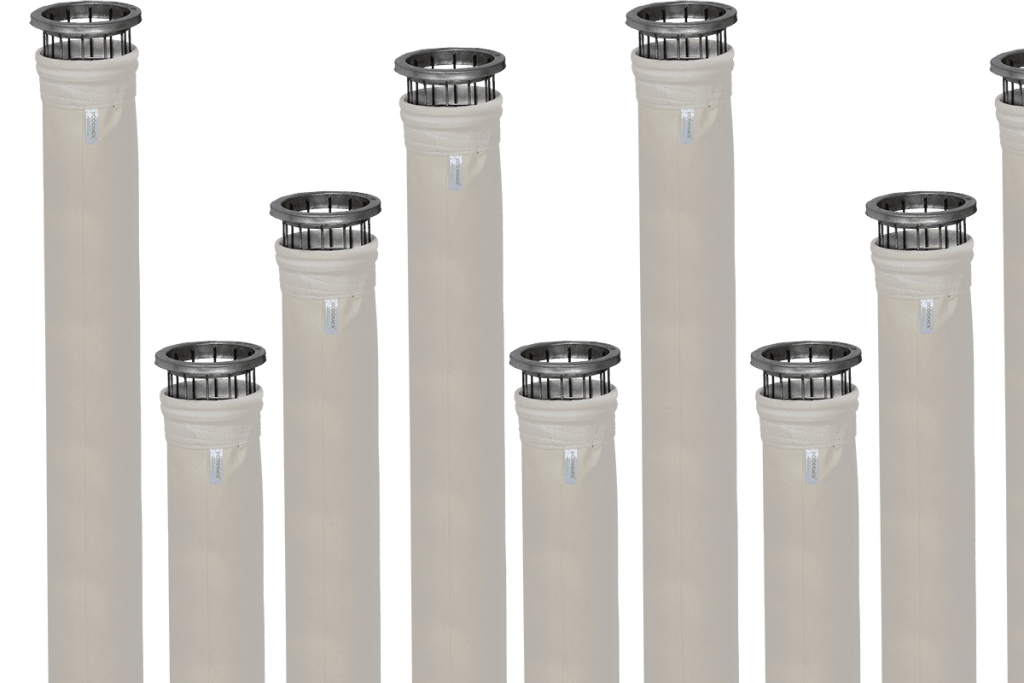
Technical Specifications – Tire Plant Filter Bags
| Filter Material Options | PPS | P84 Polyimide | PTFE + Aramid Blend |
| Operating Temperature | Continuous: 190-220°C | Peak: 240°C |
| Chemical Resistance | Excellent resistance to acids, alkalis, organic solvents |
| Surface Treatment | PTFE membrane + Oil-repellent + Anti-static |
| Filtration Efficiency | 99.95% @ 1.0 micron |
| Standard Sizes | Ø130×2500mm | Ø160×3000mm | Ø160×6000mm | Custom available |
| Service Life | 30-42 months in tire recycling applications |
| Dust Release Performance | 95%+ cake removal efficiency with pulse cleaning |
Application-Specific Filter Solutions for Tire Recycling Processes
Tire Pyrolysis Dust Collection
Process Conditions: 180-240°C, oil vapor + carbon black + rubber particles
Recommended Material: P84 polyimide needle felt with PTFE membrane lamination and oil-repellent finish. Provides exceptional chemical resistance to pyrolysis by-products while maintaining low pressure drop.
Performance Results: Emission <5 mg/Nm³ | 36+ months service life | Stable ΔP <1000 Pa
Rubber Crumb Production
Process Conditions: Ambient to 80°C, fine rubber particles + steel wire dust
Recommended Material: PPS needle felt with reinforced scrim for abrasion resistance. Anti-static treatment prevents rubber particle adhesion to filter surface.
Performance Results: 99.95% filtration efficiency | Easy cake release | 30+ months durability
Tire Buffing & Grinding
Process Conditions: 60-120°C, elastomer dust with high oil content
Recommended Material: Aramid needle felt with dual-layer PTFE membrane and hydrophobic/oleophobic coating. Prevents filter blinding from sticky rubber dust.
Performance Results: Minimal filter cake buildup | Extended cleaning intervals | Reduced compressed air consumption
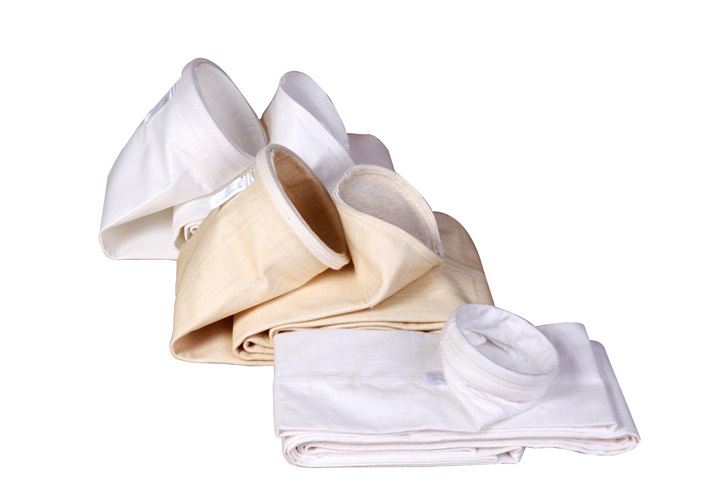
Advanced Surface Treatment Technologies
PTFE Membrane Lamination
Expanded PTFE membrane with 0.5-1.0 micron pore size creates surface filtration barrier preventing rubber particles from embedding into base fabric. Enables 95%+ dust cake release during pulse cleaning, dramatically extending filter life.
Oil-Repellent Coating
Fluoropolymer-based treatment prevents pyrolysis oil adhesion and rubber plasticizer absorption. Maintains filter permeability and prevents wet cake formation that causes irreversible pressure drop increases.
Anti-Static Properties
Conductive fibers and carbon threads dissipate static charges generated by rubber dust friction. Critical for explosion prevention in tire recycling facilities handling combustible rubber particles. Meets ATEX 2014/34/EU and NFPA 654 requirements.
Singeing & Calendaring
Surface fiber removal and heat-press finishing creates smooth surface that minimizes rubber particle anchoring points, improving dust release efficiency and reducing cleaning frequency.
Performance Comparison – Standard vs. Specialized Tire Plant Filter Bags
| Performance Metric | Standard Polyester Bags | ECOGRACE Tire Plant Bags | Improvement |
|---|---|---|---|
| Filter Service Life | 8-12 months | 30-42 months | +250% |
| Emission Level | 15-25 mg/Nm³ | <5 mg/Nm³ | -80% |
| Pressure Drop (stable) | 1500-2000 Pa | 800-1000 Pa | -45% |
| Cleaning Cycle Interval | Every 30-45 min | Every 90-120 min | +150% |
| Annual Filter Cost | Baseline ($100k) | $45k-55k | -50% |
| Energy Consumption | Baseline | -20 to -30% | Lower fan power |
Case Study: Tire Pyrolysis Plant in Southeast Asia
- Filter bags still operational (zero replacements)
- Emission reduced to
Results After 36 Months:
- Filter bags still operational (zero replacements)
- Emission reduced to
Challenge: 50 TPD tire pyrolysis facility experiencing filter bag failure every 6-8 months due to oil vapor contamination. Emission levels exceeding local standards (20-30 mg/Nm³). High replacement costs and production downtime.
Solution: Replaced standard aramid bags with ECOGRACE P84 + PTFE membrane filter bags (Ø160×3000mm) with oil-repellent treatment. Optimized pulse cleaning parameters from 90-second to 120-second intervals.